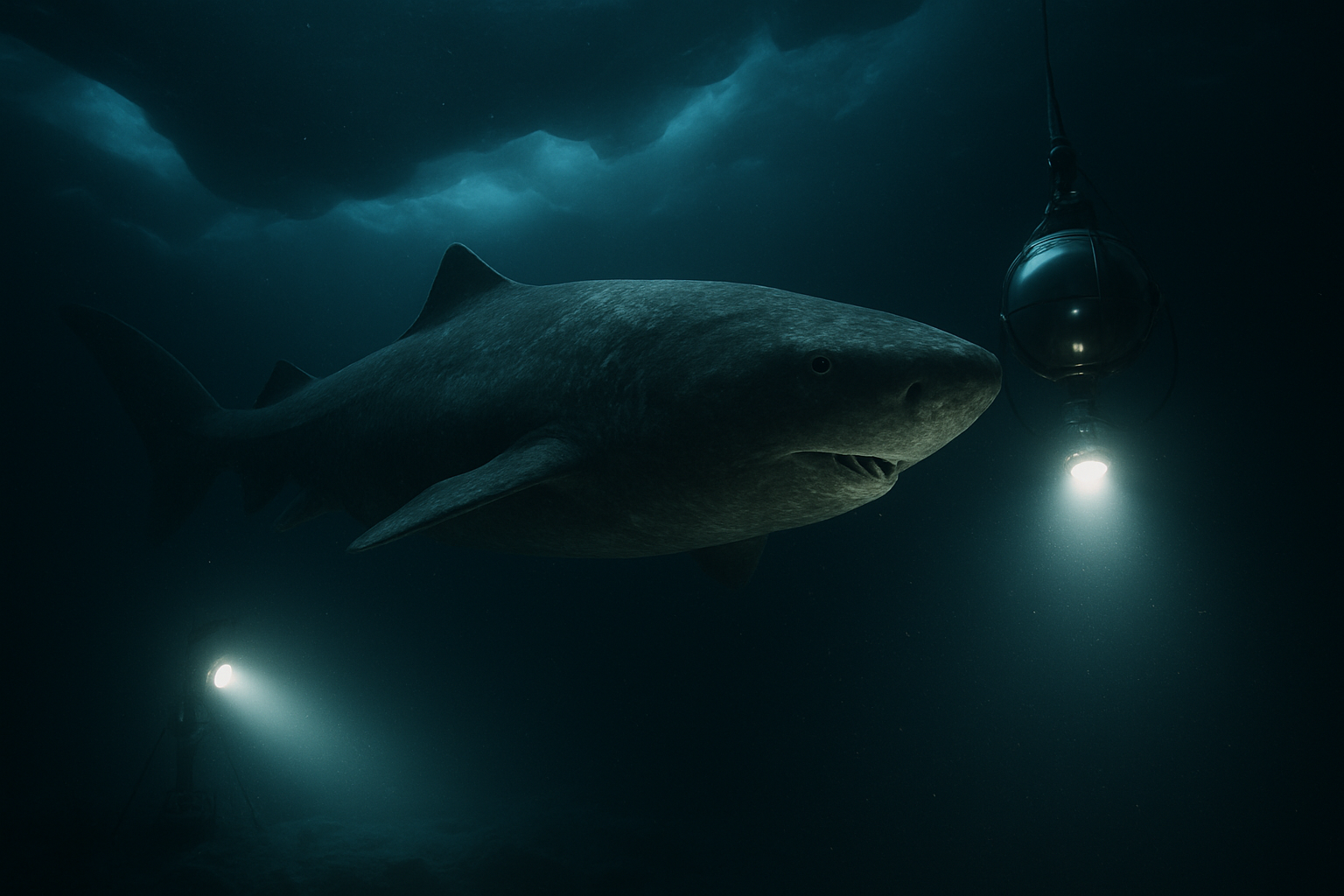
In a groundbreaking discovery that challenges decades of scientific assumptions, researchers have captured the first-ever footage of an Antarctic sleeper shark cruising through the frigid depths of the Southern Ocean, revealing a massive predator thriving in waters previously thought too harsh for sharks.
The remarkable encounter, filmed in January 2025 but announced this week, shows an impressive sleeper shark measuring between three and four meters (10 to 13 feet) in length as it moved with languid precision across a barren seabed far beyond the reach of sunlight. The discovery fundamentally alters our understanding of marine ecosystems in Earth's most extreme environments.
Rewriting Antarctic Marine Biology
"An ungainly barrel of a shark cruising languidly over a barren seabed far too deep for the sun's rays to illuminate was an unexpected sight," said researcher Alan Jamieson, who led the team that captured the historic footage. "Many experts had thought sharks did not exist in the frigid waters of Antarctica before this sleeper shark lumbered warily and briefly into the spotlight of a video camera."
The Antarctic sleeper shark's presence in these waters represents more than just a range extension – it challenges fundamental assumptions about the limits of vertebrate life in polar environments. Antarctica's waters, where temperatures consistently hover near freezing, were long considered too hostile for large predatory fish like sharks.
Understanding the Antarctic Giant
Sleeper sharks are among the ocean's most enigmatic predators, known for their slow-moving but persistent hunting style. The Antarctic specimen captured on video displayed the characteristic traits of its family: a robust, barrel-shaped body designed for efficiency rather than speed, and the patient demeanor that gives these sharks their common name.
The substantial size of the observed individual – potentially reaching 13 feet in length – suggests this may represent a mature specimen of a previously unknown Antarctic population. Sleeper sharks in other polar regions, particularly the Greenland shark found in Arctic waters, are known for their extraordinary longevity, with some individuals potentially living for centuries.
Extreme Environment Adaptations
The Antarctic Ocean presents unique challenges that would prove lethal to most marine life. Water temperatures remain consistently below freezing, while the extreme seasonality means months of complete darkness during the Antarctic winter. The discovery of a large vertebrate predator thriving in these conditions opens new questions about cold-water adaptations and metabolic strategies.
Scientists believe the shark likely possesses specialized antifreeze proteins in its blood, similar to those found in Antarctic fish species. These biological adaptations allow cellular functions to continue even in sub-zero temperatures that would crystallize the blood of most marine animals.
Implications for Marine Ecosystem Understanding
The presence of this apex predator suggests Antarctic marine ecosystems may be far more complex and diverse than previously understood. If sleeper sharks are successfully hunting in these waters, it indicates a robust food web capable of supporting large predators – a finding that could reshape conservation strategies for the Southern Ocean.
The discovery also raises important questions about the historical presence of sharks in Antarctic waters. Climate change is altering polar marine environments rapidly, but the mature size of the observed shark suggests this population has been established for considerable time, possibly predating recent warming trends.
Research Methodology and Future Studies
The footage was captured during deep-sea research operations using specialized video equipment designed to operate in extreme cold-water conditions. The brief but clear recording provides scientists with crucial behavioral data about how these predators navigate and hunt in the polar environment.
Researchers are now planning expanded surveys of Antarctic waters to better understand the population size, distribution, and ecological role of these remarkable sharks. Such studies will require international cooperation and specialized equipment capable of operating in some of Earth's most challenging marine environments.
Conservation Considerations
The discovery comes at a critical time for Antarctic marine conservation. The Southern Ocean faces increasing pressures from climate change, commercial fishing, and ocean acidification. Understanding the full scope of Antarctic biodiversity, including previously unknown apex predators, is essential for developing comprehensive protection strategies.
If Antarctic sleeper sharks represent a unique population or subspecies adapted specifically to Southern Ocean conditions, their conservation status may be particularly vulnerable to rapid environmental changes affecting polar regions.
Scientific Collaboration in Extreme Environments
This discovery exemplifies the importance of continued polar research despite the significant logistical and financial challenges. International scientific collaboration in Antarctica has yielded numerous breakthroughs in recent years, from climate research to astrobiology studies that inform our understanding of life's limits.
The Antarctic sleeper shark footage joins a growing body of evidence that polar regions harbor unexpected biodiversity, often in forms specially adapted to extreme conditions. These discoveries underscore the importance of protecting these environments as unique laboratories for understanding life's adaptability.
Looking to the Future
As research teams prepare for follow-up expeditions to study this newly documented Antarctic population, the sleeper shark discovery serves as a reminder that Earth's oceans still hold remarkable secrets. In an age of rapid environmental change, understanding these ecosystems becomes increasingly urgent.
The substantial sleeper shark captured on camera represents more than just a new geographic record – it symbolizes the resilience of life in Earth's most extreme environments and highlights the critical need for continued scientific exploration of our planet's polar frontiers.
This groundbreaking footage not only expands our knowledge of shark distribution but also demonstrates that even in the 21st century, the natural world continues to surprise and humble researchers with discoveries that challenge our fundamental assumptions about life on Earth.