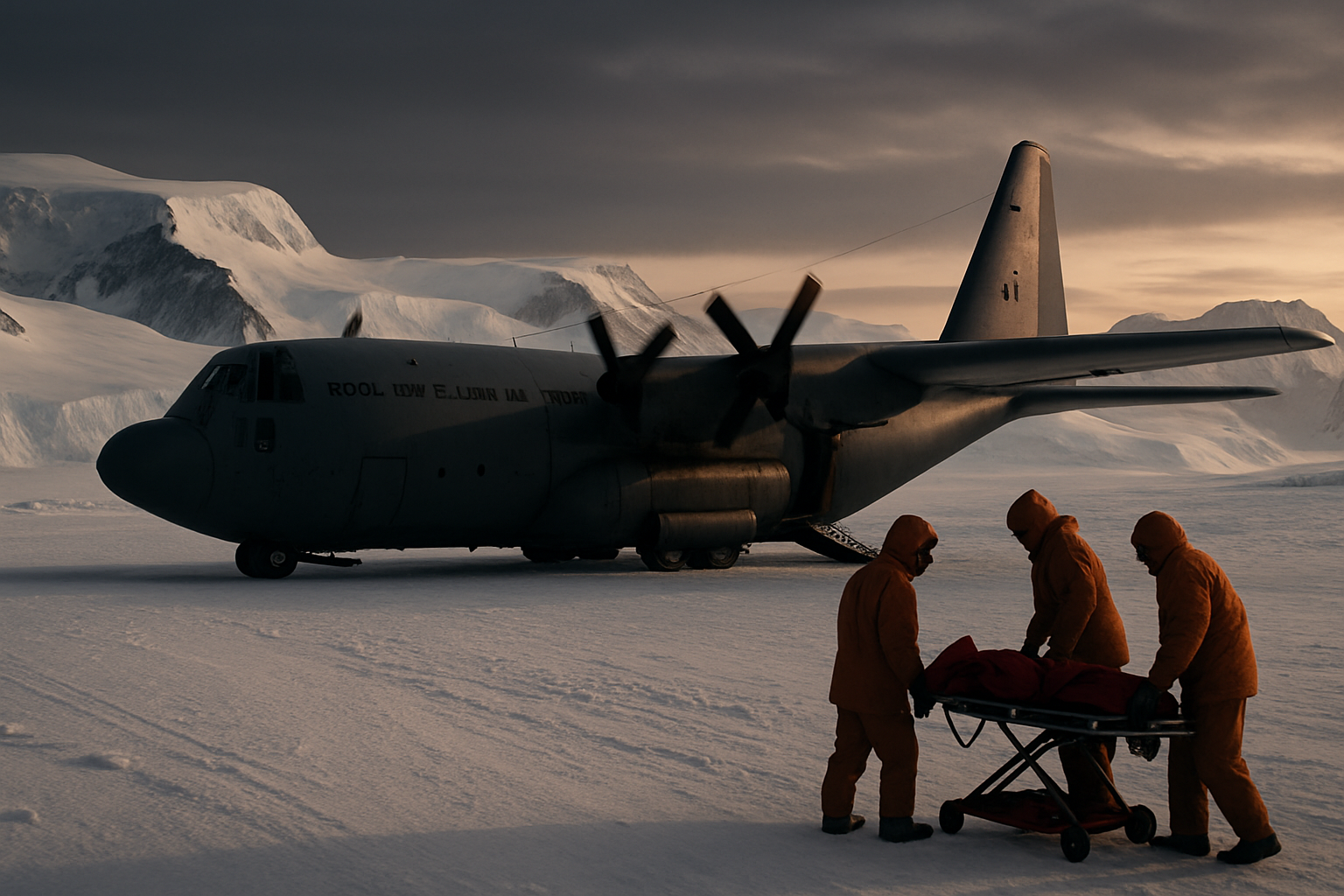
The Royal New Zealand Air Force has successfully completed a critical medical evacuation from Antarctica, bringing a patient to Christchurch for urgent medical care just as the continent begins its transition into the dark Antarctic winter.
The evacuation operation extracted a patient from McMurdo Station who required "higher medical attention" that could not be provided at the research base, according to official reports. The mission was completed with precision timing as Antarctica enters the period when medical evacuations become nearly impossible due to extreme winter conditions and months of continuous darkness.
Critical Timing Before Winter Isolation
The successful medical evacuation represents one of the final opportunities for emergency medical transport from Antarctica before the continent becomes effectively isolated for the winter months. During the Antarctic winter, which spans from approximately April to October, temperatures plummet to life-threatening levels and the region experiences continuous darkness for months, making flight operations extremely hazardous or impossible.
McMurdo Station, operated by the United States Antarctic Program, serves as Antarctica's largest research station and typically hosts hundreds of researchers and support personnel. The facility maintains basic medical capabilities but relies on evacuation flights for serious medical emergencies that require specialized treatment available only at major hospitals.
RNZAF's Antarctic Medical Mission
New Zealand's Air Force has long maintained a crucial role in Antarctic operations, providing logistical support and emergency medical evacuation services for the international research community. The RNZAF operates regular supply flights to Antarctica during the summer season and stands ready for emergency missions when lives are at stake.
"The successful evacuation demonstrates the critical importance of maintaining robust emergency medical capabilities for Antarctica's research community."
— Aviation Safety Expert
The patient was transported to Christchurch, New Zealand's South Island city that serves as the primary gateway for Antarctic operations. Christchurch Hospital maintains specialized capabilities for treating patients evacuated from Antarctica and coordinates closely with Antarctic medical programs.
Challenging Antarctic Operations
Medical evacuations from Antarctica present unique challenges that test the limits of aviation capabilities and emergency medicine. Aircraft must be specially equipped for extreme cold weather operations, and crews undergo specialized training for Antarctic conditions including white-out navigation, extreme weather protocols, and emergency procedures specific to polar environments.
The distances involved in Antarctic medical evacuations are vast, with flights from McMurdo Station to Christchurch covering thousands of kilometers over some of Earth's most remote and inhospitable terrain. Weather conditions can change rapidly, requiring careful planning and backup contingencies.
During winter months, temperatures at McMurdo Station regularly drop below -40°C (-40°F), and the lack of sunlight creates additional navigational challenges. Combined with frequent storms and unpredictable weather patterns, these conditions make winter evacuations extremely dangerous and often impossible.
International Antarctic Cooperation
The successful evacuation highlights the international cooperation that characterizes Antarctic research operations. While McMurdo Station is operated by the United States, the medical evacuation was carried out by New Zealand forces, demonstrating the collaborative spirit essential for safe operations in Antarctica.
New Zealand's Christchurch serves as a primary hub for multiple nations' Antarctic programs, including those of the United States, Italy, and South Korea. The city's strategic location and specialized facilities make it ideally positioned to support emergency medical evacuations from the continent.
Global Context of Medical Evacuations
This Antarctic medical evacuation comes during a year that has seen significant challenges for emergency medical transport globally. The ongoing aviation crisis caused by Middle East conflicts has disrupted commercial flight networks worldwide, affecting medical evacuation capabilities in many regions. However, specialized military medical evacuation operations, such as those in Antarctica, have continued despite broader aviation industry challenges.
The successful completion of this mission underscores the importance of maintaining dedicated emergency medical evacuation capabilities for remote and challenging environments, even as global transportation networks face unprecedented disruptions.
Medical Infrastructure in Remote Locations
Antarctica's medical infrastructure represents a unique challenge in global healthcare delivery. Research stations maintain basic medical facilities and personnel capable of treating routine injuries and illnesses, but serious medical emergencies requiring surgical intervention, advanced imaging, or specialized care necessitate evacuation to facilities with full hospital capabilities.
The isolation of Antarctic research stations during winter months means that medical staff must be prepared to handle any emergency that arises during the months when evacuation is impossible. This requires extensive medical training, well-stocked medical facilities, and careful screening of personnel for existing health conditions that could become serious during the isolation period.
Future Antarctic Medical Capabilities
As Antarctic research activities expand and the number of personnel stationed on the continent increases, medical evacuation capabilities remain a critical component of operational safety. The success of missions like this recent RNZAF evacuation helps establish protocols and demonstrates capabilities that will be essential for future Antarctic operations.
Climate change is also beginning to affect Antarctic operations, with changing weather patterns potentially altering the traditional seasonal windows for safe flight operations. This makes the development of robust, flexible medical evacuation capabilities even more important for the future of Antarctic research.
The Royal New Zealand Air Force's successful completion of this medical evacuation demonstrates the professionalism and capability required for operations in Earth's most challenging environments, ensuring that those who dedicate their lives to Antarctic research can receive life-saving medical care when needed most.