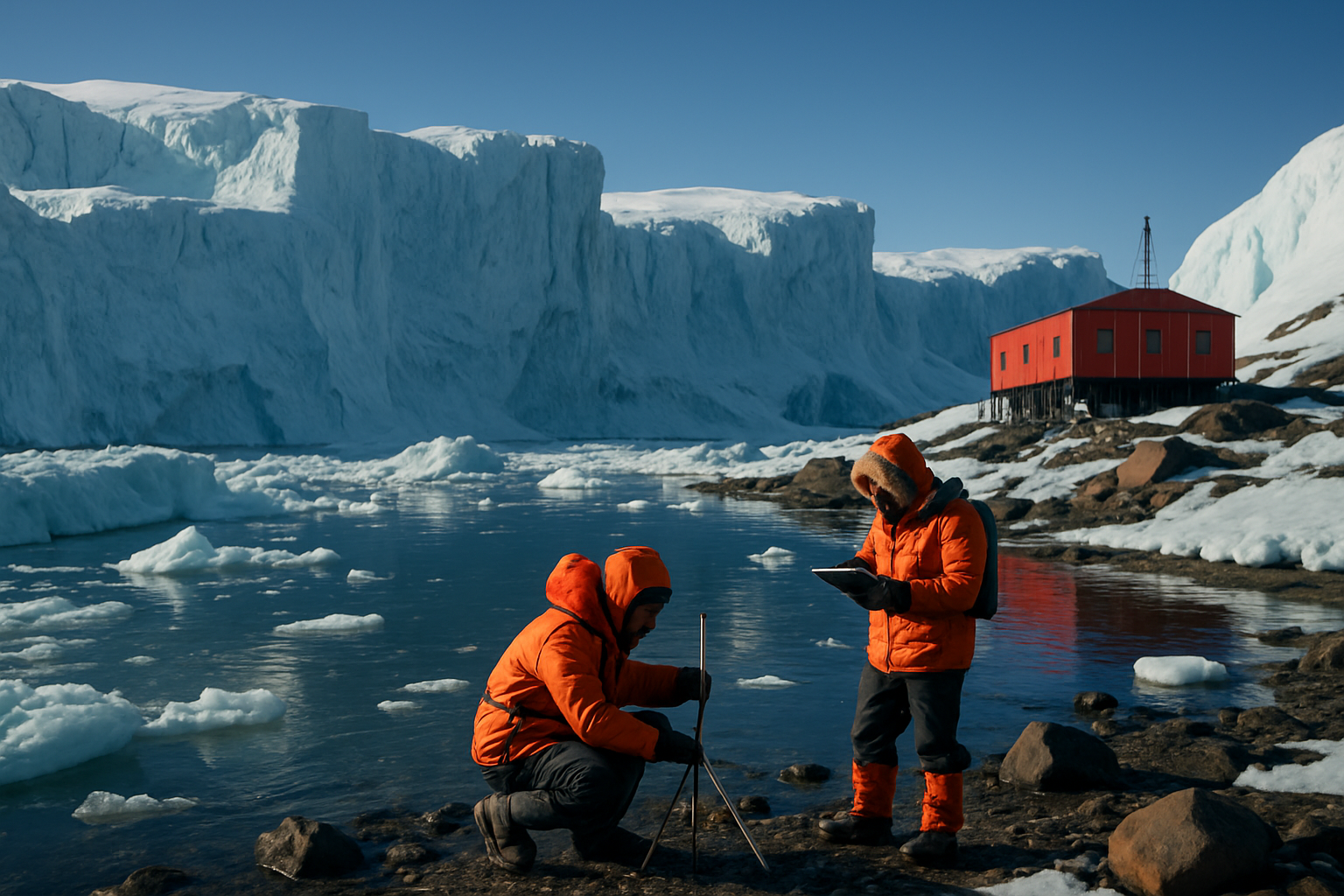
Antarctic climate research is revealing unprecedented changes in summer conditions that dwarf the temperature shifts experienced by previous generations, as new data confirms the continent faces warming patterns that fundamentally threaten global climate stability.
The stark reality of climate transformation becomes evident when examining temperature data spanning decades. Research confirms that the summers experienced today across polar regions and globally are vastly different from those of our grandparents' generation, with implications that extend far beyond seasonal comfort into the realm of planetary system disruption.
Historical Context: Antarctica's Climate Legacy
Antarctica's role as Earth's climate sentinel stretches back over a century. Argentina's 122-year Antarctic presence, beginning with the 1904 meteorological observatory on Laurie Island in the South Orkney Islands, represents the world's longest continuous scientific record from the continent. This unprecedented dataset provides invaluable insights into climate change patterns and natural variability that are now proving crucial for understanding current transformations.
The Buenos Aires Treaty Secretariat, which coordinates international Antarctic governance under the 1959 Antarctic Treaty System, has documented how contemporary Argentine Antarctic research encompasses permanent and seasonal facility networks conducting multidisciplinary research across glaciology, oceanography, atmospheric physics, and environmental monitoring using cutting-edge technology combined with traditional observation methods.
Current Antarctic Research Revelations
Recent scientific breakthroughs demonstrate the accelerating pace of change across Antarctica. In March 2026, researchers successfully drilled 523 meters through Antarctic ice at Crary Ice Rise, extracting a 228-meter sediment core containing 23 million years of climate records. This location, situated on the edge of the West Antarctic Ice Sheet 700 kilometers from the nearest research stations, provides critical insights into ice sheet behavior under elevated temperatures.
The Dutch Antarctic Program has deployed the most sophisticated polar climate monitoring network ever created, with equipment designed for extreme Antarctic conditions including -70°C temperatures and 200+ kilometer-per-hour winds, enabling real-time data transmission that reveals unprecedented environmental changes.
"The Antarctic Peninsula has experienced temperature increases faster than global averages, with profound implications for ice sheet stability, sea level rise, and global ocean circulation,"
— Dr. Sarah van der Berg, Dutch Antarctic Program
Accelerating Global Temperature Trends
The context surrounding Antarctic climate change has reached critical dimensions. January 2026 marked the hottest month in recorded history, representing the 20th consecutive month of global temperatures exceeding 1.5°C above pre-industrial levels. This sustained warming is overriding natural climate variability, including La Niña cooling effects that historically moderated global temperatures.
Research published in Geophysical Research Letters reveals that Earth has warmed 0.35°C in the past decade (2015-2025), representing a 75% acceleration from the previous average of 0.2°C per decade (1970-2015). Human-induced climate change has now completely overridden natural climate systems, fundamentally altering Earth's atmospheric conditions beyond natural recovery mechanisms.
Marine Ecosystem Impacts
The consequences extend far beyond temperature measurements. Every 0.1°C of ocean warming per decade reduces fish populations by 7.2%, with Antarctic waters experiencing particular vulnerability. The discovery of the first Antarctic sleeper shark footage in 2025 demonstrated complex marine biodiversity that depends on stable sea ice conditions, yet faces mounting pressure from warming waters.
Antarctic sea ice experienced partial recovery in 2026 after years of sharp decline, approaching long-term averages according to the National Snow and Ice Data Center. However, this temporary reprieve occurs within the context of overall warming trends that continue to threaten the Southern Ocean's unique oceanographic conditions.
International Scientific Collaboration
The Antarctic Treaty System mandates scientific cooperation and data sharing, creating collaborative frameworks that transcend national boundaries and geopolitical tensions. Recent partnerships include joint projects with Chilean, British, and Brazilian programs, shared logistical support for remote operations, and coordinated regional environmental change monitoring.
The integration of advanced monitoring systems includes automated weather stations, satellite communication networks, and real-time data transmission capabilities. Scientists utilize ice core drilling, atmospheric sampling, and oceanographic measurements to reconstruct historical climate conditions and project future changes, combining traditional meteorological observations with contemporary climate science.
Global Implications for Climate Policy
Antarctica contains enough ice to raise global sea levels by 60 meters if completely melted, making the continent's climate data essential for global weather prediction, climate modeling, and environmental monitoring systems that benefit all nations. As climate change accelerates, Argentina's Antarctic expertise and the broader international research community become increasingly valuable for international climate policy, adaptation strategies, and scientific understanding.
The meteorological and climate data collected since 1904 supports global systems that serve humanity's collective future. From simple meteorological observations, comprehensive climate research operations have evolved to inform global understanding of Earth's changing environment, demonstrating how sustained scientific commitment creates knowledge that transcends national boundaries.
Critical Decision Point for Global Action
March 2026 represents a critical juncture between reactive crisis management and proactive ecosystem service management. The convergence of accelerating warming, infrastructure failures under simultaneous climate pressures, and cooperation limitations creates immediate dangers alongside potential transformation opportunities.
The tools, knowledge, and cooperation frameworks exist for comprehensive protection, but success depends on unprecedented speed and coordination through sustained international cooperation, enhanced multi-sector coordination, and recognition of environmental protection as essential infrastructure for human prosperity and planetary sustainability.
Antarctic research demonstrates that current climate conditions provide a preview of routine conditions in the 2030s without immediate adaptation investment. The window for effective action is narrowing as ecological systems approach critical thresholds that could trigger irreversible changes affecting global food security, climate stability, and human settlement patterns for generations to come.