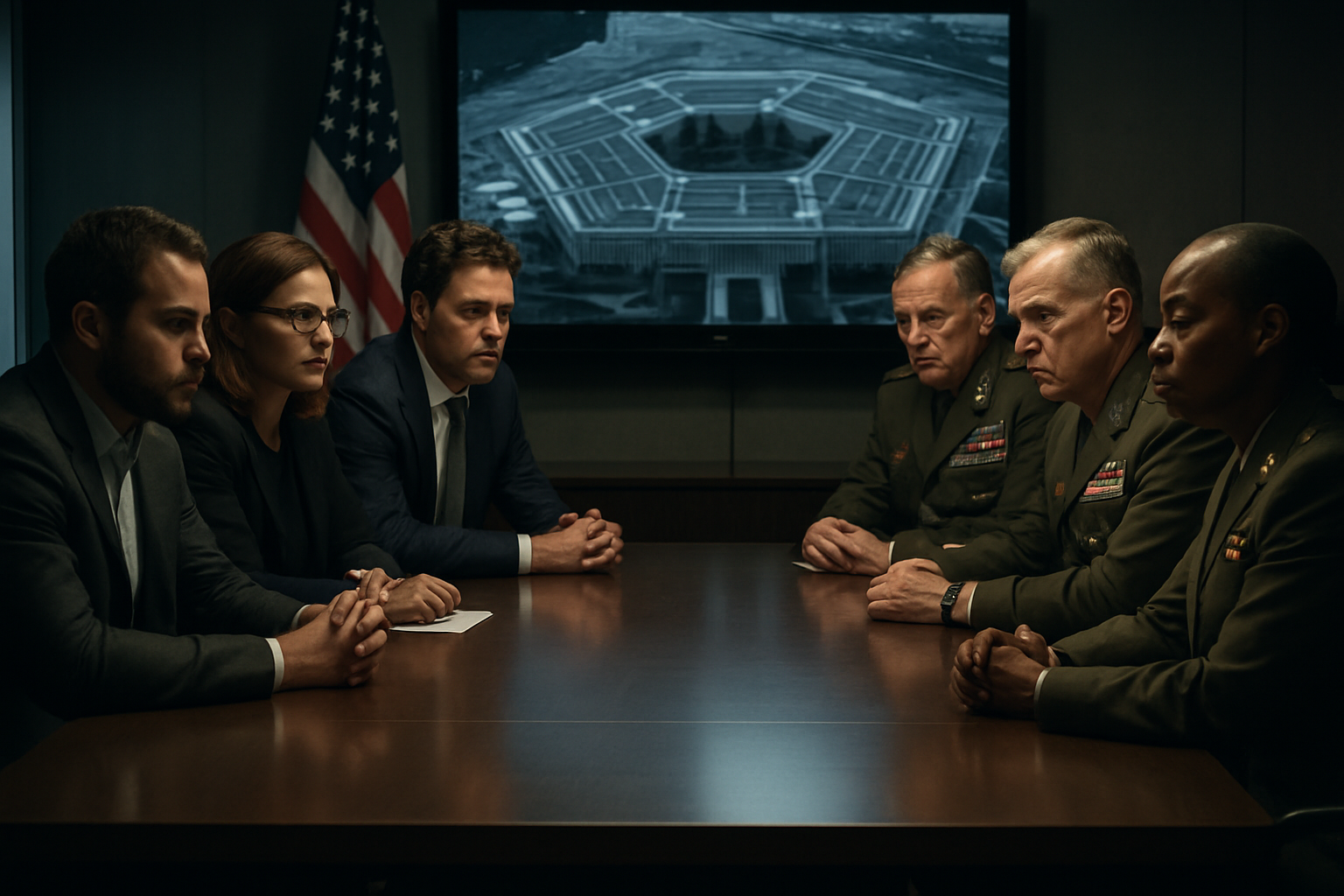
Anthropic CEO Dario Amodei has firmly rejected the Pentagon's ultimatum to remove safeguards from the company's Claude AI system, stating the company "cannot in good conscience accede" to military deployment without safety restrictions, despite threats to designate Anthropic as a "supply chain risk" and potentially lose a $200 million defense contract.
The confrontation reached a critical juncture Friday when Defense Secretary Pete Hegseth's deadline expired without Anthropic's compliance. The Pentagon had demanded unrestricted access to Claude AI for military operations, including removal of safeguards that prevent the technology from being used for mass domestic surveillance and autonomous weapons targeting.
Unprecedented Military-Tech Confrontation
The standoff represents the most significant clash between Silicon Valley AI companies and the U.S. military establishment since artificial intelligence became central to national defense strategy. According to multiple international sources, the Pentagon seeks to integrate advanced AI systems into classified military networks without the civilian safety oversight that has characterized commercial AI development.
Pentagon spokesperson Sean Parnell defended the military's position on social media platform X, stating: "Allow the Pentagon to use Anthropic's AI models to help defend America. We have no interest in mass surveillance of Americans or developing fully autonomous weapons systems."
"In certain specific cases, AI can undermine rather than defend democratic values. We cannot allow our technology to be used for mass domestic surveillance or to power fully autonomous weapons."
— Dario Amodei, CEO of Anthropic
Unauthorized Military Use Exposed
The controversy intensified following revelations that U.S. military forces used Claude AI in the operation to capture former Venezuelan President Nicolás Maduro, despite Anthropic's terms of service explicitly prohibiting violence and surveillance applications. The unauthorized use occurred through Palantir Technologies' partnership with the Pentagon, demonstrating how military contractors can circumvent AI companies' ethical restrictions.
This incident has become a focal point for critics who argue that once AI systems are deployed in military environments, civilian oversight becomes effectively impossible to maintain.
Broader Context of Military AI Integration
The Pentagon's pressure on Anthropic is part of a comprehensive campaign to expand AI tools across military operations. The Defense Department has already successfully integrated OpenAI's ChatGPT into military systems, serving over 800 million weekly users with 10% monthly growth. Ukrainian forces are deploying AI-enhanced drone systems with improved low-light vision capabilities, while only one-third of countries worldwide have agreed to AI warfare governance frameworks.
Notably, both the United States and China have abstained from comprehensive commitments on AI weapons regulation, highlighting the strategic importance military leaders place on maintaining unrestricted access to advancing AI capabilities.
Industry Safety Concerns Mount
The Anthropic-Pentagon dispute occurs amid broader concerns about AI safety versus military applications. Former Anthropic security researchers recently resigned with warnings that the "world is in peril" due to AI development outpacing safety measures, citing internal tensions between commercial pressures and responsible development.
The company has consistently opposed autonomous weapons development while maintaining that its Claude AI system should not be used for surveillance or violence, positions that directly conflict with Pentagon demands for "all lawful purposes" military access.
International Implications
The confrontation comes during a critical period for global AI governance, with 88 countries signing the Delhi Declaration - the largest AI diplomatic agreement in history - calling for "safe, reliable, and robust" AI development. However, the Pentagon's approach suggests U.S. military priorities may override civilian safety considerations established in international frameworks.
European nations are implementing unprecedented AI regulation, with Spain introducing criminal executive liability for tech platforms and France conducting cybercrime raids on AI companies. The UN has established an Independent Scientific Panel with 40 experts for comprehensive AI impact assessment.
Economic and Strategic Stakes
Beyond the immediate $200 million contract at risk, the dispute represents a fundamental test of whether democratic oversight can be maintained over AI technology during periods of great power competition. The Pentagon's threat to designate Anthropic as a "supply chain risk" would effectively exclude the company from all federal contracts and partnerships.
The stakes extend globally, as the confrontation occurs during a massive infrastructure crisis with memory semiconductor prices surging sixfold, affecting Samsung, SK Hynix, and Micron operations. This supply constraint creates additional leverage for military entities willing to compromise safety protocols for computational resource access.
Canadian Government Disappointment
Adding international pressure, Canadian AI Minister Evan Solomon expressed disappointment with OpenAI following revelations that ChatGPT's automated systems flagged concerning content from the Tumbler Ridge shooter months before the February massacre but didn't meet the company's threshold for law enforcement notification. The incident highlights broader questions about AI companies' responsibilities for public safety reporting.
Looking Forward
As the deadline has passed without resolution, the confrontation enters uncharted territory. Defense Department officials have indicated they may invoke the Defense Production Act - legislation dating to the 1950 Korean War - to force Anthropic's compliance, which would represent an unprecedented federal expansion into the AI sector.
The resolution will likely establish crucial precedents for democratic AI governance versus military imperatives, determining whether civilian oversight can be maintained during national security tensions or if military requirements will ultimately override safety protocols developed for civilian applications.
"This is about whether AI will serve democratic values and human flourishing, or become subordinated to military and surveillance priorities. The decisions made here will echo for decades."
— Former Anthropic Security Researcher
The standoff represents a critical inflection point in the relationship between advancing AI technology and democratic governance, with implications extending far beyond the immediate dispute between Anthropic and the Pentagon.