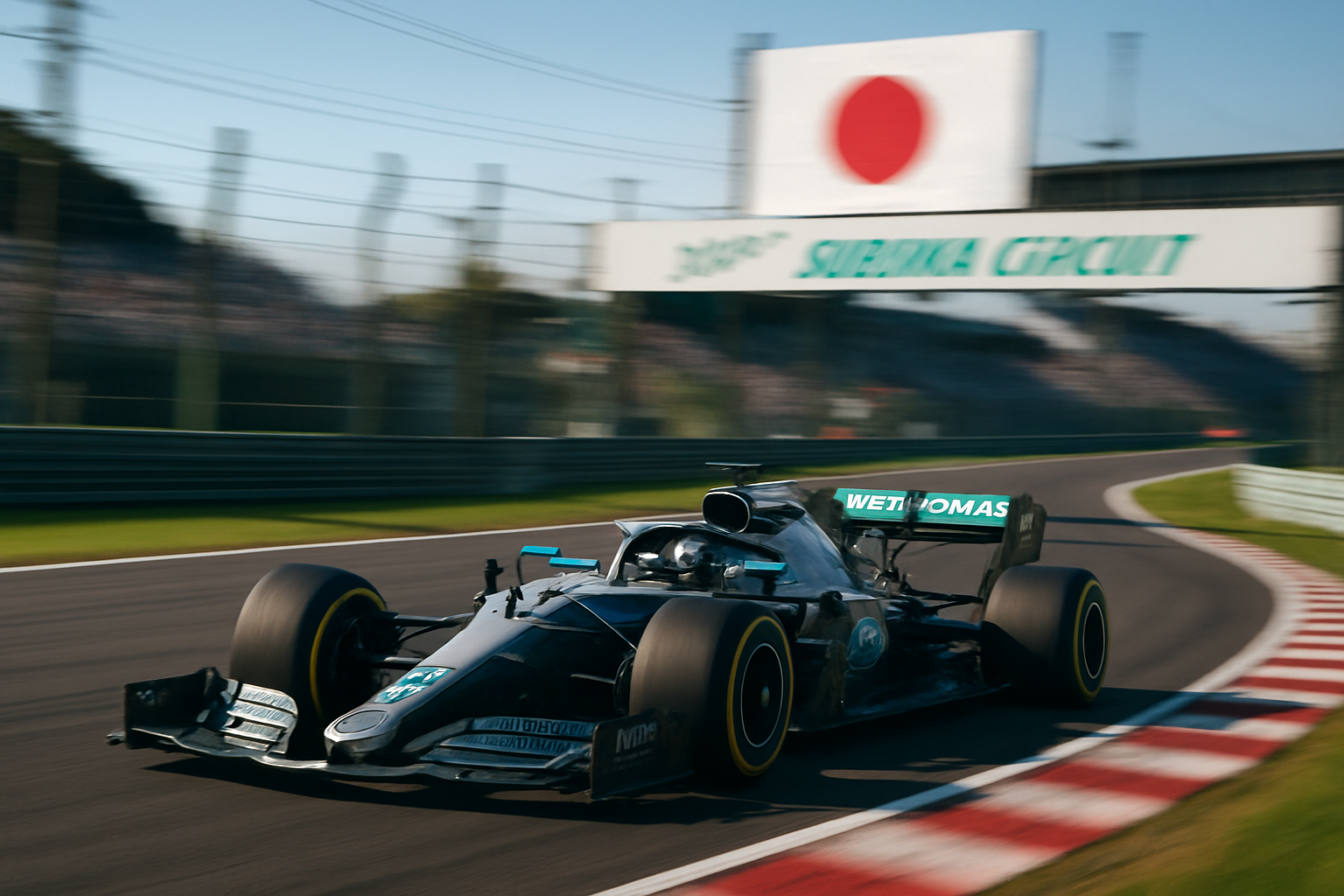
Kimi Antonelli claimed his second consecutive Formula 1 victory at the Japanese Grand Prix on Sunday, becoming the youngest driver in the sport's history to lead the world championship at just 19 years old.
The Italian Mercedes driver secured victory at Suzuka International Racing Circuit after a dramatic safety car intervention changed the complexion of the race. Antonelli, who had yet to make his mandatory pit stop when Oliver Bearman crashed and triggered the safety car, retained track position while his main rivals had already serviced their cars.
The victory marks a remarkable continuation of Antonelli's meteoric rise in Formula 1, following his breakthrough maiden win at the Chinese Grand Prix just two weeks ago. Starting from pole position, Antonelli initially struggled with a poor getaway that dropped him to fifth place early in the race.
Safety Car Changes Everything
The race had developed into a strategic battle between Oscar Piastri in the McLaren and George Russell in the second Mercedes, with both drivers having completed their pit stops ahead of the safety car period. Antonelli's Mercedes teammate Russell immediately understood the implications of the timing, exclaiming "unbelievable" over team radio as the situation became clear.
"I had yet to make my stop when the safety car came out," Antonelli explained after the race. "The team called me in immediately, and suddenly I found myself in the lead. Sometimes you need a bit of luck in this sport, but we were in the right position to capitalize."
The safety car was deployed after Haas driver Oliver Bearman lost control of his car and crashed heavily into the barriers, requiring crane recovery. The timing proved crucial for Antonelli's championship aspirations, allowing him to make his mandatory tire change under caution while maintaining track position over his rivals.
Championship Mathematics
With his victory at Suzuka, Antonelli now leads the drivers' championship with 72 points, nine points ahead of his Mercedes teammate George Russell who finished fourth. The Italian's remarkable start to his rookie season has defied all expectations, particularly given the revolutionary nature of the 2026 technical regulations.
This season marks the first time in Formula 1 history that both chassis and power unit regulations have been changed simultaneously, creating unprecedented challenges for teams and drivers alike. The introduction of VAR (Video Assistant Referee) technology has also transformed race officiating, providing enhanced incident review capabilities.
Oscar Piastri finished second in his McLaren, continuing his strong form after missing the previous two races due to a formation lap crash in Australia and absence from the Chinese Grand Prix. Charles Leclerc secured the final podium position for Ferrari, demonstrating the competitive balance in F1's new era.
Historic Achievement
At 19 years old, Antonelli has shattered multiple records during his brief Formula 1 career. Beyond becoming the youngest championship leader in the sport's 74-year history, he previously became the second-youngest race winner ever with his triumph in China. Only Max Verstappen has won a Grand Prix at a younger age.
The Bologna native's rapid ascension has been particularly remarkable given Mercedes' previous struggles to adapt to recent regulatory changes. The W17 chassis has proven superior in adapting to the 2026 technical revolution, validating the team's development approach during the sport's most comprehensive regulatory overhaul in decades.
"This feels incredible, but I know it's just the beginning," Antonelli said during the post-race press conference. "The season is long, and we need to maintain this momentum. The team has given me an incredible car, and George has been an amazing teammate to learn from."
— Kimi Antonelli, Mercedes Driver
Mercedes Dominance Returns
Mercedes' early-season success represents a dramatic turnaround from their recent competitive struggles. The team now leads both the constructors' and drivers' championships, with their driver pairing of Russell and Antonelli proving formidable during this transitional period in Formula 1.
Team Principal Toto Wolff praised Antonelli's maturity and adaptability, noting the young driver's ability to handle pressure while learning from his more experienced teammate. The Austrian had previously joked about Antonelli's first visit to the Mercedes factory, describing him as looking "like a lost child searching for his parents."
The victory at Suzuka continues Mercedes' impressive start to the 2026 season, following Russell's triumph at the Australian Grand Prix and their dominant front-row lockouts in qualifying sessions. The team's technical approach to the revolutionary regulations appears to have provided them with a significant advantage over their competitors.
Championship Context
The 2026 Formula 1 season has been marked by unprecedented challenges, both technical and operational. The simultaneous overhaul of chassis and power unit regulations, combined with the introduction of VAR technology, has created the most unpredictable championship in recent memory.
Global events have also affected the sport, with the Bahrain and Saudi Arabian Grands Prix cancelled due to Middle East conflicts – the first race cancellations due to regional warfare in F1's modern history. These disruptions have reduced the championship from 24 to 22 rounds, making every point crucial in the title fight.
Despite starting from pole position, Antonelli's victory required both skill and fortune. His poor start dropped him down the order, but the Italian driver demonstrated remarkable composure to position himself perfectly for the safety car intervention that ultimately secured his victory.
Looking Ahead
With his historic achievement at Suzuka, Antonelli has established himself as a genuine championship contender in his rookie season. The young Italian's rapid development, combined with Mercedes' technical superiority under the new regulations, suggests the championship battle could be decided between the Silver Arrows teammates.
The victory also reinforces Italy's return to Formula 1 prominence, with Antonelli becoming the first Italian to win an F1 race in over two decades. His success comes during a period of renewed Italian motorsport excellence, demonstrating the country's continued commitment to developing young racing talent.
As the championship heads into its next phase, all eyes will be on whether Antonelli can maintain his remarkable form and become the youngest world champion in Formula 1 history. With 20 races remaining in the shortened season, the teenager has positioned himself perfectly to challenge for motorsport's ultimate prize.