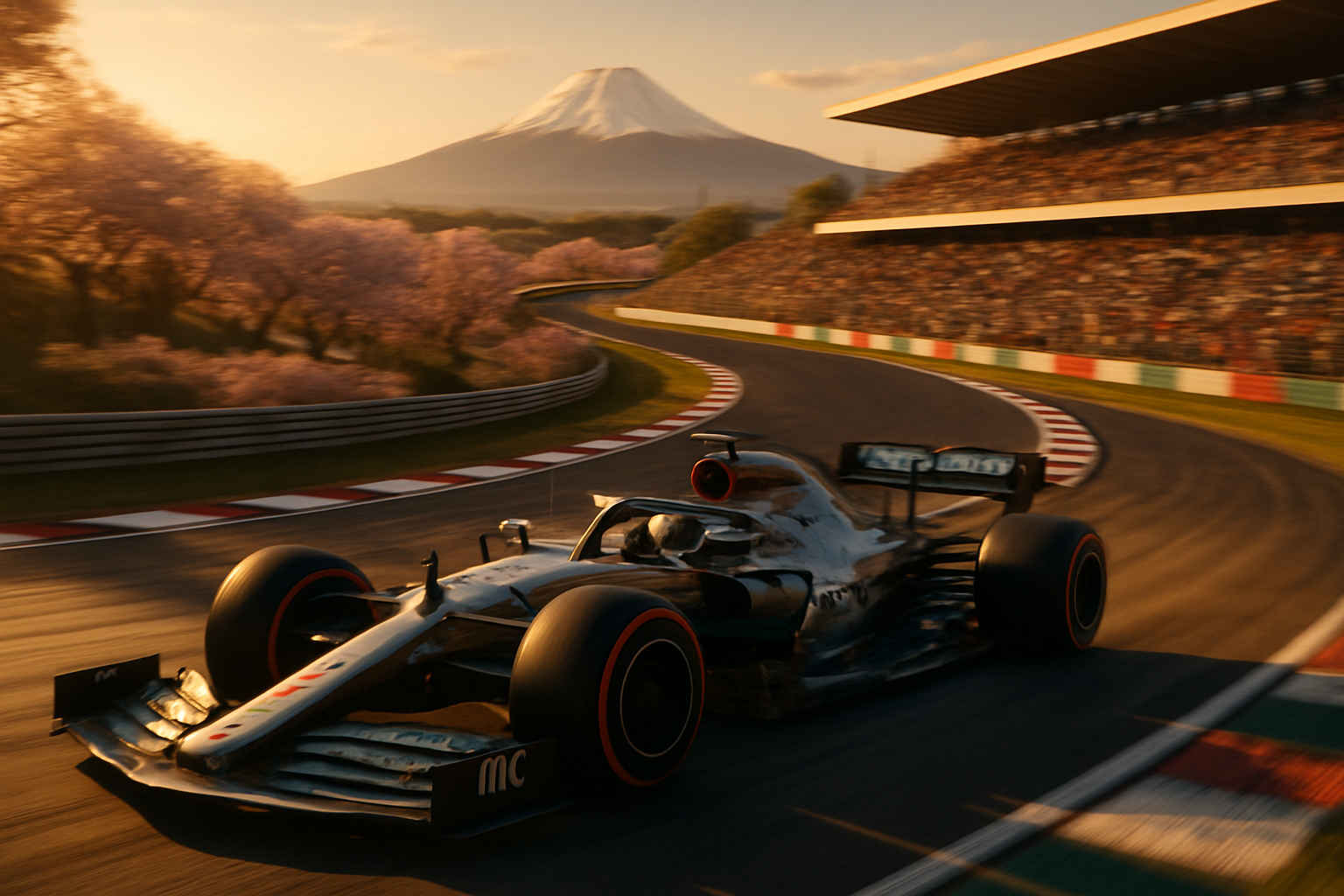
Italian teenager Kimi Antonelli has secured his second consecutive pole position at the Japanese Grand Prix, leading a Mercedes front-row lockout as the young driver continues his remarkable start to the 2026 Formula 1 season at the iconic Suzuka International Racing Circuit.
The 19-year-old Mercedes driver beat teammate George Russell to pole position on Saturday, marking back-to-back poles following his breakthrough victory at the Chinese Grand Prix two weeks ago. The result positions Mercedes perfectly for Sunday's race as they seek to extend their dominant start to F1's revolutionary 2026 season.
Mercedes Dominance Continues at Suzuka
Mercedes' front-row lockout represents the continuation of their exceptional form since the season opener, with the team's W17 chassis proving superior in adapting to the sport's most comprehensive technical regulation changes in over two decades. The Silver Arrows have locked out the front row for the third time this season, demonstrating consistent pace across different circuit characteristics.
Australia's Oscar Piastri qualified third for McLaren, giving the local crowd at Suzuka reason for optimism as he continues his strong form following disappointment at his home Australian Grand Prix. The McLaren driver has shown remarkable consistency throughout the early rounds of the championship.
"The car feels incredible here at Suzuka. The team has done an amazing job with the setup, and to get another pole position feels fantastic."
— Kimi Antonelli, Mercedes
Championship Battle Intensifies
Antonelli's pole position comes as part of his meteoric rise in Formula 1, following his historic victory in China where he became the second-youngest winner in F1 history. The Bologna-born driver has seamlessly integrated into Mercedes alongside Russell, forming what many consider the sport's most formidable driver pairing.
Charles Leclerc managed to qualify his Ferrari in fourth position, while six-time champion Lewis Hamilton found himself down in sixth place, highlighting the challenges even experienced drivers face with the 2026 cars described as "much more sensitive" than their predecessors.
The qualifying session took place without major incident, though several teams continued to struggle with the new technical regulations. The simultaneous chassis and power unit changes for 2026 have created unprecedented challenges, with traditional hierarchies disrupted as teams adapt to the revolutionary rule changes.
Technical Revolution Creates Opportunities
The 2026 season represents the most significant regulatory overhaul in Formula 1 history, with chassis and power unit regulations changing simultaneously for the first time in over 20 years. These changes, combined with the introduction of VAR (Video Assistant Referee) technology - a first in motorsport - have created the most unpredictable season in recent memory.
Mercedes' success in adapting to these changes has positioned them as early championship favorites, with both drivers showing exceptional pace and consistency. The team's technical approach appears to have unlocked performance potential that other constructors are still struggling to find.
The new regulations have also created opportunities for breakthrough performances, as evidenced by Antonelli's rapid ascent and the general competitiveness of the field. Traditional powerhouses like Red Bull have faced adaptation challenges, while Mercedes has emerged from their previous struggles to reclaim championship contention.
Global Challenges Add Context
The Japanese Grand Prix weekend has proceeded smoothly despite ongoing global aviation disruptions affecting Formula 1 logistics. The sport has successfully navigated complex international travel challenges, with teams implementing sophisticated contingency plans to ensure the championship continues uninterrupted.
These logistical achievements demonstrate Formula 1's operational resilience during a period of unprecedented global uncertainty, while maintaining the highest levels of competition and safety standards that define the sport.
Looking Ahead to Sunday's Race
Sunday's Japanese Grand Prix promises to deliver exceptional racing, with Mercedes positioned to potentially secure another commanding one-two finish. However, the characteristics of the Suzuka circuit and the unpredictable nature of the 2026 cars suggest that the race outcome remains far from certain.
Piastri's third-place qualifying position gives McLaren hope of challenging Mercedes' dominance, while Ferrari and other constructors will be looking to capitalize on any opportunities that arise during the 53-lap race around one of Formula 1's most demanding circuits.
The Japanese Grand Prix represents another crucial step in what is shaping up to be one of the most compelling Formula 1 seasons in history, with technical innovation, emerging talent, and established excellence combining to create unprecedented levels of competition and uncertainty.