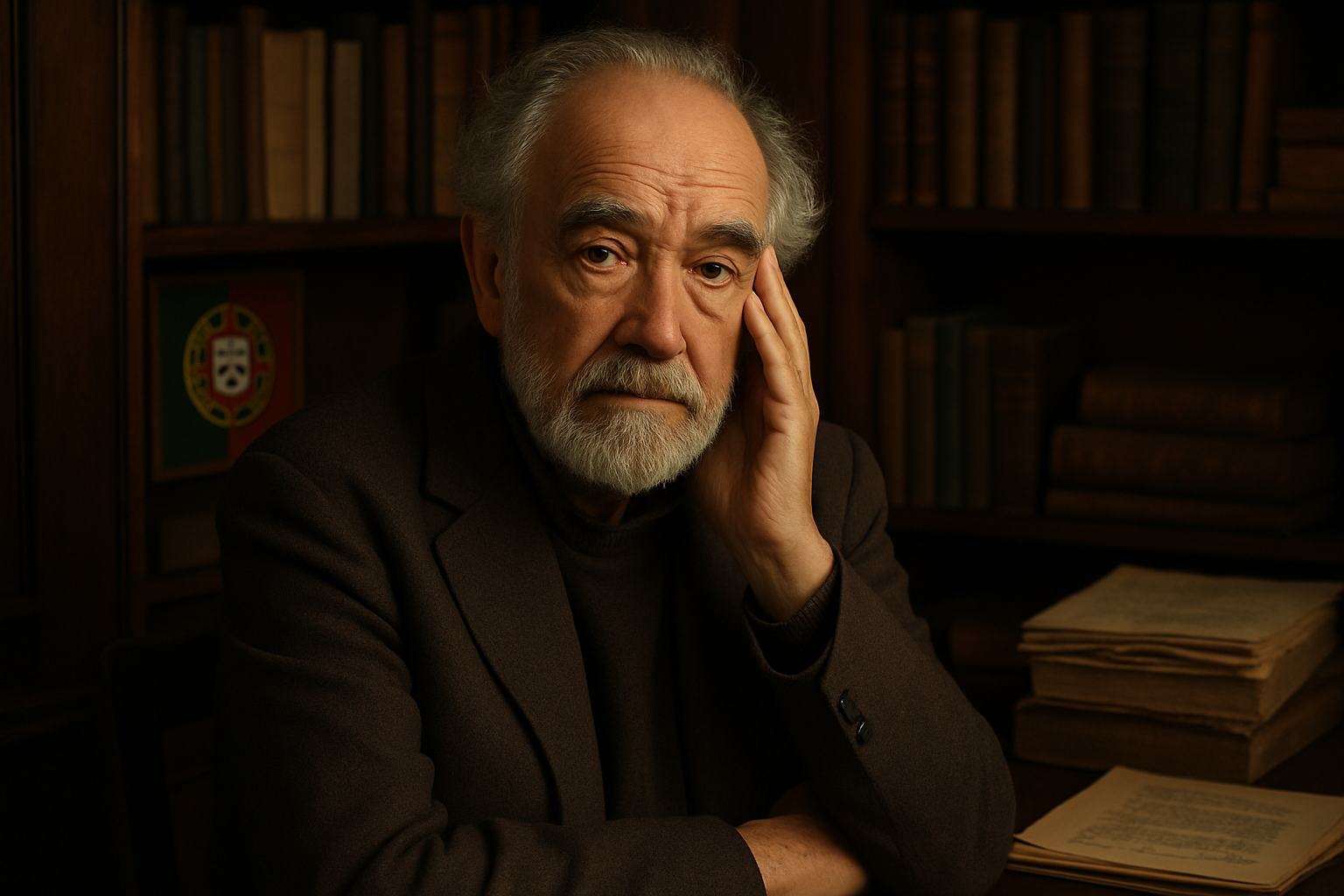
António Lobo Antunes, one of Portugal's most celebrated and internationally recognized writers, died Thursday in Lisbon at the age of 83, marking the end of an era for Portuguese literature and leaving an immense void in the global literary community.
The acclaimed novelist, who was frequently mentioned as a contender for the Nobel Prize in Literature, passed away after a distinguished career spanning more than four decades. His death prompted immediate national mourning, with the Portuguese government declaring a day of National Mourning for Saturday, the day of his funeral.
A Literary Colossus on the World Stage
Lobo Antunes was widely regarded as one of the most important Portuguese-language writers of our time, with his works translated into numerous languages and garnering critical acclaim worldwide. International media outlets described him as a "colossus" and an "icon," reflecting his towering influence on contemporary literature.
The Spanish newspaper El País noted the injustice that the Nobel Prize, which many believed he deserved, never materialized, describing his passing as leaving a "black hole" in the literary landscape. This sentiment was echoed across European media, highlighting the profound impact of his work beyond Portuguese borders.
Born in 1942, Lobo Antunes trained as a psychiatrist but always knew his true calling lay in writing. As he once reflected in a 2004 interview with PÚBLICO, "I don't write books. It's my hand, autonomous," suggesting the almost involuntary nature of his creative process and his deep connection to the act of writing.
A Master of Irony and Social Commentary
Throughout his prolific career, Lobo Antunes produced a demanding body of work that masterfully revealed the internal conflicts of contemporary Portuguese society through irony and psychological depth. His novels were characterized by their complex narrative structures and unflinching examination of Portuguese history, particularly the colonial wars in Africa and their aftermath.
His bibliography was enormous both in scope and impact, with PÚBLICO selecting ten essential books from his work spanning from 1979 to 2022. From his debut novel to his final works, Lobo Antunes consistently demonstrated an ability to blend personal trauma with collective memory, creating narratives that resonated with readers across different cultures and languages.
"I never thought of being anything other than a writer. I was a psychiatrist, but I never considered myself anything but a writer."
— António Lobo Antunes
National Honors and Final Farewell
In recognition of his immense contribution to Portuguese culture, Lobo Antunes' body will lie in state at the Church of Santa Maria de Belém in the Jerónimos Monastery from 4:00 PM on Friday. The choice of this historic and symbolic location underscores the national significance of his literary legacy.
The funeral will take place on Saturday, coinciding with the government-declared day of National Mourning. This rare honor, reserved for figures of exceptional national importance, reflects the profound impact Lobo Antunes had not only on Portuguese literature but on the cultural identity of the nation itself.
International Recognition and Cultural Impact
The timing of Lobo Antunes' death comes during what scholars have termed the "February-March 2026 Cultural Renaissance," a period of unprecedented international literary recognition and cooperation. His passing adds poignancy to this moment of cultural celebration, serving as a reminder of the mortality of even the greatest artistic voices.
The international literary community had recently been celebrating achievements in Portuguese literature, with Gonçalo M. Tavares receiving the 2026 Formentor Prize for Letters, positioning Portuguese writers among the most celebrated in the Iberian Peninsula. Lobo Antunes' death represents the end of an era, but also the continuation of a rich Portuguese literary tradition that he helped establish on the world stage.
A Complex Legacy of Truth and Memory
Lobo Antunes' work was deeply rooted in his experiences as a psychiatrist and as a participant in Portugal's colonial wars in Angola. This unique combination of professional insight into the human psyche and personal experience of historical trauma informed his writing throughout his career.
His novels often explored themes of memory, guilt, and the psychological aftermath of Portugal's colonial period. Through his distinctive narrative voice, he gave literary form to collective experiences that had been difficult to articulate, making him an essential chronicler of Portuguese identity in the late 20th and early 21st centuries.
The author's approach to literature was notably uncompromising. He rejected simplistic interpretations of his work and consistently challenged readers to engage with complex emotional and historical realities. This dedication to artistic integrity, rather than commercial appeal, earned him respect from critics and fellow writers worldwide.
The End of an Era
With Lobo Antunes' passing, Portuguese literature loses one of its most distinctive voices at a time when the country's cultural output is receiving renewed international attention. His death comes as Portugal continues to navigate contemporary challenges while reflecting on its historical legacy—themes that were central to much of his work.
The writer's influence extended beyond literature into broader discussions about art, memory, and national identity. His novels served as a bridge between Portugal's complex past and its evolving present, offering readers both Portuguese and international a deeper understanding of the country's cultural and psychological landscape.
As tributes pour in from around the world, it becomes clear that Lobo Antunes' impact transcended national boundaries. His exploration of universal themes through the specific lens of Portuguese experience created works that spoke to readers regardless of their cultural background.
A Literary Legacy for Future Generations
The monumental nature of Lobo Antunes' literary output ensures that his influence will continue long after his death. His novels, with their intricate psychological portraits and innovative narrative techniques, provide a masterclass in contemporary fiction that will inspire future generations of writers.
His passing marks not just the loss of a great writer, but the end of a particular era in Portuguese literature—one defined by the intersection of personal trauma and historical reckoning. The funeral ceremonies and national mourning period provide an opportunity for Portugal to reflect on the enormous contribution Lobo Antunes made to the nation's cultural heritage.
As the literary world mourns the loss of this towering figure, his works remain as a testament to the power of literature to illuminate the complexities of human experience. António Lobo Antunes may be gone, but his literary legacy will continue to resonate with readers around the world for generations to come.