Lieutenant Colonel Antonio Tejero Molina, the Civil Guard officer who became the enduring symbol of Spain's failed coup attempt on February 23, 1981, died Wednesday at age 93, marking the end of one of the most controversial chapters in Spain's democratic transition.
Tejero's death was announced by one of his sons and the family's lawyer to Spanish media, occurring on the same day the Spanish government declassified over 150 secret documents related to the 23-F coup attempt. The symbolic timing underscores the lasting impact of events that nearly derailed Spain's young democracy just six years after Francisco Franco's death.
The Dramatic Coup That Shocked Spain
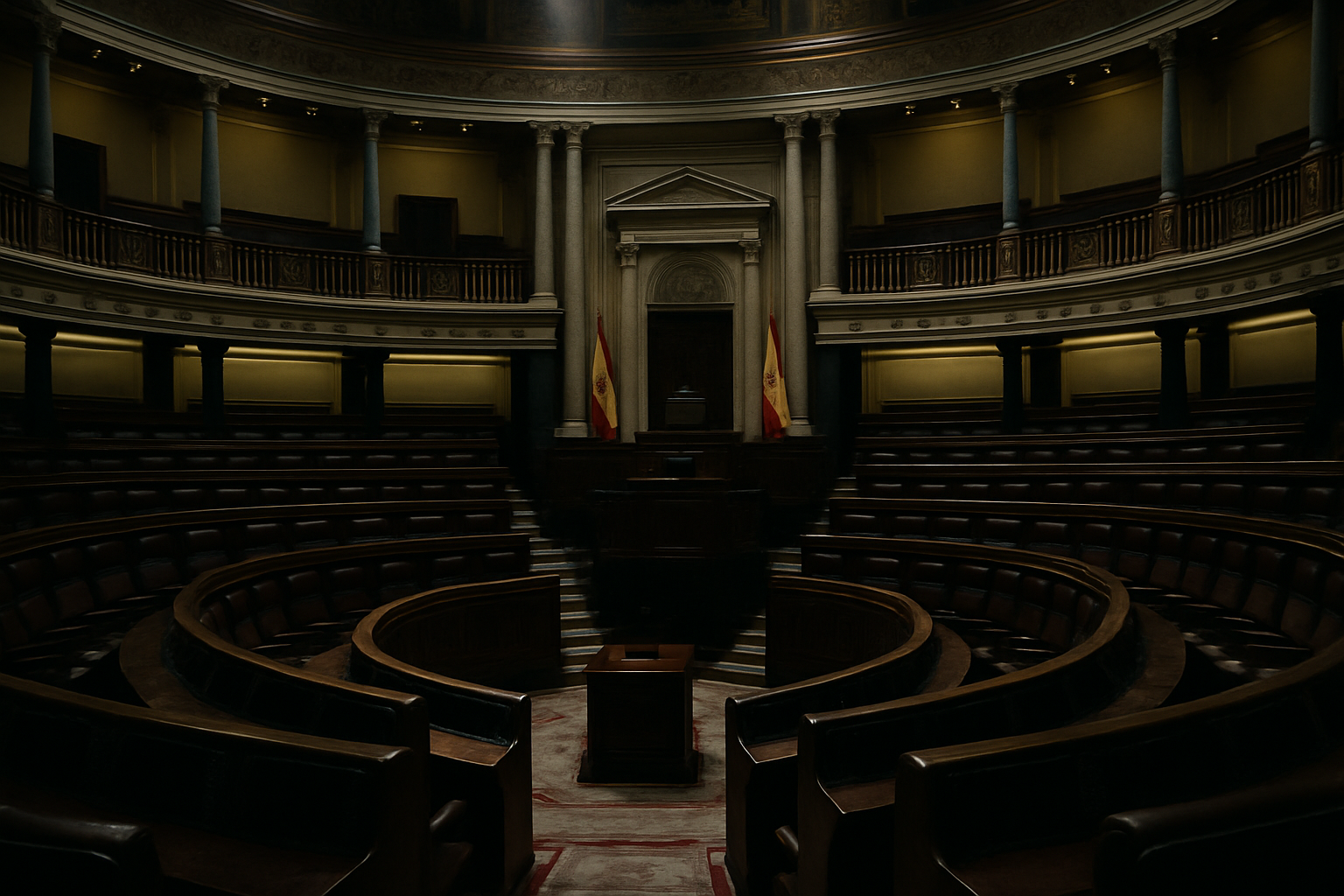
On February 23, 1981, Tejero burst into the Spanish Congress of Deputies during the investiture vote for Prime Minister Leopoldo Calvo Sotelo, shouting "¡Quieto todo el mundo!" ("Everyone stay still!") while brandishing a pistol. For 17 harrowing hours, he held the government and parliamentarians hostage in what became known as 23-F, after the date of the failed putsch.
The coup involved three coordinated operations, according to newly declassified intelligence documents. Tejero led what authorities described as the least sophisticated but most visible element—a group of "spontaneous" conspirators who believed their dramatic action would trigger broader military support across Spain's armed forces.
"They were convinced that if 'someone' (a small but sufficient military nucleus) posed the fact of the coup, the rest of the Armed Forces would join or at least not prevent it by force."
— Anonymous intelligence document, November 1980
The conspiracy ultimately failed when King Juan Carlos I appeared on television in the early hours of February 24, firmly rejecting the coup attempt and ordering military commanders to remain loyal to the constitutional order. The monarch's decisive intervention proved crucial in preserving Spain's nascent democracy.
A Life Defined by Conspiracy
Born in 1932, Tejero had previously participated in the failed "Operation Galaxia" coup plot in 1978, for which he served seven months in prison. His involvement in conspiracy dated back years before the dramatic 23-F events that would define his public legacy.
The newly declassified documents reveal that intelligence services were already monitoring Tejero's activities by November 1980, three months before the coup attempt. One handwritten intelligence report noted his role in the previous conspiracy: "He had a hint in the Galaxy operation."
Following the failed 1981 coup, Tejero was sentenced to 30 years in prison for military rebellion. However, he served only half his sentence, being released in 1996. Even in recent years, he maintained his radical positions—in March 2025, at age 92, he signed a manifesto supporting Franco alongside other retired military officers and far-right figures.
The Coup's Broader Context
The declassified documents, released coincidentally on the day of Tejero's death, provide unprecedented insight into the complexity of the 23-F conspiracy. Intelligence reports describe three separate military plots in motion during late 1980 and early 1981, with Tejero's group representing just one strand of a broader web of anti-democratic plotting.
The conspiracy involved not only military officers but also intelligence operatives. The documents reveal that six agents from CESID (Spain's intelligence service) "participated actively" in coup planning and subsequent cover-up operations under Commander José Cortina's AOME unit.
Particularly revealing are intercepted phone conversations, including calls from Tejero's wife, Carmen Díez, who was recorded saying her husband was "tonto" (stupid) and "desgraciao" (wretched), lamenting that "the Army was behind him and they left him abandoned like a cigarette butt."
International Ramifications and Royal Resistance
The newly released files document extensive conversations between coup leaders and the Royal Palace during the crisis hours. King Juan Carlos I's refusal to support the conspiracy proved decisive, with the monarch telling General Jaime Milans del Bosch: "I swear that I will neither abdicate the Crown nor abandon Spain. Whoever rebels is prepared to provoke, and will be responsible for it, a new civil war."
Intelligence documents also reveal a sophisticated disinformation campaign designed to falsely implicate the King in the coup attempt—a strategy that failed due to Juan Carlos I's unwavering support for constitutional democracy.
"The first error of the coup plotters was leaving the Bourbon free and treating him as if he were a gentleman."
— Post-coup analysis document found in a military officer's home
Legacy of Democratic Resilience
Tejero's death comes at a moment when Spain continues to grapple with the legacy of the Franco dictatorship and the fragility of democratic institutions. Former Prime Minister Felipe González, speaking at a Senate event on the day of Tejero's death, defended King Juan Carlos I's role in the 23-F crisis as "not only exemplary but decisive" for guaranteeing constitutional continuity.
The failed coup represented the most serious threat to Spanish democracy since Franco's death in 1975. Its failure helped consolidate Spain's democratic transition and demonstrated the resilience of the country's new constitutional system.
The declassified documents reveal the extent to which Spain's intelligence services were compromised by anti-democratic elements, highlighting vulnerabilities that existed during the crucial transition period. The systematic exposure of this intelligence failure provides important lessons for democratic oversight of security services.
A Controversial Figure to the End
Throughout his life, Tejero never fully accepted Spain's democratic transformation. His participation in pro-Franco manifestos as recently as 2025 demonstrated his unwavering commitment to authoritarian ideologies, even decades after his failed attempt to overthrow democracy.
The timing of his death, coinciding with the government's decision to declassify the 23-F documents, provides a final chapter to one of the most dramatic episodes in modern Spanish history. These documents, representing the largest release of classified material about the coup attempt, offer unprecedented transparency about events that shaped contemporary Spain.
Historians note that the 23-F coup attempt, while unsuccessful, served as a crucial test of Spain's democratic institutions. The failure of the conspiracy and the subsequent prosecution of its leaders helped establish the principle that no one, regardless of military rank or political position, is above the law in democratic Spain.
Historical Assessment
The coup attempt exposed deep divisions within Spanish society about the pace and direction of democratic change. Military officers who participated in the conspiracy represented elements within the armed forces who remained nostalgic for the Franco regime and suspicious of Spain's rapid democratic transformation.
However, the conspiracy's failure also demonstrated that by 1981, democratic institutions had gained sufficient strength and legitimacy to withstand a serious challenge. The decisive role of King Juan Carlos I, the loyalty of most military commanders to constitutional order, and the firm rejection of the coup by Spanish society all contributed to democracy's survival.
The 23-F events ultimately strengthened Spanish democracy by clearly establishing that military intervention in politics would not be tolerated. The successful prosecution of coup leaders sent a powerful message about the rule of law's supremacy over military authority.
Antonio Tejero's death at 93 closes a chapter on one of Europe's last serious military coup attempts. His legacy serves as a reminder of democracy's fragility and the constant vigilance required to protect constitutional order against those who would undermine it through force.
The declassification of the 23-F documents on the day of his death ensures that future generations will have access to the full historical record of these crucial events, providing transparency about a dark chapter that ultimately helped strengthen Spain's democratic foundations.