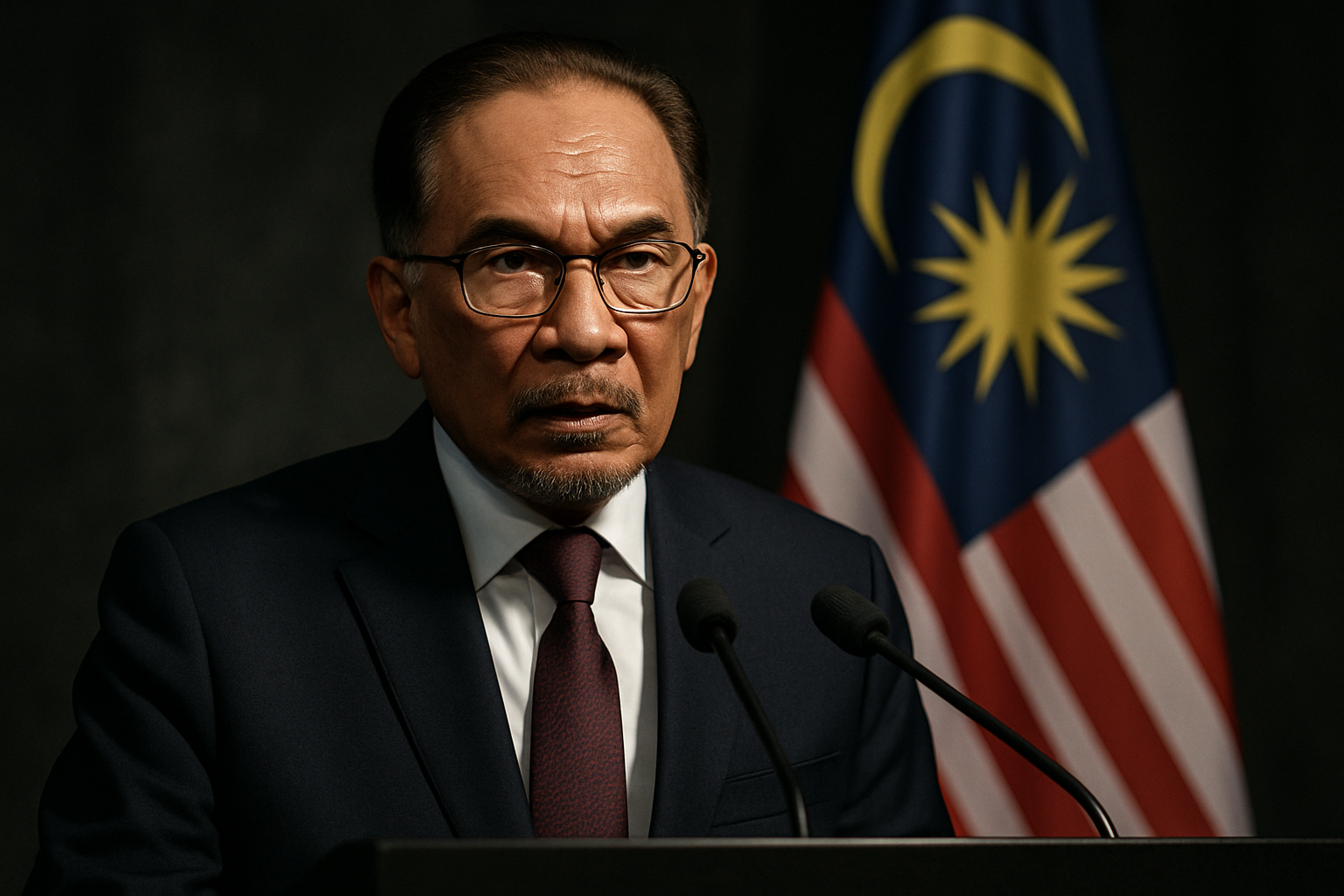
Prime Minister Anwar Ibrahim has delivered a forceful response to critics questioning his government's commitment to defending Islam, declaring on social media that "claims of non-action do not make it true," sparking an intense political debate about religious governance in Malaysia.
The sharp retort, delivered through Anwar's official social media channels on Monday, represents a significant escalation in tensions between the Prime Minister's office and various religious and political critics who have accused the Pakatan Harapan government of failing to adequately protect Islamic values and institutions in Malaysia's multi-religious society.
The Criticism and Counter-Attack
The controversy centers on persistent claims from opposition politicians, religious leaders, and conservative groups that Anwar's administration has been insufficiently robust in defending Islam's position as Malaysia's official religion. Critics have pointed to various policy decisions and public statements as evidence of what they characterize as a weakening commitment to Islamic principles in governance.
Anwar's social media response, described by political observers as unusually direct for the typically diplomatic Prime Minister, appears designed to counter what his supporters see as unfair characterizations of the government's religious stance. The phrase "claims of non-action do not make it true" suggests frustration with what the Prime Minister views as politically motivated attacks rather than legitimate policy concerns.
"The government's record speaks for itself in terms of our commitment to Islamic values while maintaining Malaysia's multicultural harmony."
— Senior Government Source
Religious Policy Under Scrutiny
The debate reflects deeper tensions within Malaysian society about balancing the country's Islamic identity with its diverse religious landscape. Malaysia's Constitution establishes Islam as the official religion while guaranteeing freedom of worship for other faiths, creating an ongoing balancing act for any government.
Recent policy decisions that have drawn criticism include approaches to interfaith dialogue, religious education reforms, and responses to various religious controversies. Critics argue these demonstrate insufficient prioritization of Islamic concerns, while government supporters maintain they reflect responsible governance of a diverse society.
The timing of this clash is particularly significant given Malaysia's current political landscape, where religious identity often intersects with partisan politics. Opposition parties, particularly those with strong Islamic credentials like PAS (Parti Islam Se-Malaysia), have regularly challenged the government's Islamic bona fides as part of broader political strategy.
Historical Context of Religious Politics
Malaysia's relationship between religion and politics has evolved significantly since independence, with various administrations taking different approaches to Islamic governance. Anwar's own political journey - from Islamic student leader to opposition figure to Prime Minister - gives particular weight to debates about his religious credentials.
The current controversy echoes similar debates that have occurred throughout Malaysian political history, where questions of Islamic authenticity and commitment regularly surface in political discourse. These debates often reflect competing visions of how Islam should influence public policy in a diverse society.
Religious scholars and political analysts note that such controversies typically intensify during periods of political uncertainty or when governments face other pressures, suggesting the current debate may reflect broader political dynamics beyond purely religious concerns.
Opposition Response
The Prime Minister's sharp response has drawn immediate reaction from various quarters, with critics interpreting his tone as defensive and potentially dismissive of legitimate religious concerns. Opposition figures have seized on the social media post as evidence of what they characterize as the government's increasingly combative approach to religious criticism.
Some religious leaders have called for more substantive dialogue about Islamic governance rather than social media exchanges, arguing that complex religious policy questions require deeper engagement than brief public statements can provide.
The controversy has also highlighted divisions within Malaysia's Islamic community, with some supporting the government's balanced approach while others push for more assertive Islamic policies. These internal debates reflect broader questions about Islam's role in modern Malaysian society.
Implications for Malaysian Politics
The escalation of this religious policy debate carries significant implications for Malaysia's political landscape. Religious credentials remain crucial for political legitimacy in Malaysia, making such controversies particularly sensitive for any government.
Political observers note that Anwar's decision to respond so directly suggests recognition that religious criticism poses a genuine political threat that requires active counter-messaging. This represents a shift from earlier periods when such criticism might have been addressed through more traditional diplomatic channels.
The debate also reflects broader global trends where religious identity increasingly intersects with political competition, creating challenges for leaders attempting to govern diverse societies while maintaining support from religious constituencies.
Looking Forward
As this controversy continues to unfold, it highlights fundamental questions about religious governance in contemporary Malaysia. The challenge facing Anwar's government is how to maintain Islamic credentials while governing a diverse society and addressing various other policy priorities.
The resolution of this debate may influence broader approaches to religious policy and political discourse in Malaysia, potentially setting precedents for how future governments navigate similar challenges. The intensity of the current exchanges suggests these issues will remain central to Malaysian political debate.
For Malaysia's diverse population, the outcome of this religious policy debate carries implications beyond politics, potentially affecting interfaith relations and the country's broader approach to religious diversity in an increasingly connected world.