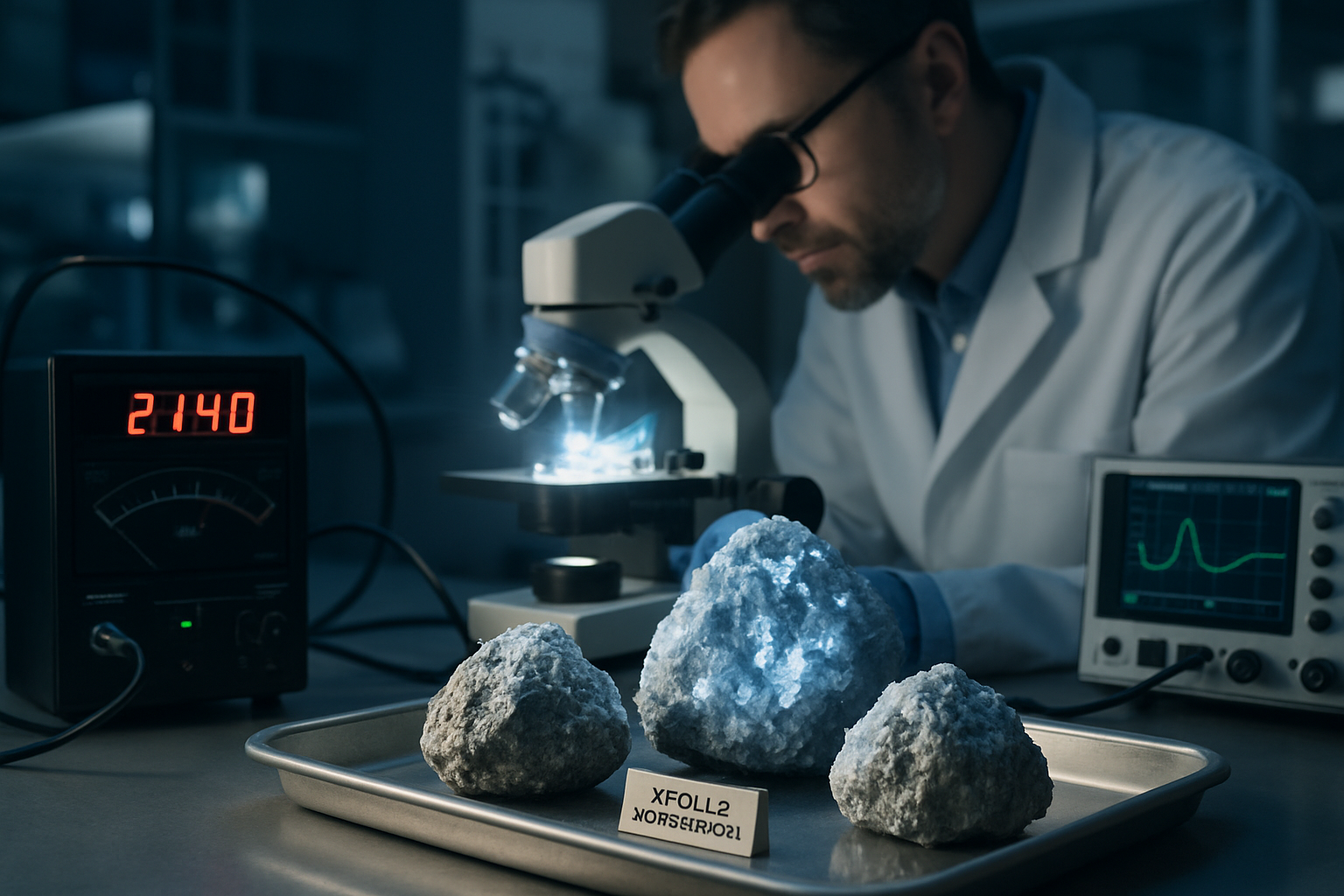
Scientists have finally solved a decades-old puzzle that has confounded researchers since the Apollo missions brought the first lunar samples back to Earth over 50 years ago: the presence of strong magnetic anomalies in Moon rocks from a celestial body that theoretically should never have possessed a magnetic field.
The groundbreaking discovery, reported by Austrian researchers and corroborated by international space agencies, represents a significant milestone in lunar geology that directly impacts current space exploration efforts, including NASA's Artemis program and the broader international push toward sustained lunar presence.
The Apollo Magnetic Mystery
When Apollo astronauts first returned with lunar samples between 1969 and 1972, scientists were puzzled to find strong magnetization in the rock specimens. According to established planetary science theory, the Moon should never have generated the dynamo effect necessary to create a magnetic field - it lacks the size, internal structure, and molten core dynamics that power Earth's magnetic field.
"The Moon was supposed to be magnetically dead," explains Dr. Sarah Chen, a planetary geologist at the International Lunar Research Institute who was not involved in the original research. "These magnetic signatures in Apollo samples have been one of the most persistent mysteries in planetary science."
The Austrian research team, working with advanced spectroscopic analysis techniques unavailable during the Apollo era, has now provided a comprehensive explanation for these magnetic anomalies that has eluded scientists for five decades.
Modern Technology Unlocks Ancient Secrets
The breakthrough came through applying cutting-edge analytical methods to the carefully preserved Apollo samples. Using sophisticated spectroscopic techniques, researchers were able to examine the mineral composition and magnetic properties of lunar rocks at an unprecedented level of detail.
The key finding centers on the Moon's early geological history. During its formation approximately 4.5 billion years ago, the Moon experienced a period of intense bombardment and heating that created temporary conditions capable of generating localized magnetic fields. These conditions, while brief in geological terms, were sufficient to magnetize certain mineral components within the lunar rocks.
Additionally, the research revealed that impact events from meteorites and asteroids during the Moon's early history could have created temporary magnetic fields through the extreme pressures and temperatures generated during these collisions. This process, known as shock magnetization, left permanent magnetic signatures in the affected rock formations.
Implications for Artemis and Future Lunar Missions
The resolution of this scientific puzzle has immediate practical implications for NASA's Artemis program and other international lunar exploration initiatives. Understanding the Moon's magnetic properties is crucial for several aspects of future lunar operations.
First, the magnetic anomalies affect navigation systems and electronic equipment on the lunar surface. The Artemis missions, designed to establish a sustainable human presence on the Moon, require precise knowledge of local magnetic conditions to ensure proper functioning of sensitive instruments and communication systems.
"This research provides essential data for selecting optimal landing sites and planning habitat placement for future lunar settlements."
— Dr. Maria Rodriguez, Artemis Mission Planning Director
Second, the magnetic signatures serve as a geological roadmap, helping scientists identify areas of particular scientific interest and potential resource deposits. The correlation between magnetic anomalies and specific geological formations provides valuable targeting information for future robotic and crewed exploration missions.
A Testament to Scientific Persistence
The solution to this decades-old mystery demonstrates the importance of preserving scientific samples for future analysis. The Apollo lunar samples, carefully curated by NASA's Johnson Space Center for over 50 years, continue to yield new discoveries as analytical technology advances.
This research also highlights the value of international scientific collaboration. The Austrian team's work builds upon decades of analysis by researchers from multiple countries, each contributing pieces to the overall puzzle through their unique expertise and technological capabilities.
The timing of this discovery is particularly significant as it coincides with renewed global interest in lunar exploration. With NASA's Artemis program facing technical delays but maintaining momentum toward its 2028 lunar landing goal, China's expanding Shenlong spacecraft capabilities, and Europe's growing launch independence through the Ariane program, comprehensive understanding of lunar geology has never been more critical.
Beyond Earth's Orbit
The magnetic anomaly research also provides insights relevant to understanding other planetary bodies. The processes identified in lunar rock formation may be applicable to Mars, asteroids, and moons throughout the solar system, informing future robotic missions and eventual human exploration of these distant worlds.
As space agencies prepare for the next phase of lunar exploration, this breakthrough ensures that future missions will be better equipped with fundamental knowledge about the Moon's geological and magnetic properties. The research validates the scientific methodology behind careful sample preservation and the continuous application of improving analytical techniques to historical specimens.
Looking Forward
The success in solving this Apollo-era mystery comes at a crucial moment in space exploration history. As international crews aboard the International Space Station conduct research essential for deep space missions, including studies on Space-Associated Neuro-Ocular Syndrome and lung tissue cultivation, the lunar magnetic anomaly breakthrough adds another critical piece to humanity's expanding knowledge of space environments.
With SpaceX preparing for its potential trillion-dollar IPO and pivoting toward lunar colonization, the European Space Agency advancing its independent launch capabilities, and emerging nations joining the space exploration community, comprehensive lunar science forms the foundation for sustainable human expansion beyond Earth.
The resolution of the Apollo magnetic mystery represents more than just academic satisfaction - it provides practical knowledge essential for the next generation of lunar explorers who will build upon the achievements of the Apollo astronauts to establish humanity's first permanent foothold on another world.