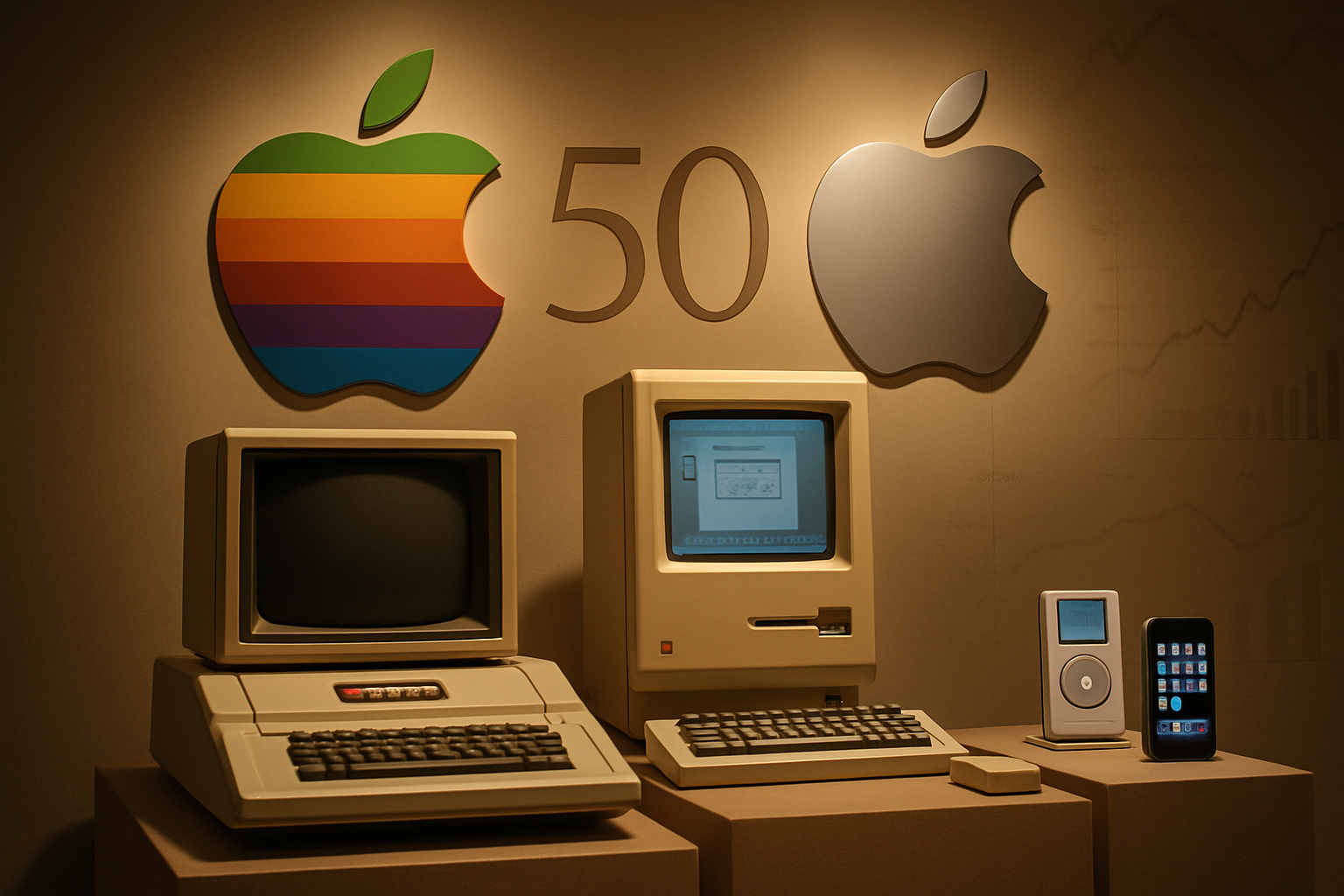
Apple Inc. reaches its 50th anniversary this month, marking an extraordinary transformation from a garage startup founded by Steve Jobs and Steve Wozniak in 1976 to the world's most valuable company with a $3.5+ trillion market capitalization serving 2.8 billion users globally.
Yet as the technology giant celebrates this remarkable milestone, industry analysts are questioning whether Apple's decades-long dominance is finally beginning to show cracks. From near-bankruptcy in 1997 when the company was just 90 days from collapse to becoming the first company to reach $1 trillion, $2 trillion, and $3 trillion valuations, Apple's journey represents one of the most dramatic corporate turnarounds in business history.
From Near-Death to Global Empire
Greg Joswiak, Apple's Senior Vice President of Worldwide Marketing, recently reflected on the company's darkest period in the mid-1990s when it "struggled to make payroll." The return of Steve Jobs as interim CEO in 1997 began what would become celebrated as one of corporate America's greatest comebacks.
The revolutionary iMac in 1998 marked Apple's resurrection, followed by the iPod in 2001 that redefined the music industry. But it was the iPhone's launch in 2007 that truly transformed not just Apple, but society itself. The device has since generated over $1.5 trillion in revenue, making it the most successful consumer product in history.
"The iPhone didn't just compete in existing markets—it created entirely new ones, becoming the foundation of the modern app economy and social media revolution."
— Industry Analysis from Apple's 50-Year Timeline
Under Tim Cook's leadership since 2011, following Jobs' death, Apple has maintained its innovation trajectory while expanding into new territories. The iPad in 2010, the transition to Apple Silicon, and the development of a comprehensive services ecosystem have all contributed to the company's unprecedented growth.
Current Strategic Challenges
However, as Apple enters its sixth decade, the company faces significant headwinds that some analysts believe signal the end of its unchallenged dominance. The most pressing challenge comes from the artificial intelligence revolution, where competitors like Google, Microsoft, and emerging Chinese firms have gained substantial ground.
The global AI transformation of 2026 has been particularly challenging for Apple. While competitors have rapidly deployed AI assistants and services, Apple's more cautious, privacy-focused approach has led to criticism that the company is falling behind in the most important technological shift since the smartphone revolution.
Regulatory scrutiny presents another major challenge. Apple faces intense pressure over its App Store business model, with governments worldwide questioning the 30% commission it charges developers. The European Union's Digital Markets Act and similar legislation globally are forcing Apple to open its previously closed ecosystem.
Geopolitical Tensions and Manufacturing Concerns
Apple's heavy reliance on Chinese manufacturing has become increasingly problematic as geopolitical tensions escalate. The company's complex supply chain, centered around Foxconn's facilities in China, faces potential disruption from trade conflicts and political instability.
The global semiconductor crisis has also impacted Apple, with memory chip prices surging sixfold and affecting companies like Samsung, SK Hynix, and Micron. Consumer electronics costs have increased 20-30%, creating pressure on Apple's traditionally premium pricing strategy.

The Search for the Next Big Thing
Perhaps most critically, Apple faces the challenge that has plagued successful technology companies throughout history: identifying the next revolutionary product category. Industry speculation centers on AR glasses and potential electric vehicle projects, but concrete progress remains elusive.
The company is heavily investing in emerging technologies including artificial intelligence, augmented reality, and autonomous vehicles. However, unlike previous breakthrough products like the iPhone, which clearly redefined entire industries, Apple's next major innovation remains unclear.
Cook has emphasized the company's commitment to privacy and user security as differentiators, but critics argue these principles may slow Apple's ability to compete in AI-driven markets where data collection and processing are crucial advantages.
Financial Resilience and Market Position
Despite these challenges, Apple's financial position remains extraordinarily strong. The company maintains over $165 billion in cash reserves and employs more than 150,000 people worldwide. Its services business has grown to Fortune 500-scale revenue, creating sustainable recurring income streams that reduce dependence on hardware sales cycles.
The transformation from a computer manufacturer to an integrated ecosystem of hardware, software, and services has created exceptional financial returns with fierce customer loyalty. Apple's design-first philosophy and premium positioning continue to generate industry-leading profit margins.
Lessons in Corporate Resilience
Apple's 50-year journey offers valuable lessons in corporate resilience and strategic vision. The company's near-death experience in the 1990s, followed by unprecedented success, demonstrates how visionary leadership, strategic focus, and customer experience commitment can overcome dire circumstances.
The company's vertical integration strategy and sophisticated supplier relationships have enabled it to navigate supply chain disruptions more effectively than many competitors. This approach has proven particularly valuable during the current global semiconductor shortage.
"Apple's corporate turnaround provides a template demonstrating how innovation, perseverance, and strategic vision can transform business trajectories."
— Business Analysis Report
Looking Toward the Next 50 Years
As Apple begins its second half-century, the company is positioning itself as a leader in corporate responsibility through privacy advocacy and environmental sustainability initiatives. The question remains whether Apple can maintain its position as the world's most valuable company while delivering the breakthrough innovations that built its reputation.
Strategic investments in AI development, manufacturing diversification, and next-generation products will determine the company's trajectory in the coming decade. The success or failure of these initiatives will shape not only Apple's future but potentially influence the entire technology industry's direction.
Apple's 50th anniversary represents both a celebration of extraordinary achievement and a recognition that past success provides no guarantee of future dominance. The company that revolutionized personal computing, portable music, smartphones, and tablets now faces the challenge of reinventing itself once again in an increasingly competitive and regulated global technology landscape.
The Verdict: Evolution, Not Revolution
While questions about Apple's future dominance are legitimate, the company's 50-year history suggests reports of its decline may be premature. Apple has consistently demonstrated an ability to evolve and adapt, from personal computers to consumer electronics to mobile devices to services.
The current challenges—AI competition, regulatory pressure, geopolitical tensions—are significant but not insurmountable for a company with Apple's resources, talent, and track record of innovation. Whether Apple's next 50 years will match the extraordinary success of its first five decades remains to be seen, but the company's journey from garage startup to global technology empire provides compelling evidence of its capacity for transformation and renewal.