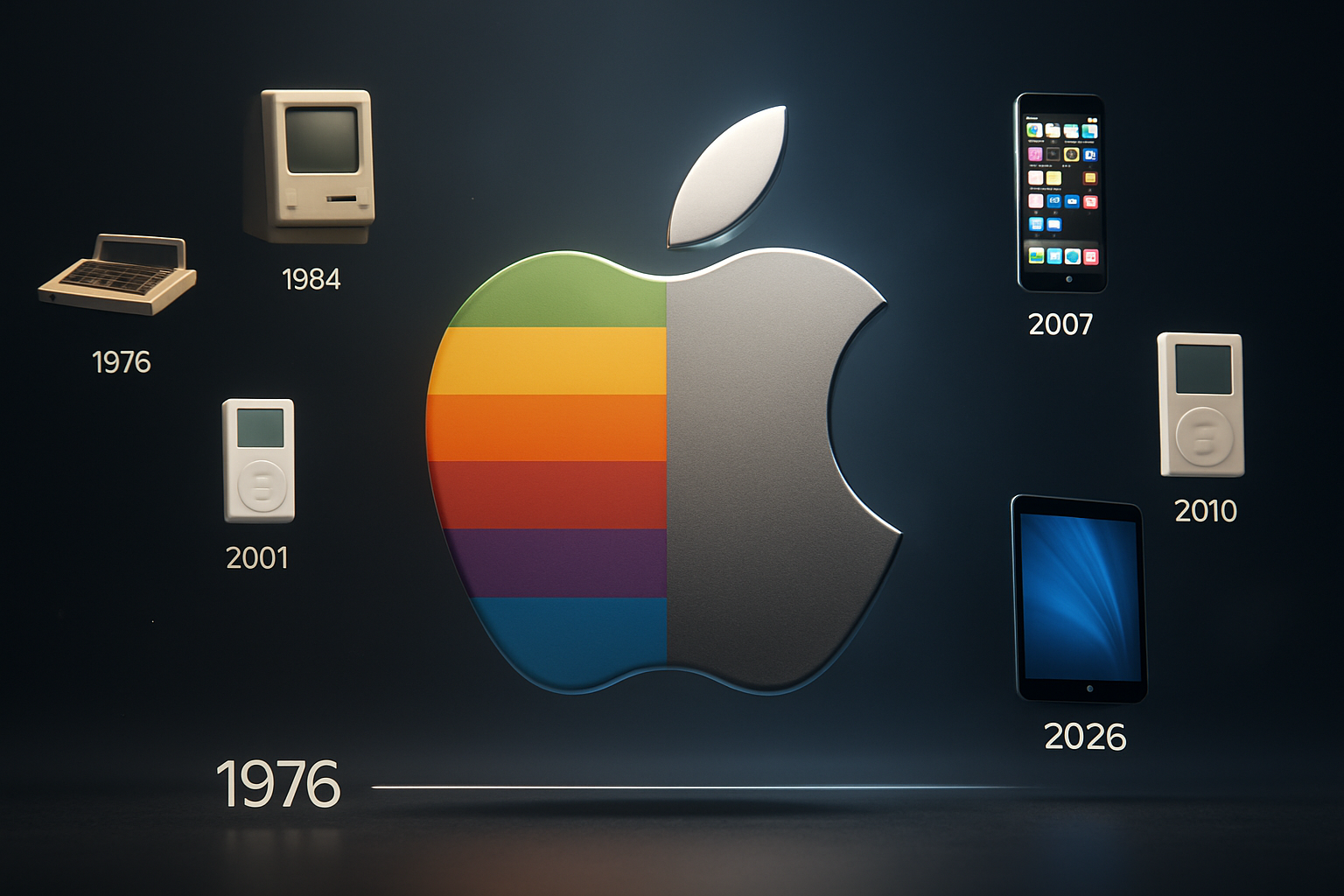
Apple Inc. celebrates its 50th anniversary in 2026, marking one of the most extraordinary corporate transformations in business history—from a garage startup to a $3.5 trillion technology empire that fundamentally changed how humanity interacts with technology.
Founded in 1976 by Steve Jobs and Steve Wozniak, Apple has evolved from a computer company struggling for survival in the mid-1990s to the world's most valuable corporation, serving 2.8 billion users across its integrated ecosystem of devices and services. The company's journey represents not just technological innovation, but a masterclass in corporate resilience and strategic vision.
The Dark Years and Remarkable Comeback
Greg Joswiak, Apple's Senior Vice President of Worldwide Marketing, recently reflected on the company's darkest period when they "struggled to make payroll" in the mid-1990s. The company was just 90 days from collapse when Steve Jobs returned as interim CEO in 1997, beginning one of the most celebrated corporate turnarounds in history.
"We were literally counting days, not months," Joswiak recalled in an exclusive interview. "The return of Steve Jobs wasn't just about leadership—it was about survival."
— Greg Joswiak, Senior VP Worldwide Marketing, Apple
The transformation began with the revolutionary iMac in 1998, which reestablished Apple's reputation for innovative design and user-friendly technology. This was followed by a series of groundbreaking products that would redefine entire industries: the iPod (2001), iPhone (2007), and iPad (2010).
Revolutionary Product Legacy
Apple's 50-year journey is marked by products that didn't just compete in existing markets—they created entirely new ones. The iPhone, launched in 2007, fundamentally transformed not only the smartphone industry but society itself, creating the foundation for the modern app economy, social media revolution, and mobile-first digital lifestyle.
The company's ability to integrate hardware, software, and services into a seamless ecosystem has been its defining characteristic. Unlike competitors who focused on individual products, Apple built a comprehensive platform that encourages customer loyalty and generates recurring revenue streams.
Financial Milestones and Market Dominance
Apple's financial evolution tells the story of unprecedented growth:
- First $1 trillion company in 2018
- Reached $2 trillion valuation in 2020
- Achieved $3 trillion in 2022
- Current market capitalization exceeds $3.5 trillion
Under Tim Cook's leadership since 2011, following Steve Jobs's death, Apple has maintained its innovation trajectory while dramatically expanding its global reach and financial performance. The company now employs over 150,000 people worldwide and maintains over $165 billion in cash reserves.
The Services Revolution
Perhaps Apple's most significant strategic evolution has been its transformation from primarily a hardware company to an integrated technology ecosystem. The Services business, including the App Store, iCloud, Apple Music, and Apple TV+, now generates Fortune 500-scale revenue on its own, creating sustainable recurring income streams that complement hardware sales.
This diversification has provided stability during challenging periods, including the current global semiconductor crisis that has affected many technology companies. Apple's vertical integration and strong supplier relationships have allowed it to navigate supply chain disruptions more effectively than many competitors.
Global Impact and Cultural Influence
With 2.8 billion users worldwide—more than the population of China and India combined—Apple has achieved unprecedented global reach. The company's products have become cultural icons, influencing everything from design aesthetics to social behavior patterns.
The iPhone alone has generated over $1.5 trillion in revenue since its launch, making it arguably the most successful consumer product in history. The device has enabled entire industries, from ride-sharing to food delivery, while fundamentally changing how people communicate, work, and access information.
Current Challenges and Future Prospects
As Apple enters its sixth decade, the company faces new challenges that test its adaptability. Regulatory scrutiny of the App Store business model, geopolitical tensions affecting manufacturing in China, and the need to identify the next revolutionary product category all present significant strategic considerations.
The company is heavily investing in emerging technologies including artificial intelligence, augmented reality, and potentially autonomous vehicles. Industry speculation about AR glasses and electric vehicle projects suggests Apple continues seeking transformative product opportunities that could define its next chapter.
Lessons in Corporate Resilience
Apple's 50-year journey offers profound lessons about innovation, leadership, and corporate strategy. The company's near-death experience in the 1990s followed by unprecedented success demonstrates that even the most dire circumstances can be overcome with visionary leadership, focus on core strengths, and commitment to customer experience.
The company's design-first philosophy, ecosystem integration strategy, and premium positioning have created a business model that generates both exceptional financial returns and fierce customer loyalty. Apple's ability to consistently command premium pricing while achieving mass market adoption represents a rare achievement in consumer technology.
Looking Forward: The Next 50 Years
As Apple marks this historic milestone, the company remains at the forefront of technological innovation while grappling with the responsibilities that come with its enormous influence. From privacy advocacy to environmental sustainability, Apple has positioned itself as a leader in corporate responsibility as well as technology development.
The story of Apple's first 50 years—from garage startup to global technology empire—demonstrates the transformative power of innovation, perseverance, and strategic vision. As the company looks toward its next half-century, it carries the weight of expectations built on five decades of revolutionary products and market leadership.
Whether Apple can maintain its position as the world's most valuable company while continuing to deliver breakthrough innovations remains one of the most closely watched questions in global business. What's certain is that the company's first 50 years have forever changed the relationship between humanity and technology, creating a legacy that will influence generations to come.