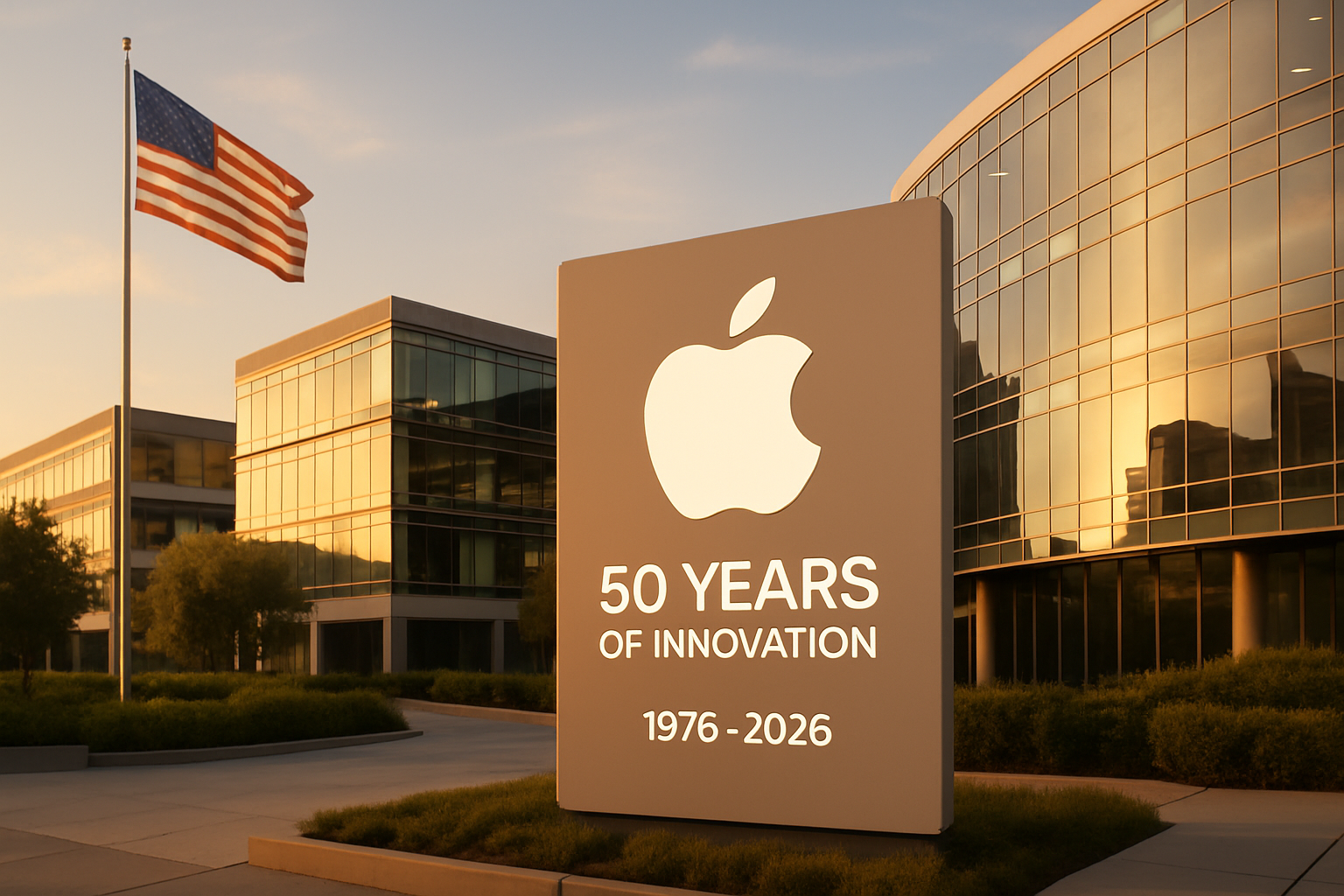
Apple Inc. reaches its 50th anniversary on April 1, 2026, marking half a century of unprecedented innovation that transformed the company from a garage startup to the world's most valuable corporation, currently valued at over $3.5 trillion with 2.8 billion users worldwide.
The technology giant's journey from near-bankruptcy in the 1990s to global dominance represents one of the most remarkable corporate turnarounds in business history. Greg Joswiak, Apple's Senior Vice President of Worldwide Marketing, recently reflected on the company's darkest period when it "struggled to make payroll" and was just 90 days from collapse before Steve Jobs' return as interim CEO in 1997.
The Extraordinary Corporate Transformation
Founded in 1976 by Steve Jobs and Steve Wozniak, Apple's trajectory includes several defining moments that shaped the technology industry. The company's near-death experience in 1997, when it was 90 days from bankruptcy, preceded one of the most celebrated corporate comebacks in business history.
The revolutionary iMac in 1998 marked Apple's return to relevance, followed by the iPod in 2001 that redefined portable music. However, it was the iPhone launch in 2007 that fundamentally transformed not just Apple, but society itself. Since its introduction, the iPhone has generated over $1.5 trillion in revenue, making it arguably the most successful consumer product in history.
"The iPhone didn't just compete in existing markets—it created entirely new ones, becoming the foundation of the modern app economy and social media revolution."
— Industry Analysis
Global Impact and Market Dominance
Today, Apple serves 2.8 billion users globally—more than the combined populations of China and India. The company has evolved from a computer manufacturer to an integrated technology ecosystem encompassing hardware, software, and services. Its Services business alone now generates Fortune 500-scale revenue, creating sustainable recurring income streams.
With over $165 billion in cash reserves and 150,000+ employees worldwide, Apple maintains its position as the world's most valuable company while continuing to innovate across multiple product categories. The company's vertical integration strategy and premium positioning have created exceptional customer loyalty and financial returns.
Innovation Through Adversity
Apple's 50-year journey demonstrates remarkable resilience during challenging periods. The company currently navigates regulatory scrutiny over its App Store business model, geopolitical tensions affecting Chinese manufacturing, and the ongoing search for its next revolutionary product category.
Despite these challenges, Apple continues heavy investment in emerging technologies including artificial intelligence, augmented reality, and autonomous vehicles. Industry speculation centers on AR glasses and electric vehicle projects as potential next-generation products that could redefine markets once again.
Technology Leadership and Cultural Influence
Apple's influence extends far beyond technology into cultural aesthetics and social behavior. The iPhone fundamentally changed human communication patterns, enabled entirely new industries like ride-sharing and food delivery, and created the mobile-first digital lifestyle that defines modern society.
The company's design-first philosophy and ecosystem integration strategy have influenced countless competitors while establishing new standards for user experience and product development. Apple's approach to privacy advocacy and environmental sustainability has also shaped industry practices and regulatory frameworks.
Strategic Challenges and Future Outlook
As Apple enters its sixth decade, the company faces the challenge of maintaining innovation leadership while managing increased regulatory scrutiny and geopolitical complexities. The technology giant must balance its ecosystem approach with regulatory demands for increased openness and competition.
Current strategic investments in AI development, manufacturing diversification beyond China, and next-generation product categories will likely determine Apple's trajectory for the next decade. The company's ability to create new product categories—as it did with smartphones and tablets—remains central to its future growth strategy.
Legacy of Transformation
Apple's 50-year evolution from garage startup to global technology empire demonstrates how visionary leadership, design excellence, and strategic patience can overcome even the direst circumstances. The company's near-bankruptcy experience followed by unprecedented success provides a template for corporate resilience and innovation.
The technological legacy includes products that didn't simply compete in existing markets but created entirely new ones. From the original Apple computer to the iPhone revolution, the company has consistently redefined what's possible in consumer technology while building one of the most valuable and influential corporations in history.
"Apple's journey demonstrates that with the right vision, focus, and commitment to customer experience, even companies facing collapse can become transformative global leaders."
— Corporate Analysis
As Apple celebrates its 50th anniversary, the company stands positioned as both a testament to American innovation and a global technology platform serving billions of users worldwide. The next 50 years will test whether Apple can maintain its position as the world's most valuable company while continuing to deliver the breakthrough innovations that have defined its remarkable half-century journey.