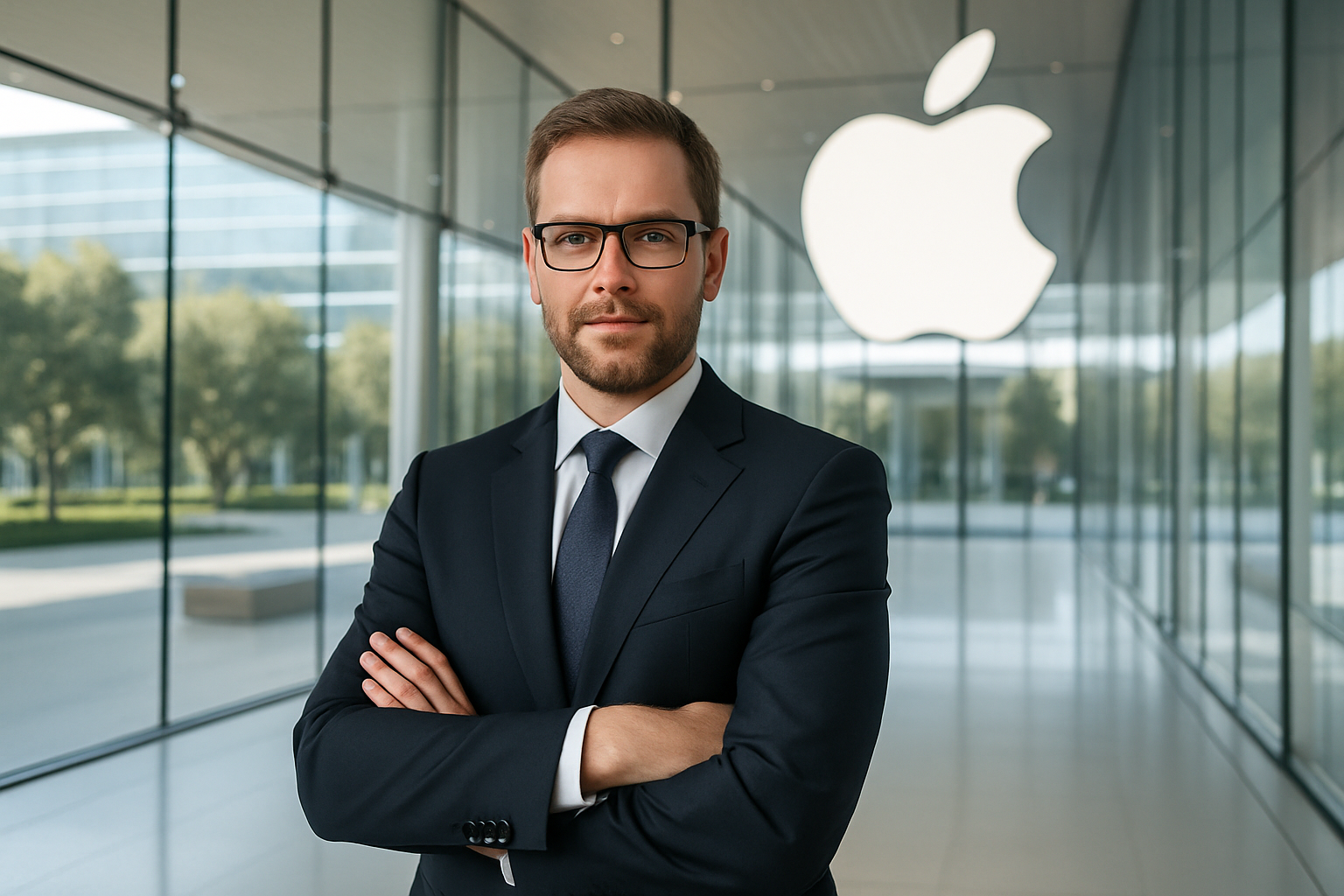
John Ternus officially became Apple's new CEO on September 1, 2026, succeeding Tim Cook after a historic 15-year tenure that transformed the company into the world's most valuable corporation worth over $3.5 trillion.
The 50-year-old hardware engineering veteran brings a quarter-century of Apple experience to the role at a pivotal moment when the technology giant faces unprecedented challenges in artificial intelligence integration, regulatory pressures, and global supply chain complexities. Ternus's appointment marks a return to Apple's engineering-focused leadership tradition during what industry experts call a "civilizational choice point" for AI development.
A Product Perfectionist for the AI Age
Ternus arrives in the CEO position with an unparalleled understanding of Apple's engineering culture and product development philosophy. Since joining the company in 2001, he has been instrumental in leading Mac development and served as the architect of Apple's revolutionary transition from Intel to its own silicon chips—a transformation that gave the company significant competitive advantages during recent global semiconductor shortages.
"We never think about shipping a technology," Ternus explained in a recent interview. "We always think about how can we leverage technology to ship amazing products." This product-first philosophy distinguishes his approach from competitors who have rushed AI features to market without ensuring optimal user experiences.
"John brings a rare combination of inspiring leadership, innovation expertise, strategic growth, and unwavering commitment to Apple's values."
— Tim Cook, Executive Chairman
While software rivals at Microsoft and Google are spending hundreds of billions to integrate artificial intelligence into every aspect of their businesses, Ternus represents a more deliberate, engineering-focused approach to AI integration. His focus on product excellence over technological spectacle positions him as a steward of Apple's core values during a period of intense industry transformation.
Navigating the AI Revolution
Apple finds itself at a critical inflection point as it attempts to catch up in the AI race while maintaining its commitment to user privacy and security. The company has been notably absent from the generative AI boom that has propelled competitors, leading to its position as the second-worst performing "Magnificent Seven" stock since ChatGPT's launch in November 2022.
Ternus inherits responsibility for Apple's AI strategy at a time when the technology industry is experiencing what analysts describe as the transition from "experimental to essential" AI infrastructure. His engineering background and deep institutional knowledge position him uniquely to navigate these challenges while preserving Apple's distinctive approach to technology development.
The new CEO must balance accelerating AI capabilities development with Apple's privacy-first principles, which have sometimes slowed the company's AI deployment compared to data-leveraging competitors. However, this measured approach may prove advantageous as regulatory frameworks intensify globally, with Spain implementing criminal executive liability for tech platforms and France conducting AI company cybercrime raids.
Tim Cook's Transformational Legacy
Ternus takes over from Tim Cook, whose 15-year tenure transformed Apple from a $350 billion company to a $3.5 trillion global technology empire. Cook's leadership saw the iPhone generate over $1.5 trillion in revenue, making it the most successful consumer product in history, while building a services business with Fortune 500-scale revenues.
Cook, who transitions to Executive Chairman, guided Apple through multiple industry transformations and maintained the company's innovation trajectory following Steve Jobs's death in 2011. His operational excellence and strategic vision established Apple as not just a technology company but a cultural force serving 2.8 billion users globally.
The succession occurs during Apple's 50th anniversary year, adding symbolic significance to the leadership transition. Cook's evolution of Apple from a computer company to an integrated ecosystem of hardware, software, and services provides Ternus with a strong foundation for future innovation.
Engineering Culture and Strategic Continuity
Ternus's appointment represents a return to Apple's tradition of promoting engineering leaders internally, similar to the path that brought both Jobs and Cook to the CEO role. His age of 50 matches Cook's age when he became CEO, suggesting a deliberate approach to leadership continuity and long-term strategic planning.
The new CEO's mechanical engineering background and deep understanding of Apple's supplier relationships will prove crucial as the company navigates ongoing global supply chain challenges. Memory chip prices have surged sixfold, affecting Samsung, SK Hynix, and Micron operations, while consumer electronics costs have increased 20-30%. Apple's vertical integration strategy, which Ternus helped develop, provides competitive advantages during these constraints.
Critical Challenges Ahead
Ternus faces multiple strategic challenges that will define Apple's trajectory for the next decade. The company must accelerate AI integration across its product portfolio while maintaining competitive advantages in privacy and user experience. Current projects include the development of AR glasses under the codename "N50" and the advancement of Apple Intelligence framework to match competitive offerings.
Regulatory pressures present another significant challenge, with the European Union's Digital Markets Act forcing ecosystem opening and global antitrust scrutiny intensifying. The company must balance compliance with maintaining the integrated experience that has defined Apple's success.
Geopolitical tensions add complexity to operations, particularly regarding Chinese manufacturing dependency and supply chain diversification needs. Ternus's operational expertise and engineering background position him well to manage these sophisticated challenges while maintaining Apple's global manufacturing excellence.
Innovation Imperatives
Under Ternus's leadership, Apple must identify and develop the next revolutionary product category while maintaining excellence in existing product lines. The AR glasses project represents a potential new platform that could replicate the transformative impact of the iPhone, requiring the engineering precision and market timing that characterized Apple's previous breakthrough products.
The company's approach to AI development differs markedly from competitors, emphasizing on-device processing and privacy protection rather than cloud-based systems that require extensive user data collection. This strategy may prove prescient as privacy concerns and regulatory frameworks evolve globally.
Global Technology Leadership
Ternus assumes leadership during what experts characterize as a "civilizational choice point" for artificial intelligence development. The decisions made at Apple, as the world's most valuable company, will significantly influence technology industry standards and user experience expectations globally.
His success in navigating AI integration while preserving Apple's core values of privacy, environmental responsibility, and user-centric design will likely serve as a template for other technology companies facing similar challenges. The sophisticated human-AI collaboration models that Apple develops under his leadership could define the industry's approach for decades to come.
Looking Forward
September 1, 2026, marks more than a corporate leadership transition—it represents the evolution of the world's most influential technology company as it prepares for the next era of innovation. Ternus's combination of engineering expertise, institutional knowledge, and strategic vision positions Apple to maintain its leadership while adapting to unprecedented technological transformation.
The coming months will test whether Apple can successfully balance innovation acceleration with safety governance, commercial interests with human welfare, and global competitiveness with responsible development. Success will require the sophisticated coordination between technology advancement and human values that has historically defined Apple's approach to breakthrough innovation.
As Ternus settles into his new role, the technology industry and global markets watch closely to see how Apple's next chapter unfolds under his leadership. The decisions made during this transition period will likely influence not only Apple's trajectory but the broader relationship between humanity and artificial intelligence for generations to come.