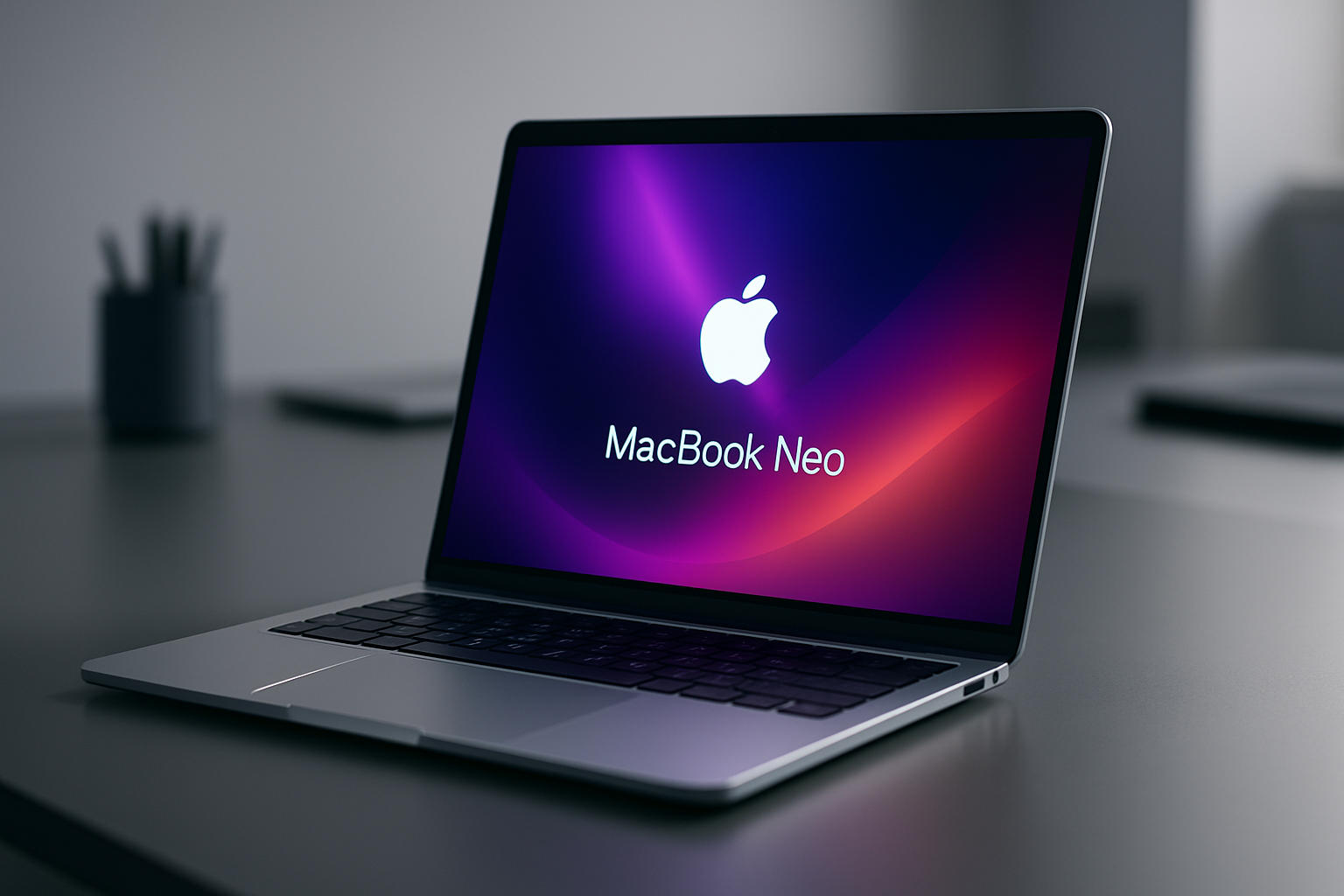
Apple has unveiled the MacBook Neo, priced at €699, marking the company's most significant strategic shift toward affordable computing in over a decade as it seeks to challenge Windows PCs and Chromebooks in the budget-minded laptop market.
The launch represents Apple's biggest push yet into low-end laptops, abandoning traditional "Air" and "Pro" designations for a simplified product category designed to attract new users to the Apple ecosystem. The MacBook Neo uses an iPhone processor from 2024, specifically the A18 Pro chip, delivering flagship performance in a budget package that creates an unprecedented Apple ecosystem entry point.
Strategic Market Positioning
This move marks a fundamental departure from Apple's historically premium-only positioning toward a dual premium/budget approach that includes the recently launched iPhone 17E at $599. The MacBook Neo targets educational institutions and price-sensitive markets previously dominated by Google Chromebooks and budget Windows PCs.
According to Portuguese technology publication PÚBLICO, the objective is to capture new users in the budget laptop segment, representing the most significant restructuring of Apple's laptop lineup in over a decade. The timing aligns with global semiconductor supply chain challenges that have created competitive advantages for vertically integrated manufacturers like Apple.
"Apple has made its biggest push yet into low-end laptops, aiming to challenge Windows PCs and Chromebooks for budget-minded shoppers."
— Sydney Morning Herald
Technical Specifications and Performance
The MacBook Neo features 256GB of base storage, double the capacity typically found in competing budget laptops. The A18 Pro processor, originally developed for premium iPhones, provides computational capabilities that significantly exceed those found in traditional budget laptops powered by entry-level Intel or AMD processors.
This silicon advantage allows Apple to offer premium features such as all-day battery life, instant wake-from-sleep, and seamless integration with other Apple devices, while maintaining the €699 price point that puts it in direct competition with mid-range Chromebooks and Windows laptops.
Educational Market Strategy
The MacBook Neo includes educational pricing at €499, creating what industry observers describe as an "ecosystem gateway device" that could fundamentally reshape Apple's market share in schools and universities. This pricing strategy directly challenges Google's dominance in educational computing, where Chromebooks have maintained market leadership through their combination of affordability and cloud-based functionality.
The educational focus reflects Apple's long-term strategy of building customer loyalty early, potentially creating lifelong users who will upgrade to premium Apple products as their needs and budgets expand.
Industry Context and Competition
The launch occurs during a global semiconductor crisis that has seen memory chip prices increase sixfold, affecting competitors including Samsung, SK Hynix, and Micron. However, Apple's vertical integration and direct relationships with suppliers provide significant advantages in navigating these constraints while maintaining competitive pricing.
This market entry represents a direct challenge to the Windows PC ecosystem, particularly in regions where budget considerations are paramount. The MacBook Neo offers the stability and security of macOS, typically available only in premium laptops, at prices previously associated with basic Windows machines.
Broader Strategic Implications
Industry analysts describe the MacBook Neo as potentially "transformative" for the personal computer market, demonstrating that premium technology can coexist with accessible pricing. The success of this approach could pressure competitors to reevaluate their premium positioning strategies.
The laptop represents more than just a budget option—it serves as a gateway to Apple's services ecosystem, including iCloud, Apple Music, and the App Store, supporting the company's transition toward a services-focused business model where hardware serves as the entry point to recurring revenue streams.
Market Reception and Availability
Pre-orders for the MacBook Neo began on March 4, 2026, with retail availability starting March 11, 2026. The rapid timeline from announcement to availability demonstrates Apple's confidence in the product and its manufacturing capabilities during challenging supply chain conditions.
Early market reception has been cautiously optimistic, with technology reviewers praising Apple's willingness to expand market accessibility while maintaining the build quality and user experience associated with the brand.
Future Implications
The MacBook Neo launch could serve as a template for similar approaches across Apple's product lines, representing a fundamental shift in the company's market strategy. Success could lead to expanded budget offerings in other categories, while failure might reinforce the challenges of maintaining brand equity while pursuing market expansion.
For consumers, the MacBook Neo represents an unprecedented opportunity to access Apple's ecosystem at an affordable price point, potentially reshaping the laptop market by forcing competitors to match both the pricing and integration capabilities that Apple brings to the budget segment.
As the technology industry grapples with supply chain challenges and changing consumer expectations, Apple's entry into the budget laptop market represents one of the most significant strategic shifts in personal computing in recent years, with implications that could resonate throughout the industry for years to come.