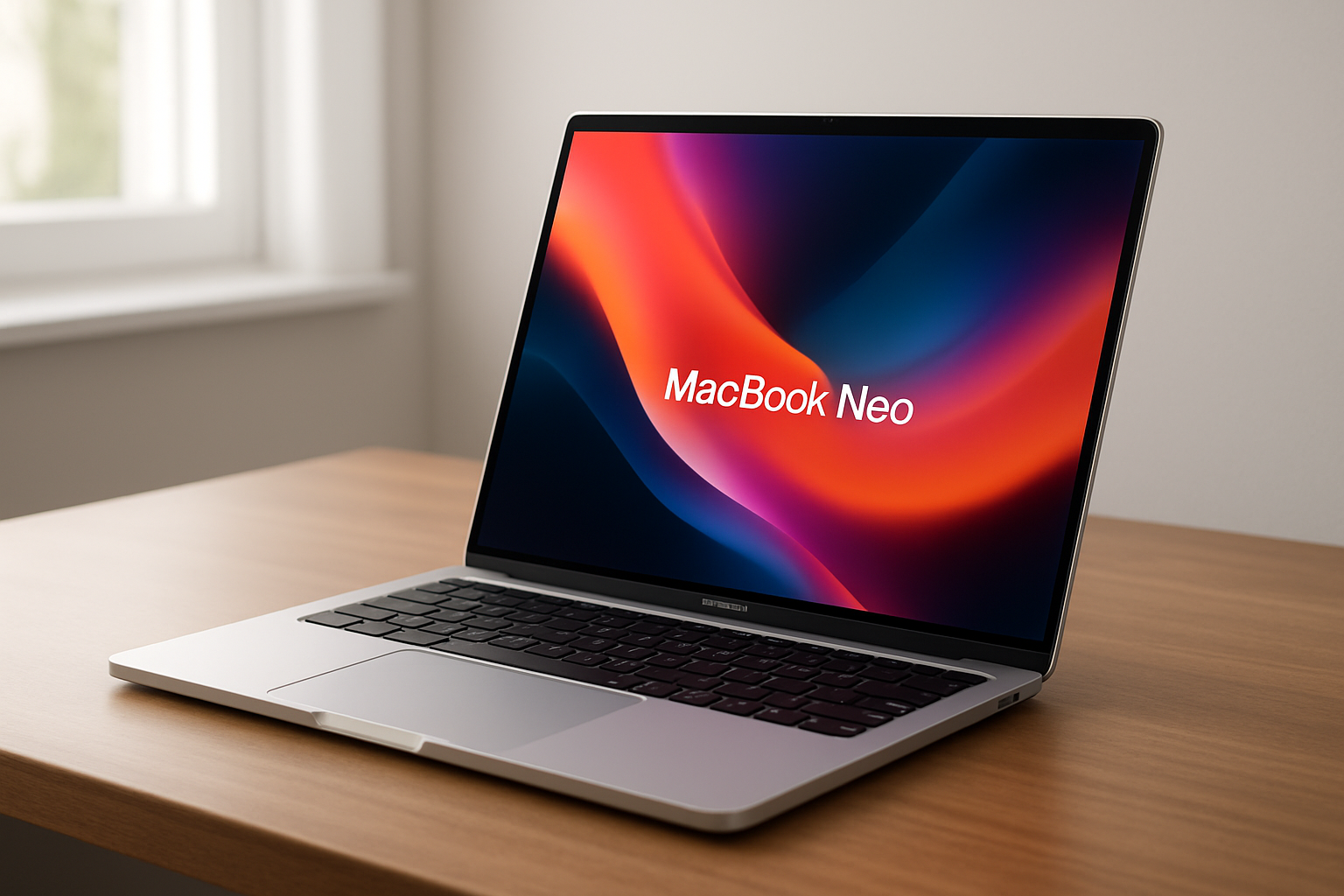
Apple has officially unveiled the MacBook Neo, a groundbreaking budget laptop positioned at $599 that industry analysts are calling "market-redefining," representing the company's most aggressive pricing strategy in its history and signaling a fundamental shift from premium-only positioning to widespread market accessibility.
The MacBook Neo, which began pre-orders on March 4 and became available in retail stores on March 11, 2026, breaks new ground by delivering flagship-level performance at budget pricing traditionally associated with basic Windows machines and Chromebooks. The device features Apple's A18 Pro chip—previously exclusive to premium iPhone models—alongside 256GB of base storage, double the capacity of typical budget laptops.
Strategic Departure from Traditional Pricing
According to Sydney Morning Herald technology reviewer Trevor Long, the MacBook Neo represents Apple's "biggest push yet into low-end laptops" and demonstrates that "compared to other laptops available at the same price, Apple's cheapest-ever MacBook is incredible." This strategic pivot marks a decisive departure from the company's traditional Air and Pro designations, opting instead for a simplified product category that directly targets Chromebook and Windows PC dominance in educational institutions.
The MacBook Neo's launch occurs during an unprecedented global semiconductor crisis, with memory chip prices surging sixfold due to AI development demand affecting major manufacturers including Samsung, SK Hynix, and Micron. Consumer electronics costs have increased 20-30% over the past year, with shortages expected to persist until 2027 when new fabrication facilities come online.
Technical Innovation at Budget Pricing
Despite supply chain pressures, the MacBook Neo delivers premium features previously unavailable at this price point. The A18 Pro processor provides flagship performance capabilities including all-day battery life, instant wake functionality, and seamless ecosystem integration with existing Apple devices. The 256GB storage capacity addresses longstanding criticism of insufficient storage in budget laptop models, supporting modern usage patterns requiring adequate space for applications, photos, and videos without immediate cloud subscription dependencies.
Educational pricing further extends accessibility, with institutions able to purchase the MacBook Neo for $499, creating an unprecedented Apple ecosystem entry point. This pricing strategy represents what industry observers describe as an "ecosystem gateway device" designed to expand Apple's installed base and support the company's services-focused business model transition.
Competitive Market Context
The MacBook Neo enters a highly competitive landscape that includes Samsung's Galaxy S26 series with revolutionary Privacy Display technology, Google's Pixel 10a "no-bullshit" smartphone approach, and ongoing market disruption from the "SaaSpocalypse"—the elimination of hundreds of billions in traditional software market capitalization as AI systems replace conventional solutions.
Apple's vertical integration provides competitive advantages during the current supply constraints. While competitors struggle with component availability and rising costs, Apple's comprehensive control over its hardware and software ecosystem enables the delivery of premium experiences at accessible pricing points.
Industry Transformation Implications
Technology analysts describe the MacBook Neo as potentially "transformative" for the personal computer market, demonstrating that premium technology can coexist with accessible pricing. The launch represents the most significant restructuring of Apple's laptop lineup in over a decade, with implications extending far beyond the company's product portfolio.
The device challenges Google's Chromebook dominance in educational markets and directly competes with Windows PC budget segments that have traditionally been inaccessible to Apple due to pricing barriers. Success could pressure competitors to reevaluate their premium strategies and force matching of Apple's pricing and integration capabilities.
Global Launch Strategy
The MacBook Neo launched simultaneously across multiple international markets, demonstrating Apple's confidence in global demand despite challenging economic conditions. The company's approach differs markedly from competitors who have delayed launches or reduced features due to supply chain pressures.
Market reception has been overwhelmingly positive, with the Sydney Morning Herald noting that the laptop "begins a new era of laptops" and represents a "cheerful" approach to computing that prioritizes user experience and practical benefits over experimental features.
Long-term Strategic Vision
The MacBook Neo serves as a critical test of Apple's ability to expand market reach without compromising its premium brand positioning. The device's success could establish a template for similar approaches across Apple's entire product line, potentially reshaping not only the laptop market but the broader technology industry's approach to pricing and accessibility.
Industry observers note that the launch occurs during what many consider a critical inflection point in personal computing, as artificial intelligence becomes essential infrastructure rather than experimental technology. Apple's positioning of premium capabilities at budget pricing could define competitive dynamics for the remainder of the decade.
The MacBook Neo represents more than a product launch—it signals Apple's evolution from a premium-focused technology company to a platform that serves diverse market segments while maintaining its commitment to innovation, quality, and user experience. As the global technology landscape continues to evolve amid supply chain challenges and changing consumer needs, the MacBook Neo stands as evidence that accessibility and excellence can successfully coexist in Apple's vision of computing's future.