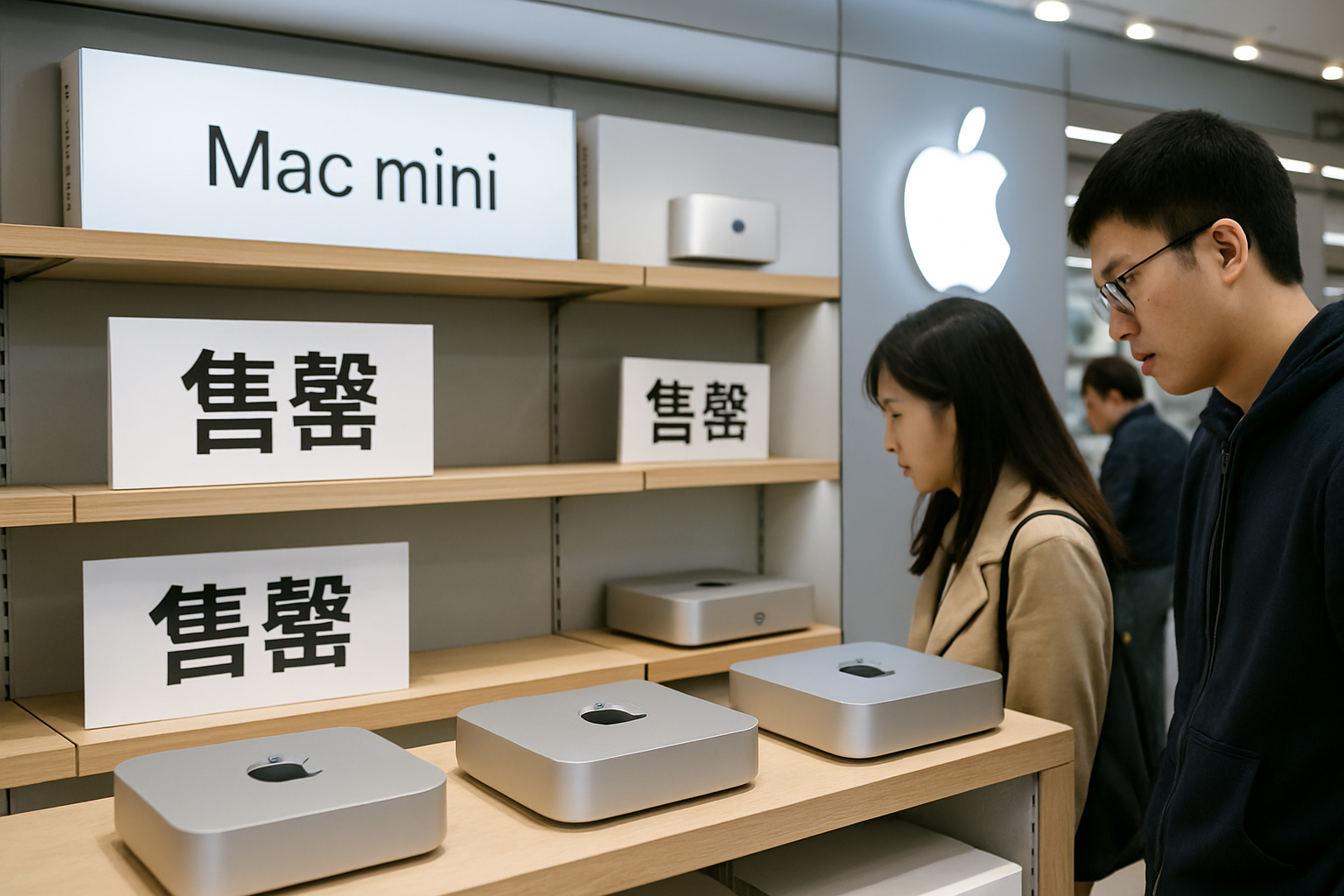
Apple's Mac Mini compact computers are experiencing unprecedented shortages across China as consumers rush to secure machines capable of running OpenClaw, an Austrian-developed artificial intelligence toolkit that users describe as "magical," driving up prices and depleting inventory in electronics markets nationwide.
Beijing electronics seller Frank Chai reported charging a markup of at least 500 yuan (US$73) for basic Mac Mini models with 16GB of memory and 256GB storage, as the "OpenClaw craze" creates supply-demand imbalances reminiscent of early iPhone launches. The phenomenon has spread beyond Beijing to electronics retailers across China, where consumers are engaged in what locals describe as a nationwide rush to "raise a lobster" – a reference to the OpenClaw AI agent's capabilities.
Austrian AI Innovation Captures Global Attention
OpenClaw emerged from Austria's growing artificial intelligence sector in February 2026, with German-language reports characterizing it as "the AI toolkit of the hour that promises the future." Early users describe experiences as "between magic, hallucinations, and a lobster on the Mac Mini," referring to the toolkit's sophisticated capabilities that have attracted significant attention in the technology community.
The Austrian developer behind "Open Claw" technology was reportedly hired by OpenAI, highlighting the international recognition of the toolkit's innovative approach. Unlike single-purpose AI applications, OpenClaw functions as a comprehensive "toolkit" suggesting integrated AI ecosystem capabilities that can perform complex tasks across multiple domains.
Austrian Der Standard analysis noted how the success represents Austria's rising profile in the global AI landscape, part of broader European efforts to develop homegrown AI capabilities competing with Silicon Valley dominance. The country's emergence as a significant AI market player demonstrates how smaller nations can achieve outsized influence through strategic technological innovation.
Mac Mini Hardware Requirements Drive Shortages
The Mac Mini's appeal for OpenClaw users stems from its optimal balance of processing power, memory capacity, and affordability for running sophisticated AI workloads. The compact computer's M-series chips provide the computational performance necessary for OpenClaw's advanced algorithms while maintaining energy efficiency crucial for extended AI processing sessions.
Industry analysts note that OpenClaw's hardware requirements align perfectly with the Mac Mini's specifications, creating what one expert described as a "perfect storm" of demand. The 16GB unified memory configuration, previously considered adequate for general computing, has become the minimum threshold for effective OpenClaw deployment, driving consumers toward higher-specification models.
This surge occurs amid broader global semiconductor constraints, with memory chip prices experiencing sixfold increases affecting Samsung, SK Hynix, and Micron operations. The shortage is expected to persist until 2027 when new fabrication facilities come online, making the Mac Mini shortage particularly acute given the limited supply of suitable hardware alternatives.
Security Concerns Cast Shadow Over AI Enthusiasm
While consumer demand surges, government authorities express growing caution about OpenClaw adoption. Hong Kong's Digital Policy Office (DPO) warned all government units against installing OpenClaw or its variants due to security concerns, despite no reported security incidents to date.
The DPO highlighted potential risks including "unauthorised data access, leakage and" other security vulnerabilities associated with AI agents. This warning came after reports that some mainland Chinese entities had restricted OpenClaw use, suggesting coordinated concern about the toolkit's security implications.
These restrictions reflect broader tensions surrounding AI tool deployment in sensitive environments, particularly as artificial intelligence capabilities advance faster than security frameworks can adapt. The contrast between consumer enthusiasm and institutional caution illustrates the complex challenge of balancing innovation with security in the AI era.
Global Context of AI Hardware Demand
The Mac Mini shortage in China represents a microcosm of global AI hardware demand patterns emerging in 2026. According to industry analysis, this period represents a critical inflection point as artificial intelligence transitions from experimental technology to essential infrastructure across multiple sectors.
European regulatory frameworks are intensifying around AI deployment, with Spain implementing the world's first criminal executive liability for tech platforms and France conducting cybercrime raids on AI companies. The UN has established an Independent Scientific Panel with 40 experts to provide the first fully independent global AI impact assessment.
Meanwhile, successful AI integration models are emerging globally, including Malaysia's world-first AI-integrated Islamic school, Singapore's WonderBot 2.0 heritage education system, and Canadian universities' AI teaching assistants that maintain critical thinking standards. These examples demonstrate human-centered approaches that enhance rather than replace fundamental capabilities.
Market Dynamics and Pricing Implications
The pricing premium Frank Chai and other retailers are charging reflects genuine supply constraints rather than speculative pricing. Electronics market sources indicate that wholesale Mac Mini availability has declined significantly since February 2026, with distributors reporting wait times of 4-6 weeks for new inventory.
Apple has not officially commented on the China-specific shortage, but industry observers note that the company's global supply chain is optimized for steady demand rather than sudden surges in specific regions. The Mac Mini was never positioned as a high-volume consumer device, making rapid production increases challenging.
The situation has created secondary market opportunities, with used Mac Mini units commanding prices approaching or exceeding new retail costs. Technology forums are reporting successful resales at 120-150% of original purchase prices, indicating the depth of demand among OpenClaw enthusiasts.
Implications for AI Development Ecosystem
The OpenClaw phenomenon demonstrates how breakthrough AI tools can rapidly reshape hardware markets and consumer behavior. The toolkit's success could influence Apple's future Mac Mini positioning and specifications, potentially leading to AI-optimized configurations targeting the growing artificial intelligence enthusiast market.
For the broader AI ecosystem, OpenClaw's trajectory serves as a case study in how European AI innovation can achieve global impact despite competing with well-funded Silicon Valley alternatives. The success validates investment in regional AI capabilities and suggests that specialized, high-quality tools can overcome the advantages of larger platforms.
Austria's emergence as an AI innovation hub, exemplified by OpenClaw's success, reflects broader trends in the multipolar AI landscape where innovation is increasingly distributed across multiple geographic centers rather than concentrated in traditional technology hubs.
Future Outlook and Market Evolution
As OpenClaw continues gaining adoption globally, hardware manufacturers may need to reconsider specifications and supply planning for AI-focused consumer devices. The Mac Mini shortage illustrates how AI software innovations can create unexpected demand patterns that existing supply chains struggle to accommodate.
Security concerns raised by Hong Kong and mainland Chinese authorities suggest that regulatory frameworks will likely evolve to address AI toolkit deployment, potentially affecting future adoption patterns. The balance between innovation encouragement and security protection will shape how breakthrough AI tools like OpenClaw navigate regulatory landscapes.
The current situation represents a critical test period for OpenClaw's commercial viability amid infrastructure constraints and evolving regulatory requirements. Success in managing these challenges could establish Austria as a significant player in the global AI market while providing a template for other emerging AI innovation centers worldwide.