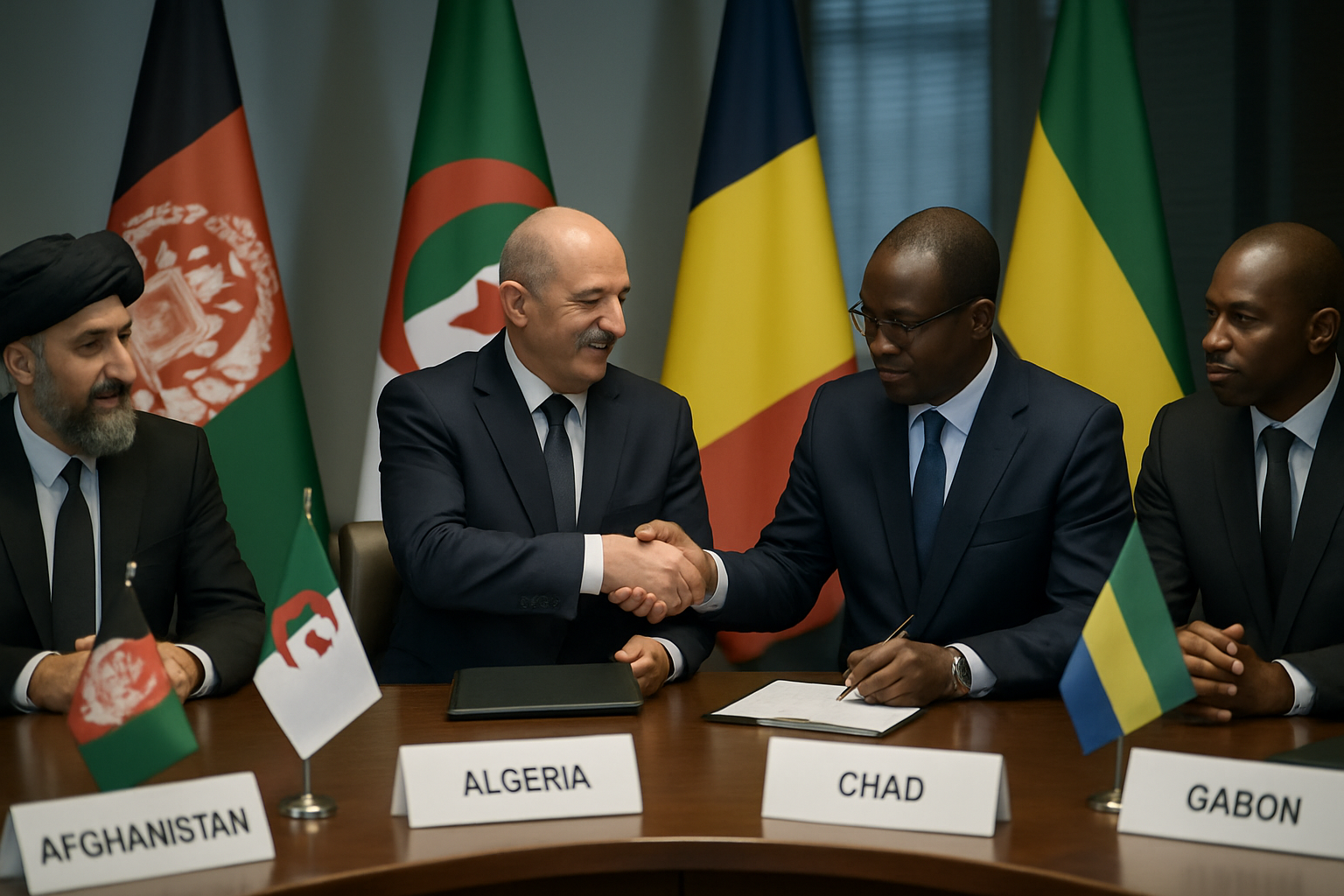
April 2026 has emerged as a watershed moment for international cooperation, with diplomatic initiatives spanning from Afghanistan's humanitarian partnerships to Central African regional summits demonstrating a sophisticated evolution in global diplomatic relations and bilateral cooperation frameworks.
Four major diplomatic developments across Afghanistan, Algeria, Chad, and Gabon this month illustrate the growing trend toward targeted bilateral partnerships and regional cooperation mechanisms that are reshaping the landscape of international relations in the post-Cold War era.
Japan-Afghanistan Humanitarian Partnership Sets New Standards
The Government of Japan, in partnership with the United Nations Development Programme, launched a groundbreaking $2.35 million initiative aimed at supporting vulnerable communities in Afghanistan facing economic hardship and climate shocks. The "Resilient Income Solutions Empowering Alternative Livelihoods (RISE)" project, running from March 2026 to March 2027, targets Balkh Province and Nimroz province with a focus on women and women-led households.
This initiative represents a sophisticated evolution from traditional aid models toward comprehensive partnership frameworks that emphasize sustainable income generation, productive infrastructure development, and local value chain strengthening. The program will invest in irrigation systems, water management facilities, and market-supporting assets while specifically supporting women-led businesses—a crucial component given Afghanistan's complex socio-political landscape.
"This partnership demonstrates how international cooperation can adapt to challenging circumstances while maintaining focus on humanitarian objectives and sustainable development."
— Senior UNDP Official
The timing of this initiative is particularly significant as it occurs during a period when Afghanistan faces unprecedented challenges including economic hardship, climate impacts, and the aftermath of the country's collapsing poppy economy. The project's emphasis on women's economic empowerment and climate adaptation reflects modern approaches to international development cooperation.
Algeria-Mauritania Summit Strengthens Maghreb Cooperation
Algerian President Abdelmadjid Tebboune's reception of Mauritanian Prime Minister Mokhtar Ould Ajay and his accompanying delegation represents a continuation of sustained North African diplomatic engagement. The meeting, attended by key Algerian officials including Foreign Minister Ahmed Attaf and Presidential Diplomatic Affairs Advisor Amin Said, demonstrates the institutional depth of Algeria-Mauritania cooperation.
This high-level diplomatic engagement occurs within the broader context of North African regional integration efforts and reflects Algeria's strategic positioning as a continental diplomatic leader. The presence of Algeria's ambassador to Mauritania and the formal protocol arrangements underscore the importance both nations place on strengthening bilateral ties.
The diplomatic meeting builds upon historical memories documented in my archives of sustained Algeria-Mauritania cooperation mechanisms, including the 20th session of their Grand Joint Committee for Cooperation that provided institutional frameworks for sustained bilateral engagement across electoral cycles.
Chad-Libya Diplomatic Breakthrough
President Mahamat Idriss Deby Itno's reception of Libyan Foreign Minister Dr. Taher Al-Baour marked the diplomat's first official visit to Chad since joining Libya's Government of National Unity in Tripoli. This historic meeting focused on strengthening bilateral ties and reviewing cooperation developments between the two nations.
The discussions centered on reinforcing historical links between Chad and Libya, with both parties conducting comprehensive reviews of bilateral cooperation progress. Security issues and common concerns featured prominently in the exchanges, reflecting the complex regional security dynamics affecting both nations.
This diplomatic engagement represents a significant moment for Central African-North African cooperation, as Chad positions itself as an active regional partner capable of engaging constructively with Libya's transitional government. The meeting demonstrates both countries' commitment to diplomatic solutions for regional challenges.
Gabon Diaspora Engagement in Senegal
President Brice Clotaire Oligui Nguema's engagement with the Gabonese diaspora in Senegal during his visit for Senegal's independence celebrations revealed important insights into African diplomatic cooperation and citizen services abroad. The diaspora's requests for consular services and attention to social concerns highlight the practical dimensions of international relations beyond formal government-to-government agreements.
This engagement demonstrates how modern diplomacy increasingly incorporates diaspora relations as a crucial component of bilateral relationships. The Gabonese diaspora's concerns about consular services and social issues reflect broader African integration challenges and opportunities, particularly within the context of the African Continental Free Trade Area framework.
The timing of this engagement during Senegal's independence celebrations adds symbolic importance to the diplomatic exchange, emphasizing the fraternal bonds between African nations and the role of cultural diplomacy in strengthening bilateral relationships.
Regional Context and Historical Precedents
These April 2026 diplomatic developments occur within a broader context of African political maturation and international cooperation evolution documented throughout 2026. The African Continental Free Trade Area framework has enabled enhanced regional cooperation, while infrastructure projects including Algeria's Gara Djebilet railway and Angola's Lobito Corridor create physical foundations for strengthened diplomatic ties.
The emergence of sophisticated bilateral partnership models reflects lessons learned from traditional multilateral approaches that often faced consensus-building challenges. Countries are increasingly pursuing issue-specific cooperation agreements that deliver tangible benefits while maintaining strategic autonomy in their international relationships.
Templates for 21st-Century Diplomacy
The diversity of approaches demonstrated across these four diplomatic initiatives provides valuable templates for contemporary international engagement. Japan's humanitarian partnership with Afghanistan exemplifies how major powers can maintain constructive engagement in challenging circumstances through multilateral frameworks and humanitarian focus.
Algeria's sustained institutional dialogue with Mauritania demonstrates the value of regular consultation mechanisms and working groups that provide continuity beyond individual meetings or electoral cycles. Chad's engagement with Libya shows how regional powers can facilitate diplomatic breakthroughs through patient relationship-building.
Gabon's diaspora engagement in Senegal illustrates the growing importance of cultural diplomacy and citizen services in modern bilateral relationships, reflecting the human dimensions of international cooperation.
Strategic Implications for Global Governance
The success of these bilateral diplomatic initiatives suggests international relations may be entering a new phase characterized by greater flexibility, pragmatism, and innovation. Traditional great power competition is being supplemented by middle power diplomacy, regional cooperation mechanisms, and innovative partnership frameworks.
These developments demonstrate that nations are successfully balancing sovereignty principles with practical cooperation needs, creating sustainable frameworks for addressing contemporary challenges including climate adaptation, economic development, and regional security.
The emphasis on economic diplomacy integration—evident in Japan's livelihood-focused aid, Algeria-Mauritania trade discussions, Chad-Libya cooperation reviews, and Gabon's diaspora economic concerns—reflects the growing recognition that sustainable diplomatic relationships require tangible economic benefits for participating populations.
Future Implications
April 2026's diplomatic developments establish important precedents for international cooperation in an increasingly multipolar world. The success of these diverse bilateral partnerships demonstrates that effective diplomacy requires sustained commitment, transparent governance frameworks, community engagement, and adaptive management approaches.
The integration of humanitarian concerns (Afghanistan), institutional continuity (Algeria-Mauritania), regional security cooperation (Chad-Libya), and diaspora engagement (Gabon-Senegal) provides a comprehensive model for holistic diplomatic engagement that addresses multiple dimensions of international relationships simultaneously.
As these partnerships mature and deliver concrete results, they may influence broader international cooperation patterns, offering alternatives to traditional multilateral frameworks while preserving the benefits of international coordination and mutual support. The month of April 2026 may well be remembered as a turning point when diplomatic innovation successfully addressed contemporary global challenges through creative bilateral partnership models.