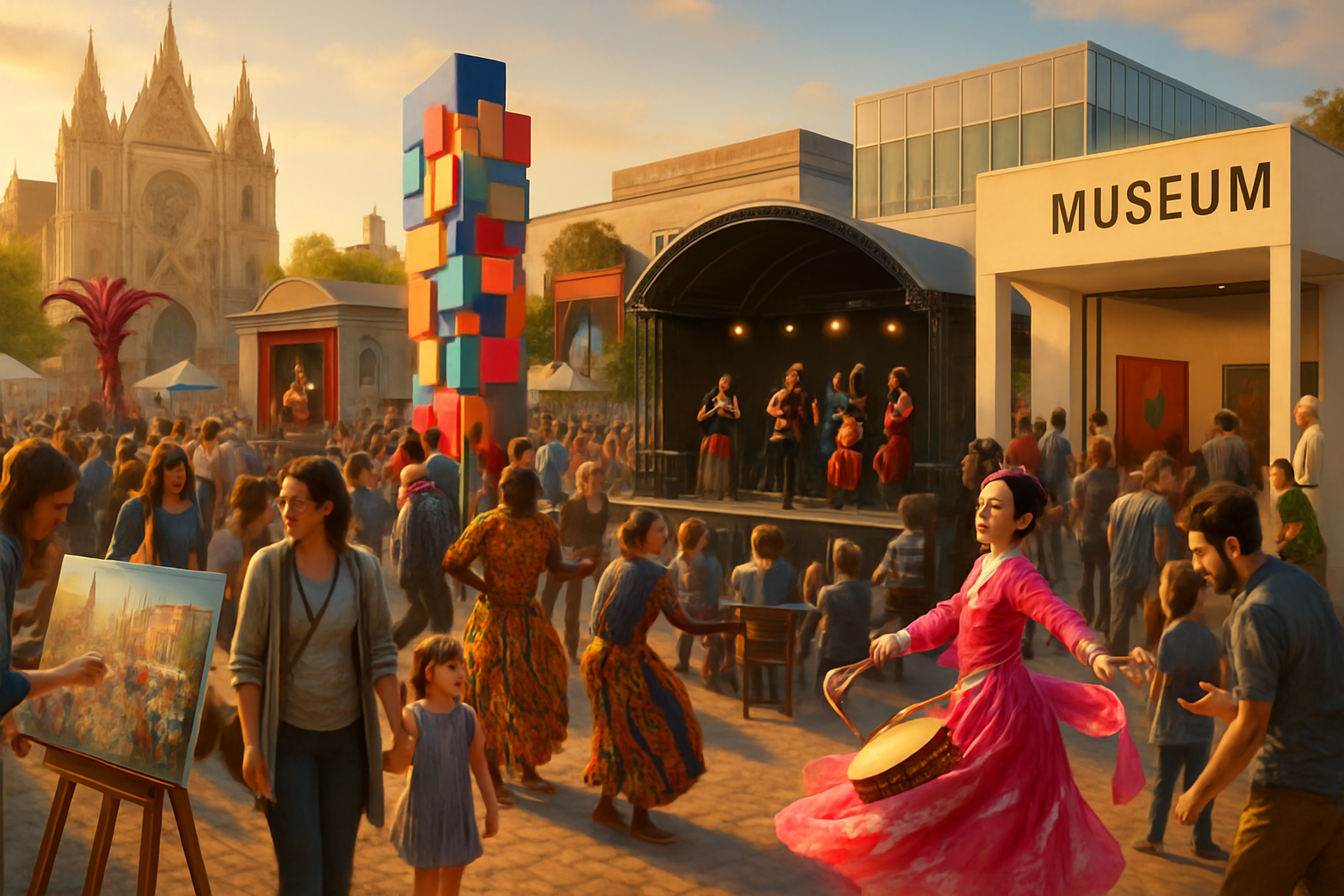
April 2026 has witnessed an unprecedented global cultural renaissance, with communities across nine countries celebrating their heritage through diverse festivals, competitions, and artistic expressions that demonstrate the universal power of culture to unite and inspire.
Armenian Cultural Preservation Milestone in Massachusetts
On April 18, the historic Hairenik Building in Watertown, Massachusetts, was officially rededicated as the Hachikian Family Hairenik Building, marking a pivotal moment for the Armenian diaspora in the United States. The ceremony brought together community leaders, benefactors, and invited guests, including donors Diana and Ken Hachikian, Archbishop Anoushavan Tanielian of the Armenian Prelacy of the Eastern United States, and ARF Bureau member Khajag Mgrdichian.
The rededication represents more than a naming ceremony—it symbolizes the enduring institutional strength of the Armenian community and serves as what organizers called "a beacon of hope and survival for the Armenian nation." Archbishop Tanielian opened the program with a blessing, while Hovig Charchafian represented the ARF Eastern Region in the proceedings.
This event exemplifies how diaspora communities successfully preserve their cultural identity while contributing to the broader American cultural landscape, creating lasting institutions that serve both heritage preservation and community building.
Bolivia Achieves Culinary Excellence on Global Stage
Bolivian gastronomy reached new heights of international recognition when the national team dominated the World BBQ Tournament held in Mexico in March. The Bolivian Federation of Gastronomic Workers celebrated their compatriots' achievements in a ceremony at Palacio Chico, where federation executive Sofía Foronda highlighted the performance of the ten grillers and judges who represented the country.
The team "Brasas Clandestinas," led by Milton Sosa, president of the Bolivian Association of Grillers in La Paz, secured first place in the general category while competing against teams from Argentina, Brazil, Colombia, Chile, Costa Rica, Ecuador, Panama, and Venezuela. The team, including Wilman Méndez, Marco Antonio Quelca, Rodrigo Rojas, and José Luis Alí, also excelled in specialized categories including chicken and fish preparation.
"This victory demonstrates that Bolivian gastronomy has reached world-class standards and deserves recognition on the international stage."
— Sofía Foronda, Executive of the Bolivian Federation of Gastronomic Workers
Cuban Rumba Festival Showcases Traditional Artistry
The Guaguanco Rumba Festival of Matanzas, held from April 23-26, celebrated one of Cuba's most vibrant traditional music and dance forms with broad participation from both the public and artists. This annual festival serves as a vital platform for preserving and transmitting Cuban cultural heritage to new generations while attracting international attention to the island's rich artistic traditions.
The festival's success reflects Cuba's commitment to maintaining its cultural identity despite economic challenges, demonstrating how traditional arts can serve as both cultural preservation tools and sources of community pride and international recognition.
Scandinavian Entertainment Industry Developments
Denmark's entertainment landscape made headlines with significant developments in both film and music. Cilia Trappaud, known as a host on the popular dance show "Vild med dans" (Dancing with the Stars), secured a role in the highly anticipated new Michael Jackson film, marking a significant crossover achievement for Danish television personalities into Hollywood productions.
Meanwhile, international media reported on the engagement of former One Direction star Harry Styles to actress Zoë Kravitz, news that resonated strongly with Danish entertainment media and demonstrates the continued global fascination with celebrity culture and cross-cultural entertainment partnerships.
Eastern European Cultural Moments
Lithuania's entertainment industry experienced both celebration and concern as legendary singer Alla Pugachova, now 77, was photographed using a walking cane for the first time, sparking worry among fans about her health. The subsequent release of images by her partner Maxim Galkin provided some reassurance to her devoted fanbase, highlighting how beloved cultural figures transcend national boundaries in their influence.
Central American Cultural Celebrations
Nicaragua demonstrated its commitment to cultural development through multiple initiatives. The TEC Urban Festival was held as part of commemorative activities for the third anniversary of the José Coronel Urtecho Cultural and Polytechnic Center, showcasing the country's investment in educational and cultural infrastructure.
Simultaneously, the city of San Marcos celebrated its patron saint festivities with traditional foods, live music, and activities filled with tradition and devotion. These celebrations underscore how religious and cultural traditions continue to serve as vital community bonding experiences, bringing families together in shared cultural expression.
Community Cultural Programming Success
The success of these Nicaraguan events reflects a broader trend toward community-centered cultural programming that serves multiple functions: heritage preservation, community bonding, economic development through cultural tourism, and intergenerational dialogue. Such initiatives demonstrate how authentic cultural expression can achieve both local relevance and international appeal.
Caribbean Digital Entertainment Phenomenon
St. Vincent and the Grenadines is preparing for a unique cultural event as YouTube and Twitch sensation "IShowSpeed" announced his intention to visit as part of his highly anticipated 15-stop Caribbean tour. The content creator, known for his signature blend of real-time chaos, massive crowds, and immersive travel content, promises to highlight local culture during his visit.
During his planned stop in St. Vincent, IShowSpeed is expected to engage with local culture while introducing the island to his millions of global followers. His tour represents a new form of cultural diplomacy where digital influencers serve as cultural ambassadors, bringing international attention to Caribbean destinations while providing authentic cultural exchange opportunities.
"Fans in St. Vincent can expect the streamer's signature blend of real-time chaos, massive crowds, and immersive travel content that highlights local culture."
— St. Vincent Times
Technology and Tradition Synthesis
Across all these cultural events, a sophisticated pattern emerges where technology enhances rather than replaces traditional cultural practices. From digital documentation of Armenian heritage preservation to global streaming of Caribbean cultural exchanges, communities are successfully leveraging modern tools to amplify authentic cultural expression while maintaining community ownership and spiritual significance.
This technology-tradition synthesis represents a mature evolution from earlier fears that digitization might diminish authenticity. Instead, April 2026 evidence suggests that thoughtful technology integration extends cultural reach while preserving essential human connections that make cultural celebrations meaningful.
Economic and Social Impact
These cultural celebrations generate substantial economic multiplier effects beyond immediate programming costs. Events create employment across costume design, performance, hospitality, media production, and tourism sectors while establishing lasting cultural infrastructure including performance networks, artistic collaborations, and community organizations active year-round.
Countries investing in authentic cultural programming report competitive advantages in international tourism, enhanced diplomatic relationships, and strengthened community resilience. Culture functions as strategic infrastructure equivalent to transportation and communication systems, providing essential foundations for both community development and international cooperation.
Global Cultural Renaissance Context
April 2026's cultural activities continue the documented "February 2026 Cultural Renaissance"—an unprecedented period of coordinated international cultural activity across multiple continents. This global movement emphasizes authentic community engagement, successful technology-tradition synthesis, economic viability through cultural tourism, and international cooperation that respects local distinctiveness while fostering global understanding.
Success factors consistently include community leadership in cultural programming, authentic representation emerging from communities themselves, strategic technology integration that enhances rather than replaces traditional practices, and economic sustainability through diversified funding including cultural tourism and educational partnerships.
Future Implications and Templates
The diverse success stories from April 2026 establish practical templates for 21st-century cultural stewardship that successfully balance heritage preservation with contemporary innovation, local authenticity with international cooperation, and economic viability with cultural integrity.
From the Armenian diaspora's institutional preservation to Bolivia's culinary excellence, from Cuba's traditional arts festivals to the Caribbean's digital culture innovation, these events demonstrate that authentic cultural expression can achieve global appeal while maintaining local significance.
This represents a fundamental shift from viewing cultural preservation as costly heritage maintenance toward understanding culture as essential infrastructure for community development, international cooperation, and human flourishing in an increasingly interconnected world. The window for effective coordinated cultural action appears to be expanding rather than narrowing, offering hope for continued cultural resilience and creative adaptation.