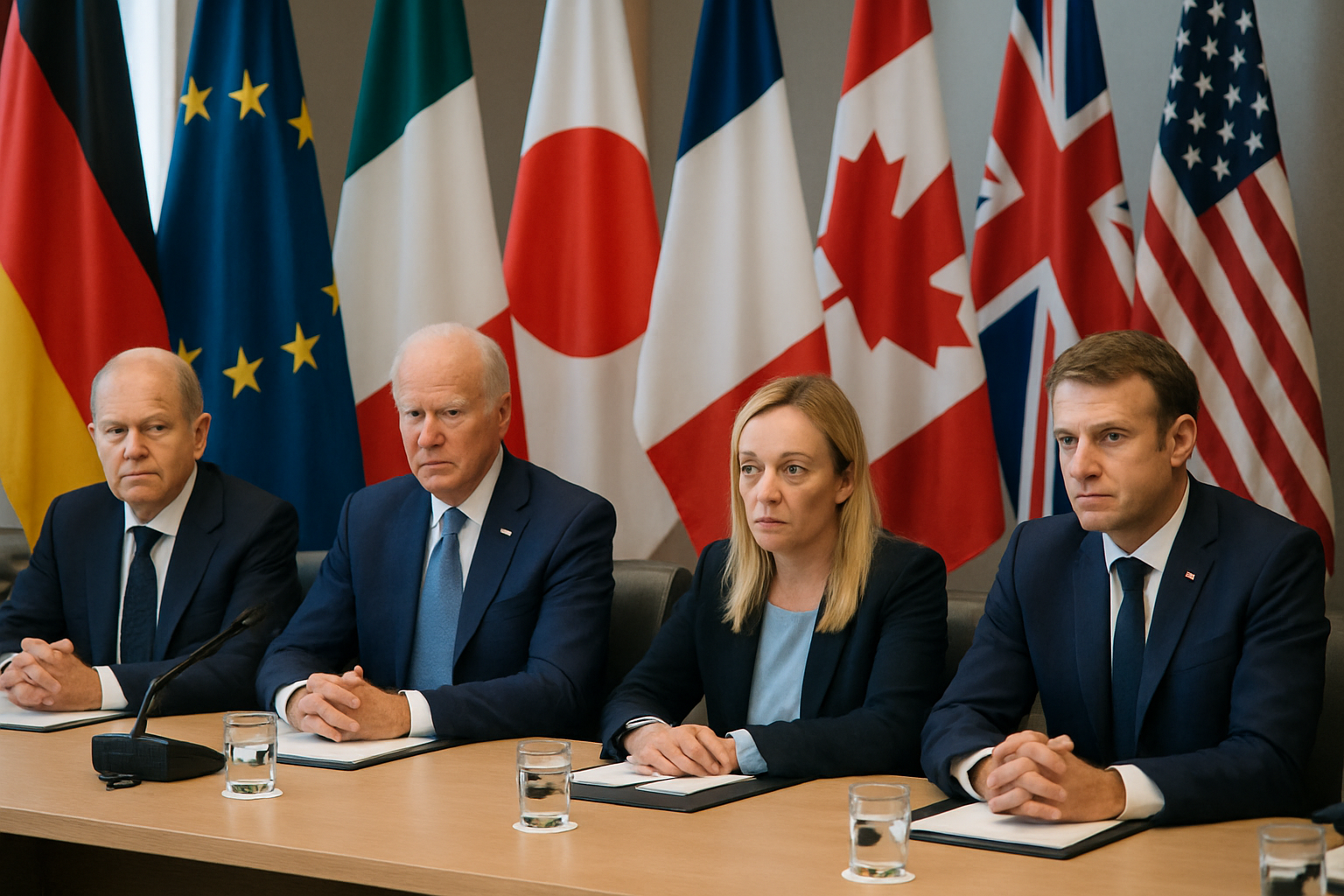
April 2026 has emerged as a pivotal month for global democracy, with political crises and electoral developments spanning from Eastern Europe to West Africa testing the resilience of democratic institutions worldwide.
Hungary's Democratic Crossroads
The most consequential political story of April 2026 centers on Hungary, where Prime Minister Viktor Orbán faces his most serious electoral challenge since returning to power in 2010. With parliamentary elections scheduled for April 12, polling data consistently shows Orbán's Fidesz party trailing opposition coalitions for the first time in over a decade.
Péter Magyar's Tisza Party has successfully consolidated opposition forces behind a pro-European platform advocating for wealth taxes, euro adoption, and stronger EU/NATO ties. This represents a stark contrast to Orbán's nationalist sovereignty approach that has dominated Hungarian politics for the past 16 years. The opposition's "Greatest National March" in March drew an estimated 500,000 participants, marking the largest anti-government demonstration since 2010.
"This is not just about Hungary's future, but about the future of European integration itself."
— Senior EU Official, speaking on condition of anonymity
Unprecedented Foreign Interference
What makes Hungary's electoral crisis particularly significant is the documented evidence of dual foreign interference. Investigative journalist Szabolcs Panyi's VSquare investigation confirmed Russian operative teams actively supporting Fidesz—the first concrete evidence of Kremlin agents directly participating in European electoral campaigns.
Simultaneously, the Trump administration has provided unprecedented political backing through high-level diplomatic visits, including JD Vance's Budapest visit five days before the election. This dual international intervention creates a historic precedent for foreign powers directly participating in EU member state elections.
EU Institutional Crisis Deepens
Hungary's political upheaval coincides with its continued blockade of a historic €90 billion Ukraine aid package, creating the deepest EU institutional crisis since the bloc's formation. The European Commission has frozen €19 billion in Hungarian funding over rule of law concerns, while enhanced cooperation discussions accelerate to bypass unanimity requirements—a fundamental departure from consensus decision-making.
The crisis has prompted European Council President António Costa to issue an unprecedented direct letter demanding Hungary honor its commitments, while Lithuanian Foreign Minister Kestutis Budrys warned that "the EU cannot become Budapest's hostage."
West African Democratic Developments
Meanwhile, in West Africa, significant political developments are unfolding across multiple nations. In Benin, officials are emphasizing the crucial role of the Constitutional Court ahead of the 2026 presidential election, highlighting the importance of judicial oversight in democratic processes.
The Enhanced Court of Justice's (ECOWAS) observation mission, led by former President Akufo-Addo, underscores the regional commitment to electoral integrity and democratic governance throughout West Africa.
Djibouti's Continued Leadership
In the Horn of Africa, Djibouti's long-serving leader has declared victory in Friday's election, securing his sixth consecutive presidential term. This development continues the pattern of extended leadership that has characterized Djibouti's political landscape for over two decades.
The election results reflect the complex dynamics of political continuity in a strategically important nation that serves as a crucial hub for international military bases and Red Sea shipping lanes.
Trump Administration's Global Political Influence
The Trump administration's active involvement in global political affairs extends beyond Hungary to broader regional dynamics. President Trump's promise to "use the full economic might of America to strengthen Hungary's economy" if Viktor Orbán wins re-election represents a significant departure from traditional US diplomatic neutrality in European elections.
This selective engagement strategy, focusing on conservative nationalist leaders aligned with Trump's worldview, marks a fundamental shift from traditional multilateral institutional engagement toward bilateral relationship preferences.
Democratic Resilience Under Pressure
These developments collectively represent what experts describe as the most challenging period for continental democracy since World War II. The convergence of foreign interference, energy weaponization, and institutional manipulation creates unprecedented strain on traditional democratic mechanisms.
Despite these challenges, European institutions have demonstrated fundamental resilience through credible elections, constitutional governance maintenance, and peaceful transitions. The question remains whether democratic institutions can adapt to 21st-century challenges while preserving the values that have underpinned European success since 1945.
Global Stakes and Implications
The outcomes of these political developments will influence European security architecture, international law enforcement credibility, and democratic governance effectiveness under authoritarian pressure for decades to come. Success in channeling political tensions through electoral competition while preserving institutional integrity would strengthen the European democratic model globally.
Conversely, failure could accelerate institutional fragmentation and undermine the cooperation principles that have been fundamental to international stability and prosperity in the post-war era.
"We are writing the template for 21st-century crisis management, and the world is watching whether democratic institutions can adapt while preserving European values."
— Senior EU Official
As April 2026 progresses, these political developments serve as critical test cases for democratic resilience, institutional innovation, and international cooperation in an increasingly complex global environment. The decisions made in the coming weeks will likely serve as precedents for how democratic nations navigate sovereignty challenges, foreign interference, and internal political divisions in the years ahead.
The global political landscape of April 2026 demonstrates that while democracy faces unprecedented challenges, it also possesses remarkable capacity for adaptation and renewal when citizens and institutions remain committed to democratic principles and peaceful political competition.