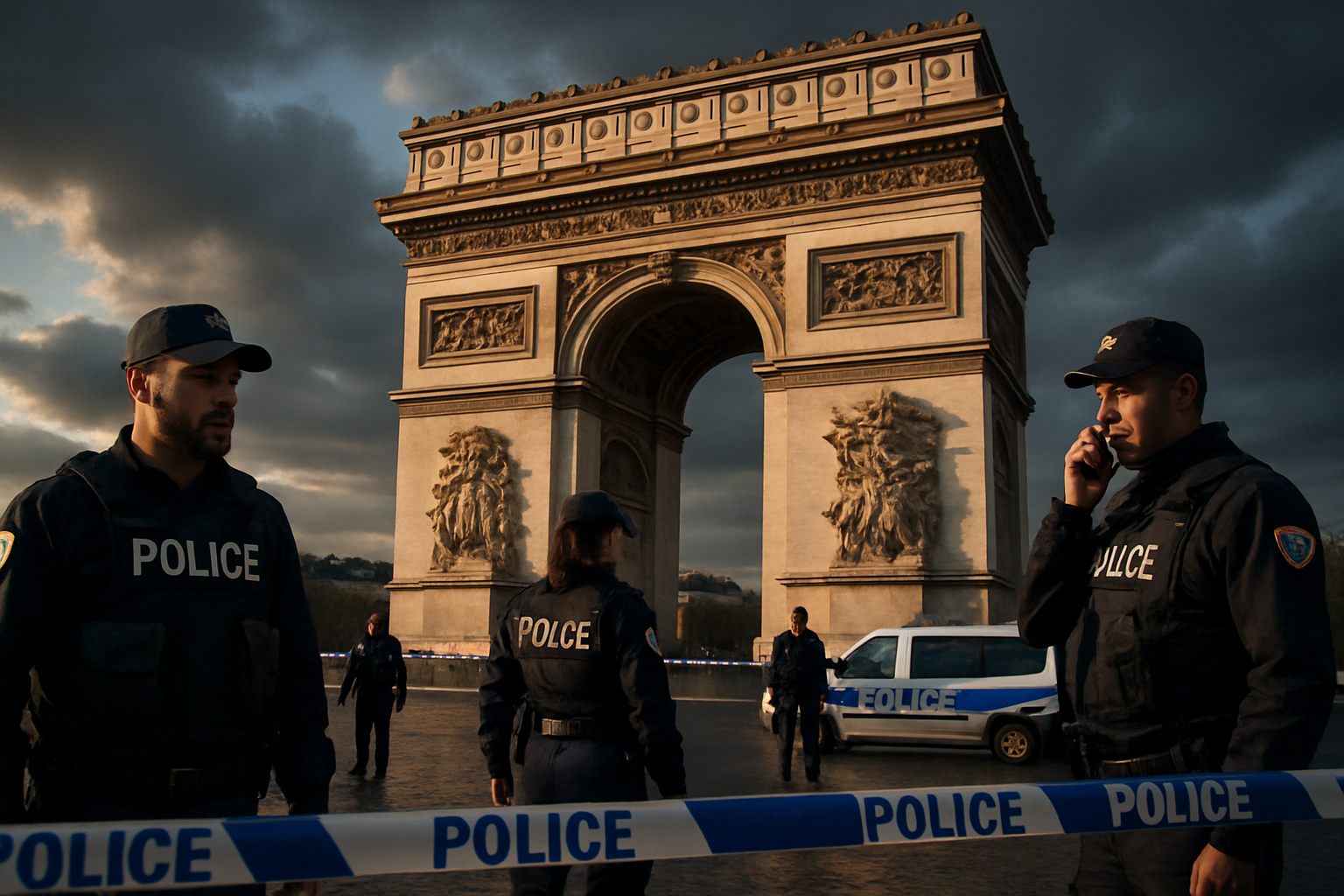
A knife-wielding attacker who threatened French police officers during a ceremonial flame-lighting at Paris's Arc de Triomphe has died from gunshot wounds sustained when officers opened fire to stop the assault. The incident, which French President Emmanuel Macron has characterized as an "Islamist terrorist attack," has prompted a full terrorism investigation.
The attack occurred Friday afternoon as gendarmes were conducting their daily ceremony to rekindle the eternal flame at the Tomb of the Unknown Soldier beneath the iconic monument. The assailant, armed with a knife, approached the officers and began threatening them during the solemn ritual that takes place every evening at 6:30 PM.
According to French authorities, one of the gendarmes opened fire when the attacker moved to strike, hitting him with multiple bullets. The wounded man was immediately transported to a Paris hospital in critical condition but succumbed to his injuries on Friday evening.
Suspect's Criminal History Revealed
Investigations have revealed that the deceased attacker had been released from prison just two months earlier in December 2025, having completed a 12-year sentence for terrorism-related charges. Swiss media reports indicate the man was previously convicted in 2013 for the attempted murder of police officers in what authorities described as a "terrorist-motivated" attack.
The suspect's recent release from prison has raised serious questions about France's monitoring of former terrorism convicts and the effectiveness of deradicalization programs. Belgian authorities confirmed the individual had also been previously convicted for attempting to kill law enforcement officers, demonstrating a clear pattern of targeting police personnel.
"This represents a significant failure in our surveillance systems for high-risk individuals recently released from prison."
— Security Expert, speaking anonymously to French media
Swift Terrorism Investigation Launched
France's National Anti-Terrorism Prosecutor's Office (PNAT) immediately took control of the investigation, signaling the seriousness with which authorities are treating the incident. The rapid response by terrorism prosecutors suggests investigators have identified clear indicators of extremist motivation.
The timing and location of the attack are particularly significant. The Arc de Triomphe stands as one of France's most iconic symbols, and the daily flame-lighting ceremony at the Tomb of the Unknown Soldier is a revered national tradition honoring French military sacrifices. Targeting this specific location and ceremony appears calculated to maximize symbolic impact.
Security footage from the area is being analyzed to determine if the attacker conducted surveillance or reconnaissance in advance of the assault. Initial reports suggest the individual acted alone, but investigators are examining possible connections to known extremist networks.
Presidential Response and Security Implications
President Emmanuel Macron's immediate classification of the incident as an "Islamist terrorist attack" underscores the government's assessment of the threat's nature. This designation triggers enhanced security protocols and allows for expanded investigative powers under France's anti-terrorism framework.
The attack comes amid heightened security concerns across France, particularly regarding individuals with previous terrorism convictions who have completed prison sentences. France has been grappling with the challenge of monitoring and reintegrating former extremists while protecting public safety.
No other individuals were injured in the incident, and authorities have confirmed there is no ongoing threat to public safety. However, the attack has prompted a review of security measures at major national monuments and ceremonial sites across the capital.
International Context and Concerns
The Arc de Triomphe attack adds to growing international concerns about "lone wolf" terrorism incidents targeting symbolic locations and law enforcement personnel. European intelligence agencies have been tracking a trend of recently released terrorism convicts attempting to carry out new attacks, often with limited planning but significant symbolic intent.
The incident occurred as France continues to face ongoing security challenges related to domestic terrorism threats. The country has experienced numerous attacks over the past decade, leading to the implementation of comprehensive counter-terrorism legislation and enhanced surveillance capabilities.
International partners, including European Union security agencies, have been notified of the incident and are reviewing their own protocols for monitoring former terrorism convicts. The case is expected to prompt discussions about information sharing regarding high-risk individuals across European borders.
Monument Security and Public Access
The Arc de Triomphe, one of Paris's most visited monuments, attracts millions of tourists annually. The area around the monument typically maintains significant security presence, but the daily flame ceremony requires officers to remain exposed while conducting the ritual.
Tourism officials have confirmed that public access to the monument will continue normally, though visitors may notice increased security measures in the immediate vicinity. The eternal flame ceremony will proceed as scheduled, demonstrating France's commitment to maintaining national traditions despite security threats.
Local businesses and residents in the 8th arrondissement have expressed shock at the attack occurring in what is considered one of Paris's most secure areas. The Champs-Élysées district maintains constant police patrols and surveillance coverage due to its high-profile nature and tourist density.
Broader Terrorism Prevention Challenges
The attack highlights ongoing challenges facing French authorities in preventing terrorism incidents by individuals with documented extremist histories. Despite serving a 12-year sentence and presumably undergoing deradicalization programming, the attacker retained both the capability and intent to carry out violence against state representatives.
Counter-terrorism experts point to the case as evidence of the limitations of current rehabilitation programs for terrorism offenders. The relatively simple nature of the attack—a single individual with a knife—demonstrates how difficult it can be to prevent determined individuals from attempting violence even with limited resources.
The incident will likely prompt legislative discussions about extending monitoring periods for former terrorism convicts and potentially mandating longer supervision following prison release. Current French law allows for administrative surveillance, but enforcement depends on available resources and judicial approval.
Investigation Continues
French authorities are conducting a comprehensive investigation into the attack, examining the suspect's activities since his December release from prison, potential contacts with extremist networks, and any indicators that might have preceded the assault.
The investigation will also review the circumstances of the attacker's prison release and whether appropriate monitoring protocols were followed. Questions are being raised about whether warning signs were missed or if additional supervision might have prevented the attack.
Results of the terrorism investigation are expected to influence policy discussions about post-release monitoring of terrorism convicts and may lead to enhanced security protocols at ceremonial sites across France. The case serves as a stark reminder of the ongoing terrorist threat facing European democracies and the challenges of balancing public safety with civil liberties.