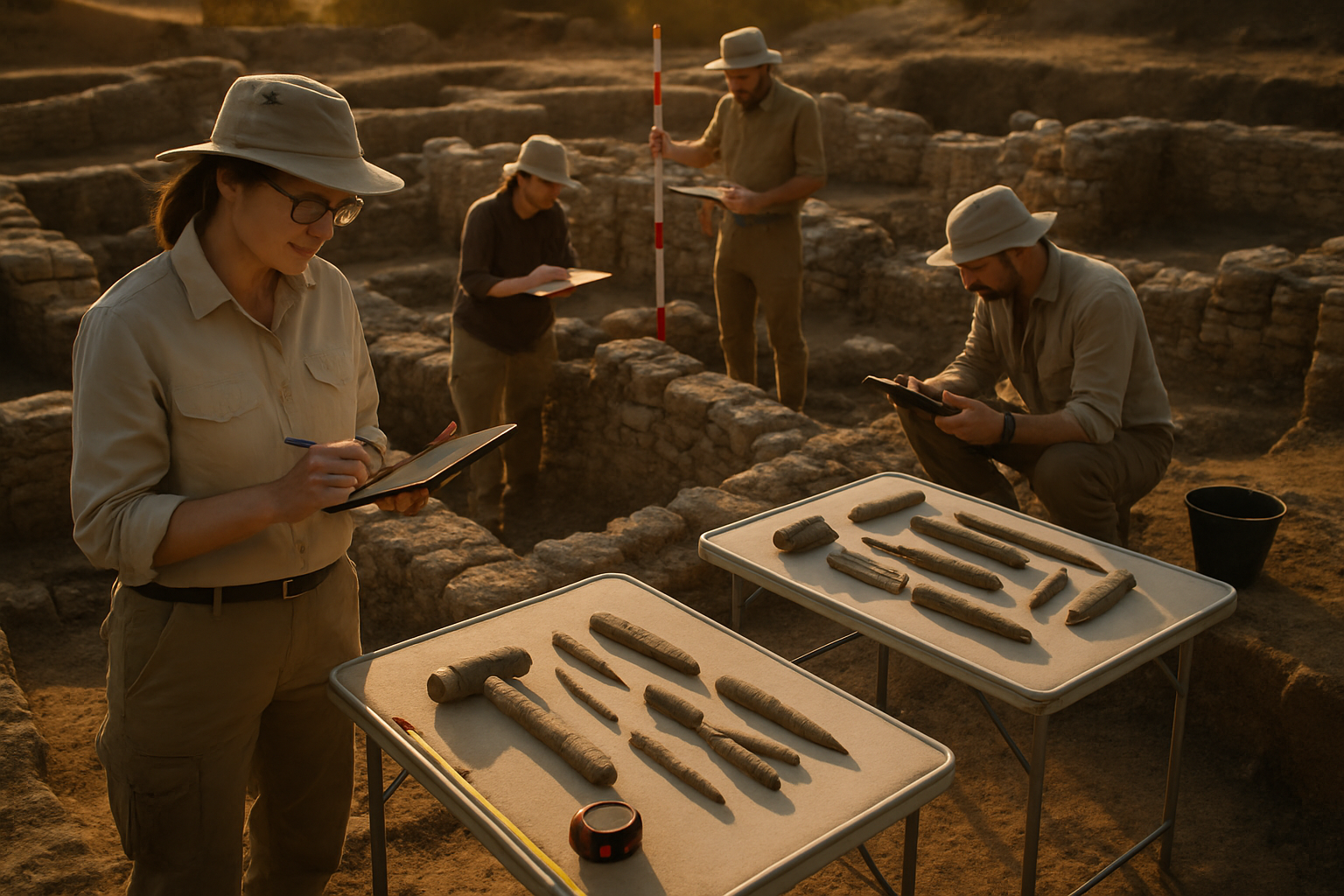
Archaeological discoveries across the Netherlands are revolutionizing our understanding of both ancient tool usage and medieval urban engineering, revealing sophisticated technologies that challenge conventional timelines of human innovation.
Recent findings demonstrate that ancient peoples used needles and awls for far more than simple clothing construction, while excavations at The Hague's Binnenhof have uncovered remarkable medieval infrastructure that showcases advanced engineering capabilities from the 13th and 14th centuries.
Ancient Tools: Beyond Basic Survival
New research by American scientists has fundamentally challenged long-held assumptions about ancient tool usage. While it might seem obvious that early humans used needles and awls primarily for making clothes, evidence now suggests these implements served a dramatically wider range of applications across multiple cultures and time periods.
The research reveals that ancient peoples employed these sophisticated tools for tattooing, basket weaving, leather working, and intricate decorative arts. This discovery aligns with the broader "2026 Archaeological Renaissance" that has revealed increasingly complex capabilities among early human societies worldwide.
"These findings suggest our ancestors possessed far more versatile technological capabilities than traditional archaeological models have assumed."
— Archaeological Research Team
The multi-functional nature of these ancient tools demonstrates sophisticated understanding of material properties, precision manufacturing, and diverse application techniques that required considerable skill and knowledge transfer across generations.
Medieval Dutch Engineering Marvels
Simultaneously, archaeologists working at the historic Binnenhof complex in The Hague have uncovered extraordinary evidence of medieval urban planning sophistication. The excavations have revealed the foundations of the Spuipoort, a medieval city gate dating from the late 13th or early 14th century, providing unprecedented insights into Dutch medieval architectural engineering.
The Spuipoort discovery represents more than just another historical site—it showcases the remarkable urban planning capabilities of medieval Dutch communities. The gate's strategic positioning, sophisticated construction techniques, and integration with broader city infrastructure demonstrate advanced understanding of defensive architecture, traffic flow, and civic planning.
Architectural Sophistication
The discovered foundations reveal intricate stonework, carefully planned drainage systems, and defensive features that required extensive coordination between architects, engineers, and civic authorities. The precision of the construction techniques suggests the existence of specialized guilds and knowledge systems that preserved and transmitted complex engineering expertise across generations.
Archaeological investigation has employed cutting-edge ground-penetrating radar, advanced chemical analysis, and digital mapping technologies to understand construction methods and building phases. These modern analytical techniques, combined with traditional excavation methods, are revealing previously hidden aspects of medieval urban development.
Global Context: The 2026 Archaeological Renaissance
These Dutch discoveries occur within a broader pattern of remarkable archaeological breakthroughs throughout 2026. From 5,000-year-old Egyptian drilling machines to 350,000-year-old fire control evidence in England, researchers worldwide are uncovering evidence of sophisticated ancient capabilities that fundamentally challenge evolutionary timelines.
The Netherlands findings contribute to this global renaissance by demonstrating that medieval European communities possessed far more advanced technical knowledge than previously recognized. The combination of ancient tool versatility and medieval engineering sophistication suggests continuous innovation and knowledge preservation across millennia.
Technological Integration
Modern archaeological methodology exemplifies successful integration of cutting-edge analytical techniques with traditional fieldwork expertise. Digital documentation creates permanent records accessible to researchers globally while protecting original artifacts. Advanced imaging reveals construction details invisible to previous generations of archaeologists.
This technological convergence enables international cooperation on unprecedented scales. Dutch archaeological teams collaborate with specialists across Europe and North America, sharing expertise in conservation, analysis, and interpretation that transcends individual national capabilities.
Preservation Challenges and Opportunities
The discoveries underscore urgent challenges facing archaeological preservation in an era of accelerating climate change. January 2026 marked the 18th consecutive month of global temperatures exceeding 1.5°C above pre-industrial levels, creating unprecedented threats to archaeological sites through extreme weather, flooding, and environmental degradation.
However, these same environmental pressures have created opportunities for discovery. Construction projects for climate adaptation infrastructure, renewable energy installations, and flood protection systems have revealed previously unknown archaeological sites across the Netherlands and Europe.
"The race against time to document and preserve our archaeological heritage has never been more urgent, but it has also never been supported by such sophisticated analytical capabilities."
— Dutch Archaeological Authority
Economic and Educational Impact
The archaeological discoveries generate substantial economic benefits through cultural tourism, international media attention, and academic partnerships. The Binnenhof excavations are expected to attract scholarly attention and heritage tourism, contributing to the Netherlands' position as a leading destination for archaeological research and cultural heritage experiences.
Educational benefits extend beyond tourism revenue. The discoveries provide rich material for museum exhibitions, specialized academic programs, and international summer schools that connect contemporary communities with their historical heritage while fostering scientific career development.
Cultural Diplomacy Success
These archaeological breakthroughs serve multiple diplomatic functions, strengthening the Netherlands' international relationships through collaborative research, cultural exchange, and shared heritage preservation efforts. The discoveries demonstrate how archaeological research serves as soft power, building understanding and cooperation across national boundaries.
Future Research Directions
The Dutch discoveries establish foundations for continued archaeological breakthroughs. Researchers plan expanded excavations around the Binnenhof area, seeking additional evidence of medieval urban infrastructure. Advanced analytical techniques will enable detailed studies of construction materials, dating precision, and comparisons with similar sites across Europe.
The ancient tools research opens entirely new avenues for understanding early human technological capabilities. Teams are examining sites worldwide for evidence of multi-functional tool usage, seeking patterns that might reveal broader technological sophistication among ancient communities.
International cooperation frameworks developed through these projects provide templates for future collaborative archaeological research. The success demonstrates that shared expertise, coordinated funding, and digital documentation can achieve remarkable results while respecting local cultural heritage ownership.
Implications for Historical Understanding
These discoveries represent a fundamental shift in archaeological thinking, moving beyond assumptions of gradual technological progress toward recognition of sophisticated ancient capabilities. The evidence suggests human communities developed complex solutions to technical challenges much earlier than traditional evolutionary models assumed.
The convergence of ancient tool versatility and medieval engineering excellence demonstrates continuous innovation across millennia. Rather than viewing history as simple progression from primitive to advanced, these findings reveal cyclical patterns of innovation, knowledge preservation, and technical adaptation that characterized human societies throughout history.
As the 2026 Archaeological Renaissance continues, each discovery provides new pieces of humanity's technological puzzle, revealing ancestors who were far more ingenious, adaptable, and sophisticated than previously understood. The Netherlands, with its remarkable preservation conditions and commitment to scientific archaeological research, remains at the forefront of this global rediscovery of human heritage.