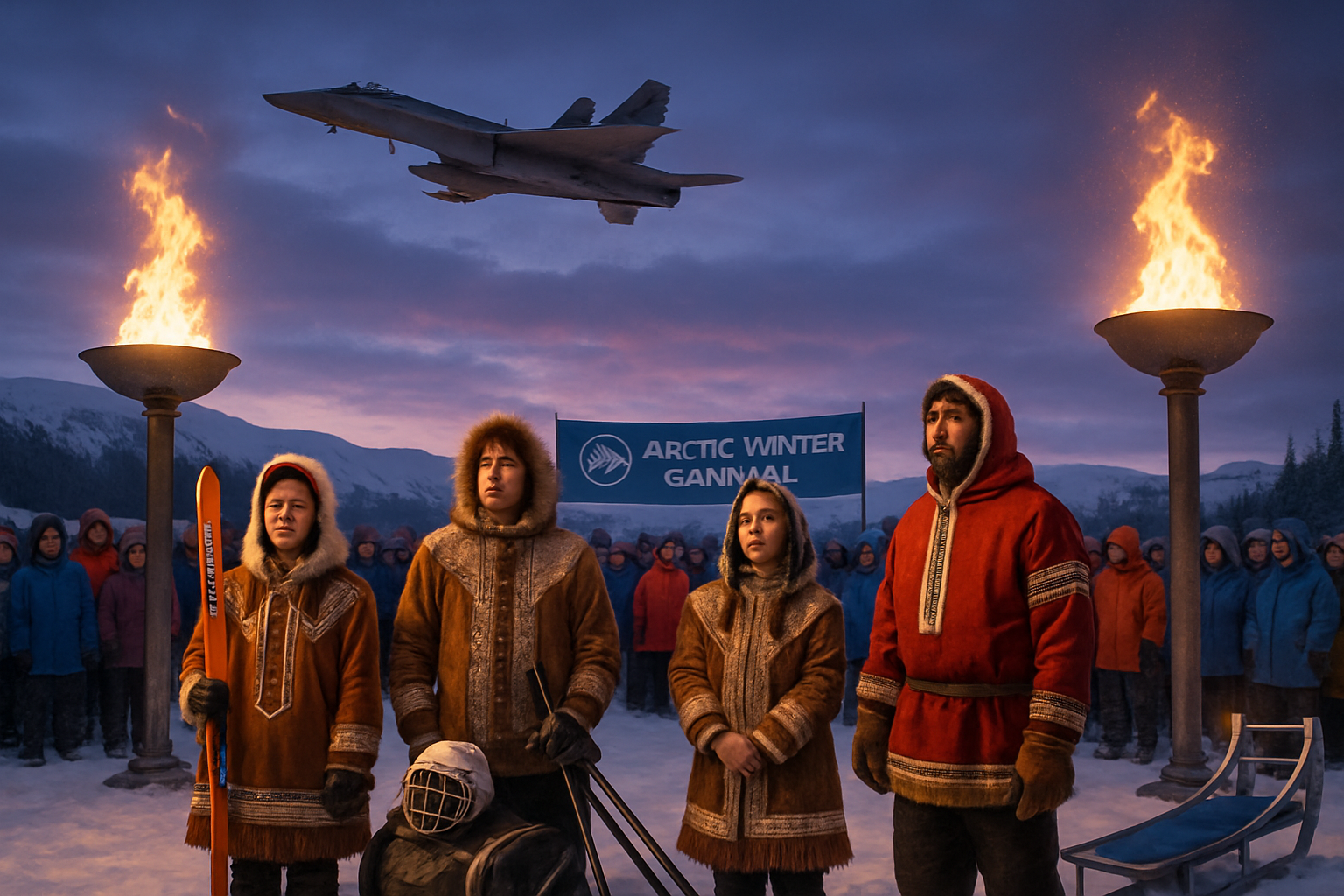
The Arctic Winter Games opened in Whitehorse on March 8, 2026, with an unprecedented military flyover that highlighted how geopolitical tensions are increasingly infiltrating one of the North's most cherished cultural celebrations.
A CF-18 fighter jet from Cold Lake, Alberta, soared over the opening ceremony—a display that organizers described as "practically unheard of" in the Canadian North. While military aircraft appearances at sporting events are commonplace elsewhere, the Arctic Winter Games have traditionally maintained their focus on cultural exchange and athletic competition among northern communities.
Indigenous Heritage at the Heart of Competition
Despite the geopolitical overtones, the Games continue to serve their founding purpose: celebrating the rich sporting traditions and cultural heritage of Indigenous peoples across the Arctic. Athletes from across northern Canada, Alaska, Greenland, and other circumpolar regions gather to compete in traditional sports alongside modern winter disciplines.
The event represents a unique fusion of ancient and contemporary athletic traditions. Traditional games like the one-foot high kick, Arctic wrestling, and dog mushing stand alongside hockey, skiing, and figure skating. This blend reflects the ongoing evolution of Indigenous culture—maintaining ancestral practices while embracing modern sporting excellence.
For many participants, the Games provide a rare opportunity to connect with their cultural roots while demonstrating athletic prowess. Indigenous athletes often speak of competing not just for personal achievement, but to honor their communities and preserve traditions that have sustained Arctic peoples for millennia.
Geopolitical Undercurrents Surface
The military flyover reflects broader tensions that have emerged across Arctic regions as climate change opens new shipping routes and resource extraction opportunities. The presence of military aircraft at what has traditionally been a purely cultural and sporting event signals how northern sovereignty has become a pressing concern for Arctic nations.
These developments come amid heightened international focus on the Arctic. Recent months have seen increased military activities in northern regions, with nations like Canada strengthening their Arctic presence as geopolitical competition intensifies in what was once considered a remote, largely unpoliticized region.
The timing of the military display was particularly notable, occurring as discussions about northern sovereignty and resource rights continue to evolve. For many observers, the juxtaposition of fighter jets with traditional Indigenous celebrations created an uncomfortable tension between celebration and militarization.
Cultural Resilience Amid Political Pressure
Despite these challenges, Indigenous communities continue to use the Arctic Games as a platform for cultural assertion and preservation. Traditional competitions serve as living laboratories for ancestral knowledge, passing down techniques and traditions that connect contemporary athletes to their heritage.
The Games also facilitate important cultural exchanges between diverse Indigenous groups across the Arctic. Athletes from Inuit communities in Canada's eastern Arctic compete alongside Gwich'in participants from Alaska and Indigenous athletes from northern Scandinavia, creating bonds that transcend political boundaries.
Cultural programming accompanying the athletic competitions includes storytelling sessions, traditional craft demonstrations, and language preservation workshops. These activities underscore the Games' role as more than sporting competition—they serve as crucial cultural preservation vehicles.
Balancing Tradition with Modern Realities
The presence of military aircraft at the 2026 Games reflects the complex reality facing Arctic communities: they must navigate between preserving cultural traditions and acknowledging the changing geopolitical landscape that increasingly affects their homelands.
For many Indigenous leaders, maintaining the Games' cultural integrity while acknowledging political realities requires careful balance. They emphasize that traditional sporting competitions remain central to the event's mission, even as external pressures create new contexts for these celebrations.
The competition continues through March 15, with thousands of athletes participating in both traditional and modern events. Organizers report strong participation despite the political undertones, suggesting that the fundamental appeal of cultural celebration and athletic competition remains strong among Arctic communities.
Looking Forward: Games as Cultural Anchor
As Arctic regions face increasing international attention and political pressure, events like the Arctic Winter Games become even more important as anchors for Indigenous identity and cultural continuity. They provide spaces where traditional knowledge systems can flourish alongside contemporary athletic achievement.
The 2026 Games may mark a turning point where purely cultural events must confront geopolitical realities. However, the strong participation and continued enthusiasm for traditional competitions suggest that Indigenous communities remain committed to using these platforms for cultural preservation and celebration.
For Arctic Indigenous peoples, the Games represent something that transcends politics: they embody the resilience, adaptability, and cultural richness that have enabled their communities to thrive in one of the world's most challenging environments for thousands of years. That heritage continues to flourish, even as the political landscape around them evolves.