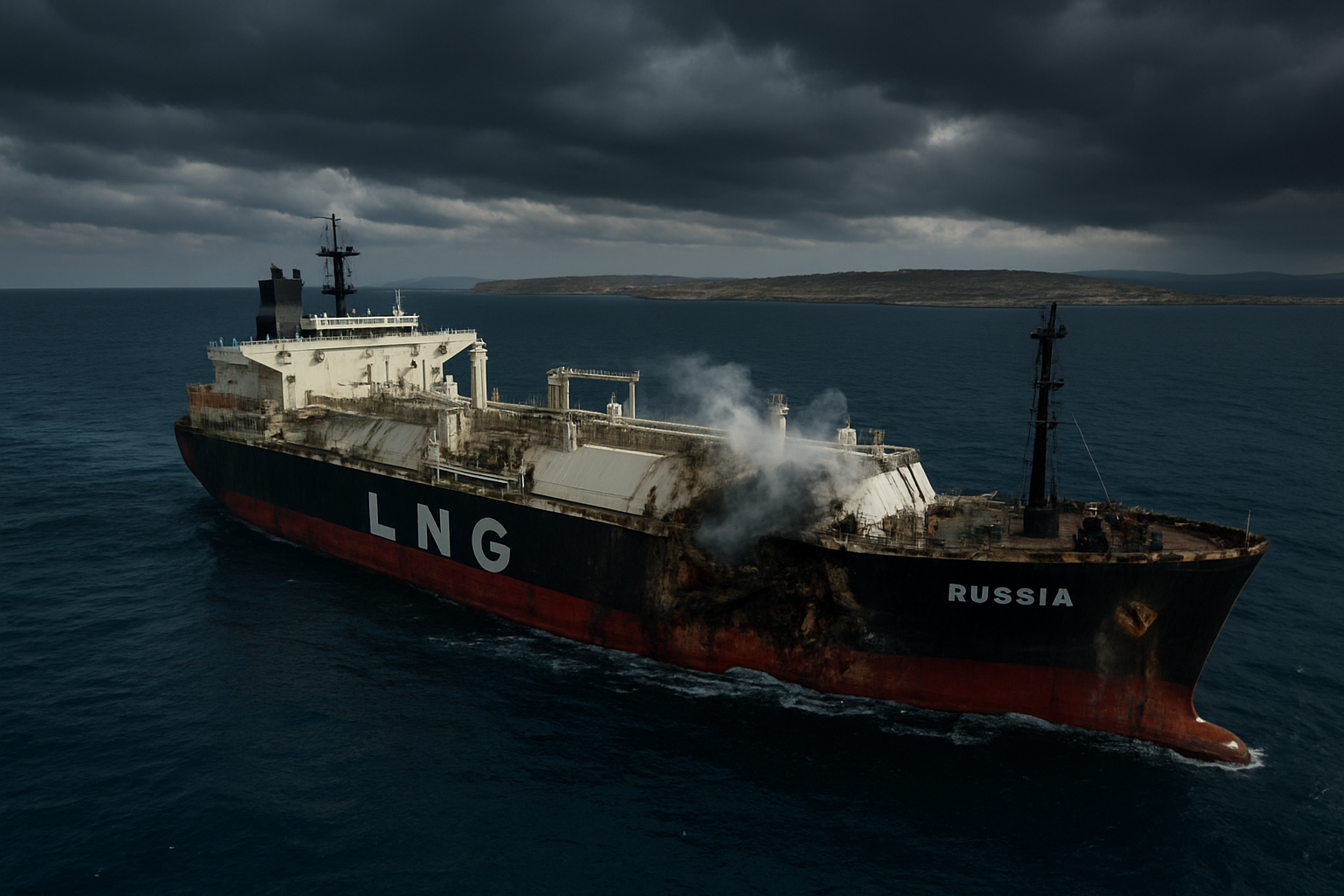
The Russian LNG tanker Arctic Metagaz, severely damaged by a suspected maritime drone attack earlier this month, has drifted 111 nautical miles from Maltese shores and moved outside the country's Search and Rescue Area, according to sources confirmed by Malta Today.
The vessel, carrying approximately 61,000 tons of liquid natural gas, has been described by Italian officials as an "environmental bomb" that could "explode at any moment." The tanker was reportedly struck by a drone attack in early March, leaving it unmanned with a significant hull breach and drifting uncontrolled in Mediterranean waters.
Escalating Environmental Threat
French media reports describe the Arctic Metagaz as "severely damaged by a naval drone" and drifting for two weeks off the coast of Sicily "without a decision being taken to prevent serious pollution." The vessel's movement away from Malta's immediate jurisdiction does not diminish the environmental risks it poses to the broader Mediterranean ecosystem.
The tanker represents a dangerous escalation in maritime warfare, marking what security analysts believe to be the first successful drone attack on a Russian LNG carrier. The vessel is part of Russia's extensive "shadow fleet" of over 600 vessels operating with false documentation to circumvent international sanctions.
"This vessel poses enormous risks and could explode at any moment."
— Alfredo Mantovano, Italian Official
International Response and Concerns
Nine European Union countries have urgently called upon the European Commission to take decisive action regarding the drifting tanker. Environmental groups have echoed these concerns, with organizations describing the vessel as presenting catastrophic risks to Mediterranean marine life and coastal communities.
According to BBC reports cited by Maltese media, the tanker carries not only the massive LNG cargo but also significant quantities of fuel oil and diesel, compounding the potential environmental disaster. Italian and Maltese authorities continue monitoring the ship's southward trajectory toward Libya.
The crisis has exposed critical vulnerabilities in international maritime law enforcement, as the vessel's location in international waters has limited direct intervention options for coastal states, despite the clear environmental threat it represents.
Historical Context of Maritime Tensions
The Arctic Metagaz incident occurs against the backdrop of unprecedented maritime security challenges that have plagued global shipping throughout 2026. The broader Mediterranean crisis follows the complete collapse of US-Iran nuclear negotiations, leading to Operation Epic Fury and Iran's retaliatory closure of the Strait of Hormuz, which has affected 40% of global oil transit.
This escalating pattern of maritime warfare has seen oil prices surge past $100 per barrel for the first time since 2022, with the International Energy Agency deploying its largest strategic petroleum reserve release in 50 years—400 million barrels from 32 member countries.
The stricken Russian tanker represents a new dimension to these maritime conflicts, bringing environmental warfare directly into European waters. Previous incidents in March included Iranian drone attacks on Cyprus, marking the first Middle Eastern attack on European territory since World War II.
Environmental and Economic Implications
The 61,000 tons of LNG aboard the Arctic Metagaz represents one of the most significant environmental threats the Mediterranean has faced in recent years. Marine biologists warn that any explosion or leak could devastate regional ecosystems, particularly affecting marine mammals and migratory species that rely on Mediterranean waters.
The incident has also highlighted the vulnerability of energy infrastructure in an era of hybrid warfare. Russia's shadow fleet operations, designed to evade sanctions through false documentation and concealed ownership, have created new categories of maritime risk that existing international frameworks struggle to address.
Economic implications extend beyond immediate environmental concerns. Maritime insurance premiums have surged globally as underwriters grapple with new forms of warfare targeting civilian shipping infrastructure. The uncertainty surrounding the Arctic Metagaz's ultimate fate continues to influence regional shipping routes and costs.
Current Status and Future Concerns
While the vessel has moved outside Malta's immediate search and rescue jurisdiction, Mediterranean coastal states remain on high alert. The tanker's southward drift toward Libya raises additional concerns about response capabilities in less monitored waters.
European maritime officials emphasize that the crisis tests fundamental assumptions about maritime security and environmental protection. The Arctic Metagaz incident demonstrates how modern conflicts can create persistent transnational threats that outlast their immediate military objectives.
International maritime law experts note that the incident exposes gaps in current frameworks for addressing disabled vessels in international waters, particularly when those vessels pose environmental threats to multiple coastal states simultaneously.
Broader Security Implications
The Arctic Metagaz crisis represents more than an isolated environmental incident—it exemplifies the new reality of maritime warfare where civilian infrastructure becomes both target and weapon. The vessel's continued drift through international waters demonstrates how modern conflicts can create persistent, mobile threats that challenge traditional concepts of territorial security.
Intelligence analysts view the successful drone attack on the LNG tanker as a significant evolution in maritime warfare capabilities. The incident has prompted enhanced surveillance of critical energy infrastructure throughout European waters and accelerated discussions about protecting civilian maritime assets in conflict zones.
As the Arctic Metagaz continues its unpredictable drift through Mediterranean waters, it serves as a floating reminder of the new security challenges facing the international community. The vessel's ultimate fate will likely influence future maritime security protocols and environmental protection frameworks for decades to come.