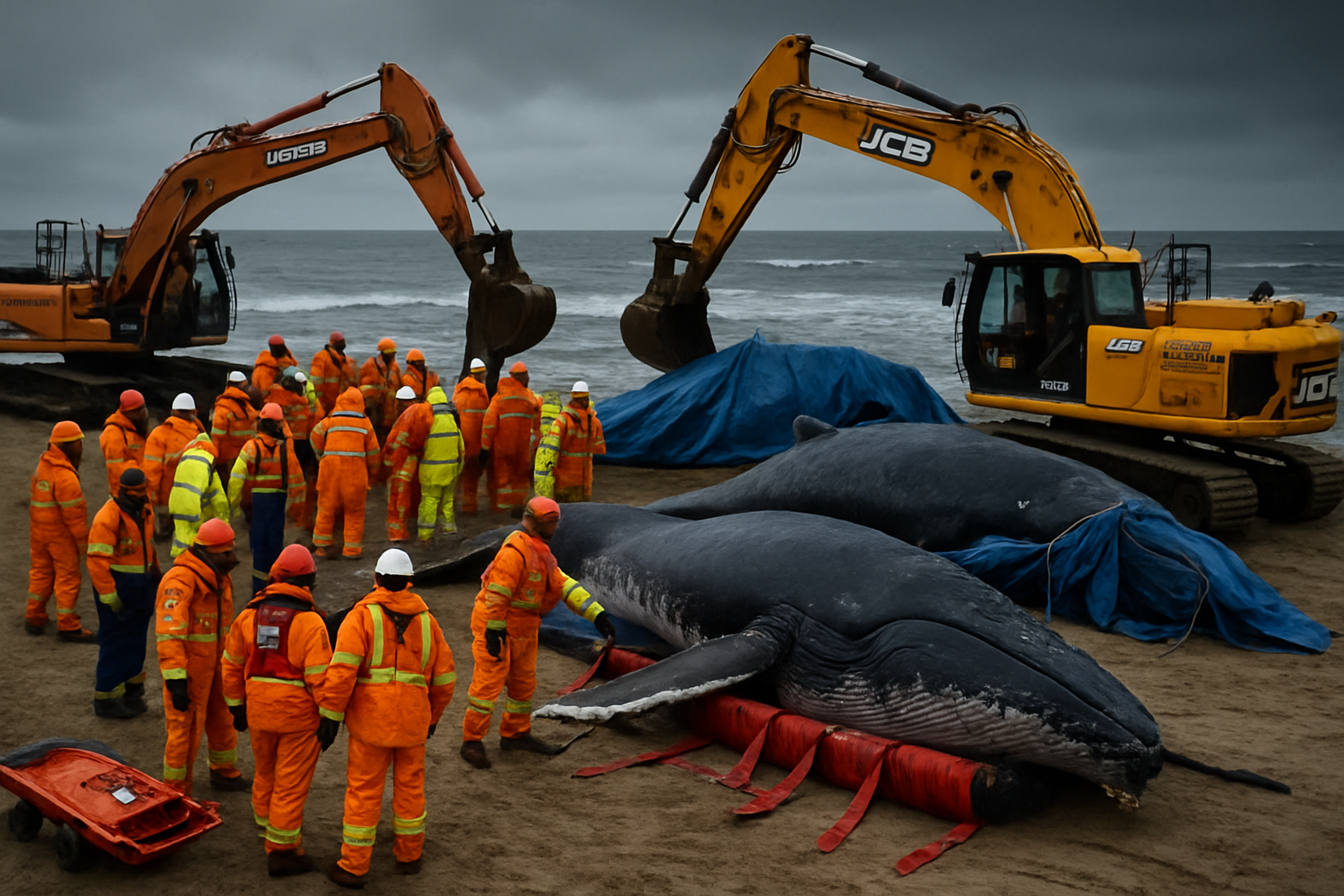
International marine rescue teams are conducting an unprecedented multi-day operation in the Baltic Sea, working around the clock to save beached whales using heavy machinery and specialized equipment in some of the most challenging maritime rescue conditions recorded this year.
The complex rescue effort, now entering its third day, demonstrates extraordinary international cooperation as Finnish and German emergency teams coordinate sophisticated operations to save stranded marine mammals amid harsh Baltic Sea weather conditions.
German Teams Deploy Heavy Machinery in Unprecedented Rescue Effort
German rescue teams made international headlines on Thursday when they deployed two industrial excavators to create an emergency channel through a sandbank, attempting to provide a pathway for a beached humpback whale to return to deeper waters. The operation, conducted along the German Baltic coast, represents one of the most innovative approaches to marine mammal rescue ever attempted in European waters.
The German rescue operation required precise coordination between marine biologists, heavy equipment operators, and coastal engineers to ensure the excavation work would not further endanger the whale while creating a viable escape route to deeper waters.
Finland's Multi-Day Maritime Emergency Response
Simultaneously, Finnish rescue teams have been engaged in their own intensive three-day operation to save a humpback whale that became entangled in fishing nets, significantly weakening the animal. Finnish emergency services, working in coordination with marine biology experts, have deployed specialized cutting equipment and support vessels to address what has become one of the most challenging marine rescue operations in recent Baltic Sea history.
The Finnish operation has been complicated by the whale's compromised condition after becoming trapped in commercial fishing equipment, requiring rescue teams to work with extreme caution to avoid further injury to the already distressed animal.
Unprecedented International Marine Conservation Cooperation
The parallel rescue operations occurring in Finnish and German waters represent a significant moment in international marine conservation cooperation. Both nations have shared expertise, equipment specifications, and operational strategies throughout the coordinated efforts, establishing new protocols for future cross-border marine mammal emergency responses.
"These operations demonstrate how international cooperation can mobilize rapidly when marine wildlife faces life-threatening situations. The coordination between Finnish and German teams sets a new standard for Baltic Sea conservation efforts."
— International Marine Conservation Expert
The rescue efforts are being conducted under the broader context of what marine biologists are calling a "Global Conservation Renaissance," characterized by unprecedented international coordination in wildlife protection during a period of significant environmental challenges.
Challenging Baltic Sea Conditions Test Rescue Capabilities
Both operations have been significantly complicated by harsh Baltic Sea conditions, including cold water temperatures, variable weather patterns, and challenging coastal geography that makes access to stranded marine mammals extremely difficult. The German team's decision to use excavators represents an innovative adaptation to coastal conditions that previously would have made rescue attempts nearly impossible.
The Finnish operation has required multiple specialized vessels and round-the-clock monitoring to ensure the weakened whale receives continuous support while teams work to safely remove fishing net entanglements.
Marine Mammal Conservation in a Changing Climate
These rescue operations are occurring during what scientists confirm as the 21st consecutive month of global temperatures exceeding 1.5°C above pre-industrial levels, representing the longest sustained extreme warming period in recorded human history. Climate change is increasingly affecting marine mammal behavior and distribution patterns, potentially contributing to more frequent beaching incidents as traditional migration routes and feeding areas are disrupted.
Marine biologists note that the current environmental conditions create additional stress factors for whales and other marine mammals, making rescue operations both more necessary and more challenging to conduct successfully.
Technology and Traditional Knowledge Integration
The rescue operations demonstrate sophisticated integration of cutting-edge technology with traditional marine conservation knowledge. Finnish teams are employing environmental DNA sampling, satellite tracking, and AI-powered behavioral analysis alongside decades of Baltic Sea marine mammal expertise developed by local conservation specialists.
German rescue coordinators have utilized advanced sonar systems and real-time weather monitoring to optimize the timing and methodology of their excavation operations, ensuring maximum safety for both the whale and rescue personnel.
Economic and Strategic Implications
The international cooperation demonstrated in these rescue operations functions as more than wildlife conservation—it represents a broader strategic approach where environmental protection serves as economic development strategy rather than regulatory burden. Both Finland and Germany are positioning themselves as leaders in marine conservation technology and international cooperation, attracting sustainable investment and research partnerships.
The operations are generating valuable data and operational experience that will support future marine rescue capabilities, eco-tourism development, and international environmental leadership positioning for both nations.
Setting Precedents for Future Marine Emergencies
The success or failure of these coordinated rescue operations will influence marine mammal rescue protocols across the Baltic region and potentially globally. The innovative use of heavy machinery, international resource sharing, and sustained multi-day operations under challenging conditions is establishing new possibilities for what can be achieved when nations coordinate effectively on marine conservation emergencies.
Environmental experts note that as climate change continues to affect marine ecosystems, the need for sophisticated international rescue capabilities will only increase, making the lessons learned from these operations critically important for future conservation efforts.
Critical Action Window for Marine Conservation
These rescue operations are occurring at what marine conservationists describe as a critical juncture between reactive crisis management and proactive ecosystem service management. The environmental action window for protecting marine mammals is narrowing rapidly as ecological systems approach critical thresholds that could trigger irreversible changes affecting global marine food security and climate stability.
The tools, knowledge, and cooperation frameworks demonstrated in the Finnish and German operations exist for comprehensive marine protection, but success requires unprecedented speed and coordination through sustained international cooperation and enhanced recognition that environmental protection constitutes essential infrastructure for planetary sustainability.
As rescue teams continue their around-the-clock efforts in both Finnish and German waters, the international marine conservation community watches closely, understanding that these operations may establish crucial precedents for how humanity responds to marine wildlife emergencies in an era of unprecedented environmental challenge.