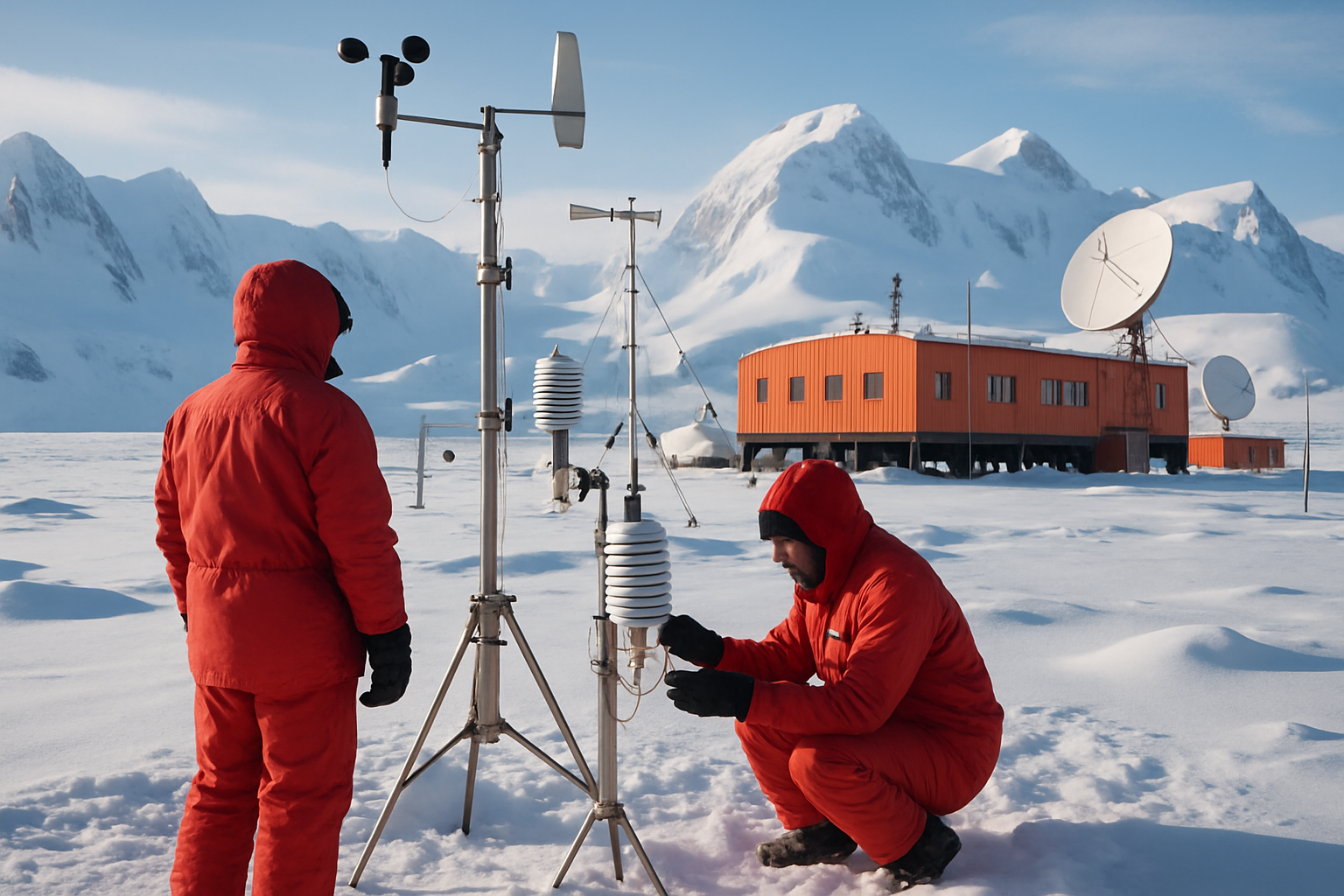
Argentina's Antarctic research legacy spans over 120 years, beginning with a modest meteorological observatory in 1904 that became the foundation for the continent's most comprehensive climate monitoring network and establishing Buenos Aires as the global headquarters for Antarctic Treaty governance.
The story of Argentina's Antarctic commitment began on the remote Laurie Island in the South Orkney Islands, where Argentine scientists established the continent's first permanent meteorological station in 1904. This pioneering installation marked the beginning of an uninterrupted Argentine presence on the white continent, creating the world's longest continuous scientific record from Antarctica.
Historical Foundation: The 1904 Meteorological Observatory
The original observatory on Laurie Island represented far more than a simple weather station. Argentine scientists recognized early that Antarctica held crucial keys to understanding global climate patterns, atmospheric circulation, and weather systems affecting the entire Southern Hemisphere. The station's establishment required extraordinary logistical planning, with supplies and personnel transported across treacherous Southern Ocean waters using early 20th-century maritime technology.
From its inception, the meteorological observatory collected comprehensive atmospheric data including temperature, barometric pressure, wind patterns, precipitation levels, and cloud formations. These measurements, recorded daily for over a century, now constitute one of the world's most valuable long-term climate datasets, providing irreplaceable insights into climate change patterns and natural variability.
"The 1904 station represented Argentina's vision that Antarctic research would become essential for understanding global climate systems. This foresight has proven remarkably prescient."
— Dr. María Elena Castellano, Argentine Antarctic Institute
Buenos Aires: Global Antarctic Treaty Headquarters
Argentina's Antarctic expertise and diplomatic leadership culminated in Buenos Aires becoming the permanent seat of the Antarctic Treaty Secretariat, the organization coordinating international Antarctic governance under the 1959 Antarctic Treaty System. This designation recognizes Argentina's unique position combining the longest continuous Antarctic presence with sophisticated understanding of the continent's scientific and environmental challenges.
The Secretariat coordinates activities among the 54 Antarctic Treaty nations, manages environmental protection protocols, facilitates scientific cooperation, and ensures peaceful use of Antarctica for scientific purposes. Buenos Aires hosts annual consultative meetings where nations address emerging challenges including climate change impacts, resource management, and environmental protection standards.
Modern Climate Research Operations
Contemporary Argentine Antarctic research extends far beyond the original meteorological station, encompassing a network of permanent and seasonal research facilities across Argentine Antarctic Territory. Scientists conduct multidisciplinary research including glaciology, oceanography, atmospheric physics, biology, and environmental monitoring using cutting-edge technology combined with traditional observation methods.
Current research priorities focus on climate change impacts, with Argentine scientists documenting accelerating ice sheet dynamics, changing precipitation patterns, and ecosystem responses to warming temperatures. The research contributes essential data to global climate models and international assessments including IPCC reports and World Meteorological Organization analyses.
Advanced Monitoring Systems
Modern Argentine Antarctic stations employ sophisticated instrumentation including automated weather monitoring systems, satellite communication networks, and real-time data transmission capabilities. Scientists use ice core drilling, atmospheric sampling, and oceanographic measurements to reconstruct historical climate conditions and project future changes.
The integration of traditional meteorological observations with contemporary climate science creates comprehensive understanding of Antarctic environmental systems. Argentine researchers collaborate extensively with international partners through the Scientific Committee on Antarctic Research (SCAR) and other cooperative frameworks.
Climate Change Research Frontlines
Argentina's Antarctic research assumes heightened significance as climate change accelerates in polar regions. Antarctic Peninsula temperatures have increased faster than global averages, with profound implications for ice sheet stability, sea level rise, and global ocean circulation patterns.
Argentine scientists document these changes through multiple research approaches. Glaciologists monitor ice sheet thickness and movement using satellite technology and ground-based measurements. Marine biologists study ecosystem responses to changing temperatures and ice conditions. Atmospheric physicists analyze ozone depletion, greenhouse gas concentrations, and weather pattern modifications.
"Our century-long presence provides unique perspective on Antarctic changes. We can distinguish natural variability from human-induced climate change because our records extend back to pre-industrial conditions."
— Dr. Rodolfo Sánchez, National Antarctic Directorate
International Collaboration Networks
Argentine Antarctic research operates within extensive international networks sharing data, expertise, and resources. The Antarctic Treaty System mandates scientific cooperation and data sharing, creating collaborative frameworks that transcend national boundaries and geopolitical tensions.
Recent international partnerships include joint research projects with Chilean, British, and Brazilian Antarctic programs, shared logistical support for remote research operations, and coordinated monitoring of regional environmental changes. These collaborations maximize scientific return while minimizing environmental impacts and operational costs.
Environmental Protection Leadership
As Antarctic Treaty Secretariat host, Argentina plays crucial roles in environmental protection policy development. The 1991 Protocol on Environmental Protection to the Antarctic Treaty, negotiated through Buenos Aires-hosted meetings, established Antarctica as a "natural reserve devoted to peace and science" with comprehensive environmental protection standards.
Argentine leadership emphasizes balancing scientific research with environmental conservation. Research activities must comply with rigorous environmental impact assessments, waste management protocols, and wildlife protection measures. Argentina's long-term presence demonstrates sustainable research practices that preserve Antarctic wilderness for future generations.
Contemporary Environmental Challenges
Current environmental challenges include managing increasing research activity, protecting vulnerable ecosystems from human impact, and addressing climate change effects on Antarctic environments. Argentine policymakers work through international frameworks to strengthen environmental protections while maintaining essential scientific research capabilities.
Future Research Directions
Argentina's Antarctic research continues evolving to address emerging scientific questions and global challenges. Priority areas include understanding Antarctic contributions to sea level rise, documenting ecosystem responses to climate change, and improving long-term climate projections.
Technological advances enable new research approaches including autonomous monitoring systems, satellite-based measurements, and enhanced data analysis capabilities. However, the foundation remains the continuous observational record beginning with the 1904 meteorological station—an irreplaceable scientific legacy spanning more than a century.
Next-Generation Scientists
Argentina maintains strong educational partnerships with universities and research institutions, training new generations of Antarctic researchers. Student exchange programs, field research opportunities, and international collaborations ensure continued scientific excellence and knowledge transfer.
The Argentine Antarctic Institute coordinates educational outreach programs that connect school students with Antarctic research, inspiring future scientists while building public understanding of Antarctica's global significance.
Global Significance
Argentina's Antarctic research contributions extend far beyond national scientific interests. The meteorological and climate data collected since 1904 supports global weather prediction, climate modeling, and environmental monitoring systems that benefit all nations.
As climate change accelerates, Argentina's Antarctic expertise becomes increasingly valuable for international climate policy, adaptation strategies, and scientific understanding. The continuous presence since 1904 provides unique historical perspective on environmental changes now affecting the entire planet.
"Antarctica belongs to all humanity, but Argentina's century-long commitment has created irreplaceable scientific resources that serve global needs. This responsibility motivates our continued dedication to Antarctic research excellence."
— Dr. Sergio Marenssi, Director, Argentine Antarctic Institute
The story that began with a simple meteorological observatory on Laurie Island has evolved into comprehensive climate research operations that inform global understanding of Earth's changing environment. Argentina's Antarctic legacy demonstrates how sustained scientific commitment creates knowledge that transcends national boundaries and serves humanity's collective future.