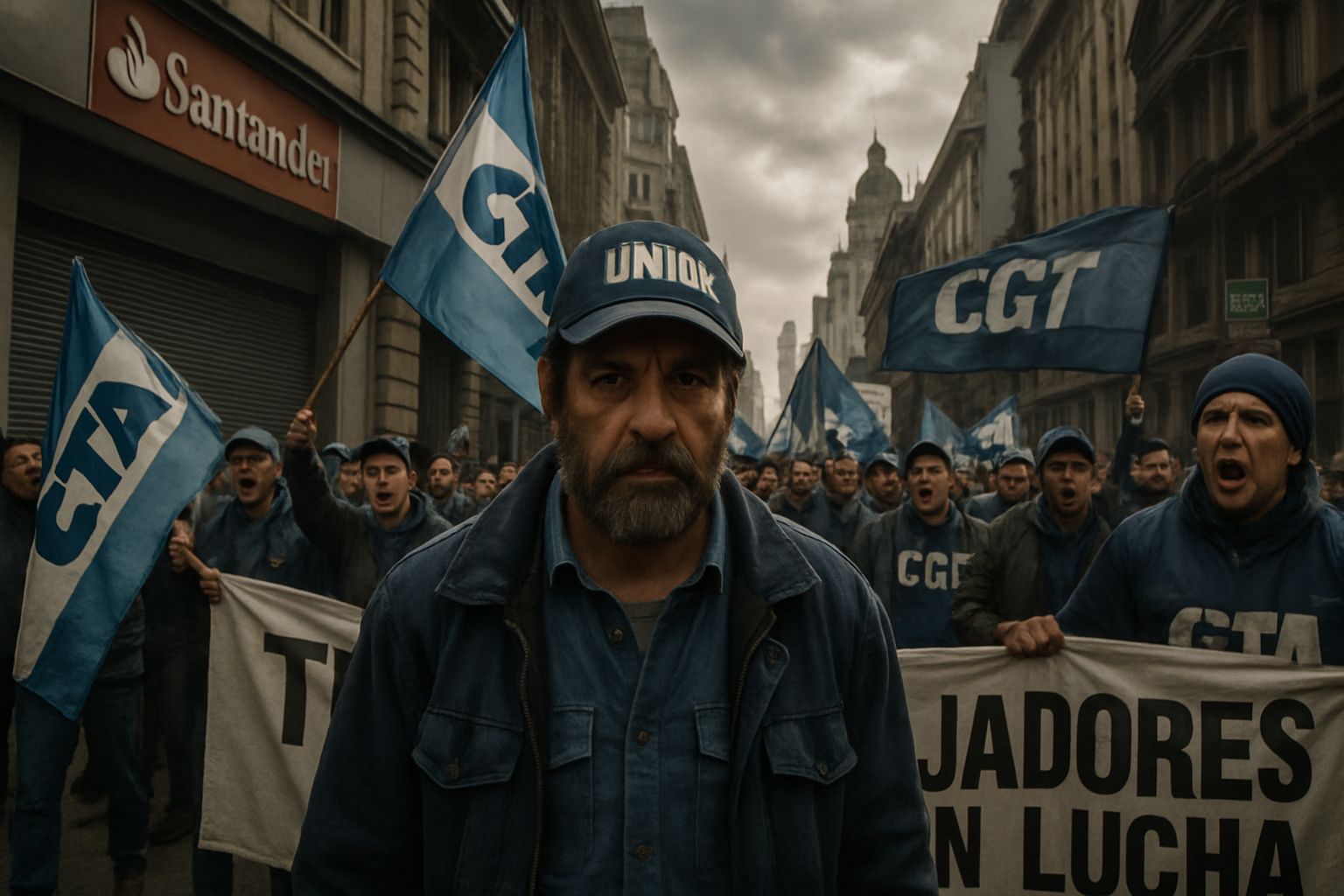
Argentina faces comprehensive economic disruption on February 19, 2026, as the General Confederation of Labor (CGT) launches its fourth general strike against President Javier Milei's administration, paralyzing banks, public transport, and aviation across the nation while Congress debates controversial labor reform legislation.
The 24-hour nationwide work stoppage, designated as a strike "without mobilization," represents a strategic shift from traditional street protests to pure economic pressure, coordinating shutdowns across multiple critical sectors including financial services, urban transportation, and air travel.
Banking Sector Completely Shuttered
The Association of Bank Employees (Asociación Bancaria) confirmed full participation in the general strike, ensuring no banking institutions will open their doors on February 19. The comprehensive shutdown affects all in-person transactions, account openings, credit management, commercial advisory services, and any operations requiring branch personnel nationwide.
This banking paralysis represents one of the most significant disruptions to Argentina's financial sector in recent years, affecting millions of citizens and businesses dependent on banking services for daily operations and payroll processing.
Transportation Networks Completely Disrupted
Public transportation faces total collapse as multiple unions join the coordinated action. The Metrodelegados union announced complete subway service suspension in Buenos Aires (CABA), while the Transport Workers' Union (UTA) confirmed nationwide participation affecting short, medium, and long-distance bus services throughout the country.
UTA Tucumán explicitly stated they are "not in agreement with labor reform," declaring complete provincial bus service suspension that will leave thousands of commuters stranded. The transportation shutdown strategically targets the Buenos Aires metropolitan area during the crucial legislative session, maximizing political pressure on lawmakers.
Aviation Industry Faces Mass Cancellations
Aeronautical unions' adhesion to the CGT strike anticipates widespread flight cancellations and reprogramming at major airports nationwide. Airlines are advising passengers to check flight status and prepare for significant delays or cancellations.
Budget airline Flybondi proactively warned passengers via social media: "If you have a flight for February 19, we recommend checking status... If your flight was modified more than 4 hours from its original schedule, you can self-manage your date change without additional cost."
Political Context: Labor Reform Battle
The strike coincides precisely with the Chamber of Deputies' scheduled 2 PM session to debate Milei's comprehensive labor modernization legislation. This timing represents calculated political pressure during the reform's final approval phase after violent Senate passage in February.
The legislation introduces a controversial "bank of hours" overtime system, modified severance structures, and adjusted union contribution requirements. Interior Minister Patricia Bullrich successfully modified over 30 articles to secure UCR party support, demonstrating the government's tactical flexibility while maintaining core reform objectives.
"This is the fourth strike against the Milei administration, representing the most sustained organized opposition since the president took office."
— Political analysts following CGT resistance
Strategic "Without Mobilization" Approach
The CGT's decision to designate this as a strike "without mobilization" marks a significant tactical evolution from traditional Argentine labor protests. Rather than organizing mass street demonstrations, unions are focusing on economic disruption through coordinated work stoppages.
This strategic shift follows the unprecedented violence during February Senate debates, when CGT-organized protests escalated to Molotov cocktails, stone throwing, and improvised explosives targeting federal police outside Congress. That confrontation resulted in over 50 arrests, multiple injuries, and an estimated 270 million pesos in property damage.
Government Response and Political Stakes
President Milei's administration has dismissed the strike as "senseless," with officials claiming union leaders "had to resort to transport sector adhesion" to create the image of paralysis. Government representatives characterized it as a "strike of the CGT agenda that holds back progress."
The timing proves particularly significant as it represents the fourth major labor confrontation of Milei's presidency, demonstrating the sustained organizational capacity of Argentina's traditional union movement against comprehensive economic restructuring.
Economic Context and Broader Implications
The strike occurs amid severe economic challenges, with economists projecting 22.4% annual inflation versus the government's 10.1% forecast. Argentina has lost 21,938 companies under the Milei administration, affecting 290,602 workers according to Superintendency of Labor Risks data.
The labor reform complements the US-Argentina trade agreement eliminating 1,600+ tariffs, positioning the country as a key Trump administration partner in South America. However, industrial closures like the recent FATE tire plant shutdown demonstrate the immediate costs of rapid economic liberalization.
Opposition Coalition Broadens
The strike represents the most significant organized resistance to Milei's agenda, encompassing not only the CGT but also both CTA branches, the Left Front, La Cámpora, and various Peronist groups. Six provincial governors, including Buenos Aires Governor Axel Kicillof, support the union opposition.
Kicillof, positioning himself for a 2027 presidential campaign, has emerged as a leading voice against the reforms, joining protests and coordinating opposition through his control of Argentina's most populous province's Peronist party apparatus.
International and Historical Significance
Argentina serves as a crucial test case for Latin American structural reform capacity, demonstrating whether democratic institutions can manage comprehensive economic modernization while preserving social stability. The outcome influences regional approaches to similar reform efforts and affects international investor confidence in emerging market transformations.
The strike's success or failure will determine both the specific legislation's fate and the broader momentum of Milei's comprehensive economic restructuring agenda, with implications extending far beyond Argentina's borders to global democratic governance during periods of structural economic change.
Looking Forward: Critical Juncture
The February 19 general strike represents a decisive moment in the confrontation between Argentina's traditional labor movement and President Milei's libertarian economic transformation. With transportation paralyzed, banks closed, and flights cancelled, the country faces a critical test of whether economic pressure can derail legislative momentum or if the government can maintain reform progress despite massive organized opposition.
The coming hours will prove crucial not only for the immediate labor legislation but for establishing precedents about democratic governance capacity during comprehensive economic modernization in Latin America's second-largest economy.