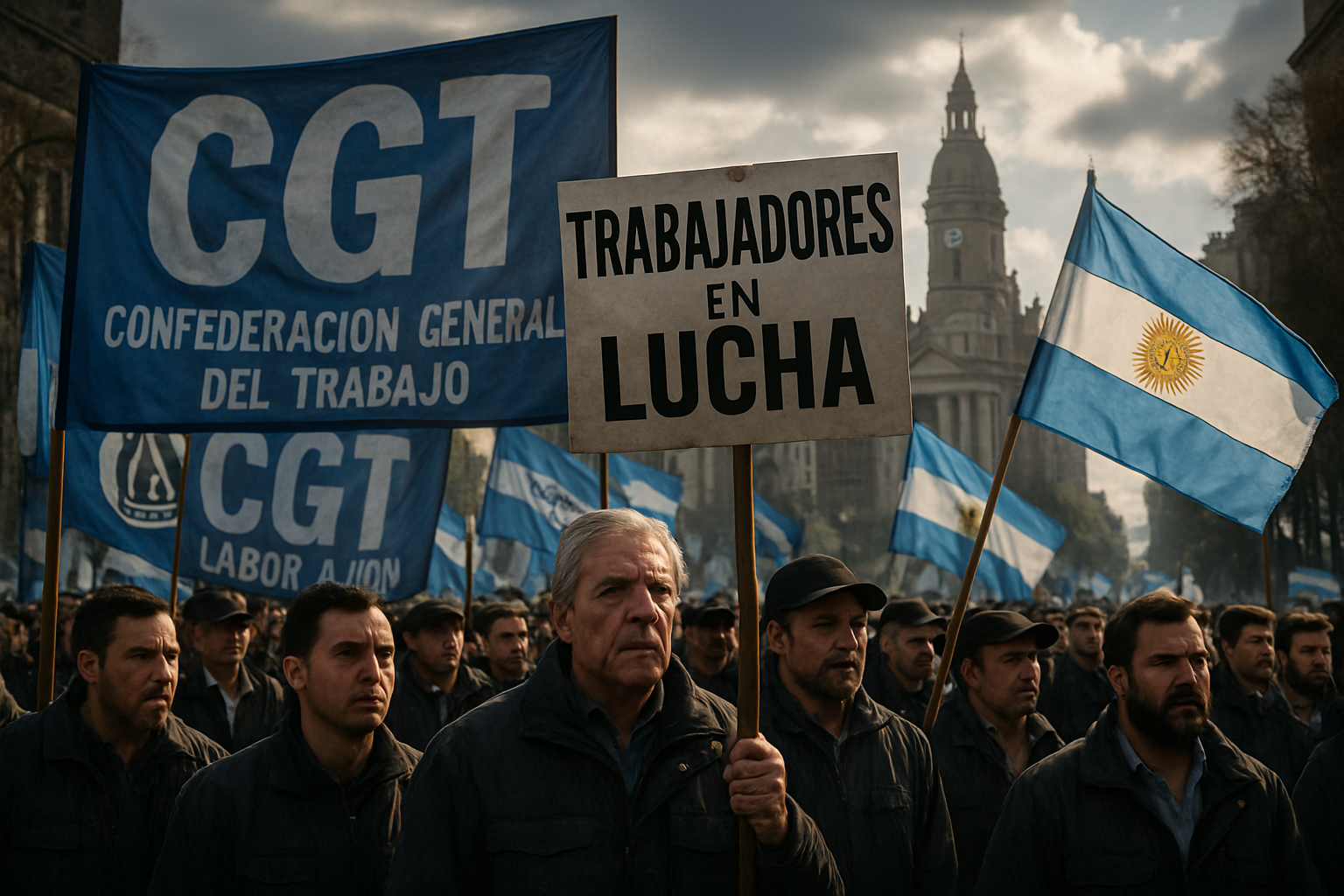
Argentina braces for nationwide disruption as the General Confederation of Labor (CGT) launches a comprehensive general strike on Thursday, February 20, 2026, targeting President Javier Milei's controversial labor reform legislation currently under debate in the Chamber of Deputies.
The powerful union confederation has declared the strike will proceed "without mobilization," marking a tactical departure from traditional street protests that have previously turned violent. Instead, the CGT is focusing on economic pressure through coordinated work stoppages across multiple sectors, with complete adhesion from critical transport unions threatening to paralyze Buenos Aires and major urban centers nationwide.
Transport Sector Leads Strike Action
The Unión Tranviarios Automotor (UTA) has confirmed full participation in the general strike, warning of complete disruption to public transportation services across Argentina. The union's adhesion extends to bus services of "short, medium and long distance throughout the country," according to statements from transport union leaders.
In Tucumán province, UTA representatives stated they are "not in agreement with the labor reform," confirming total suspension of provincial bus services during the strike period. This coordinated transport shutdown aims to maximize the strike's visibility and economic impact during the crucial legislative session.
Labor Reform at Critical Juncture
The strike coincides with the Chamber of Deputies' scheduled debate on Milei's labor modernization legislation, which received Senate approval in a dramatic 42-30 vote in February following unprecedented violent protests that resulted in over 50 arrests and 270 million pesos in property damage.
The controversial reform package introduces a "bank of hours" overtime system allowing employers greater scheduling flexibility, modifies severance payment structures while maintaining basic worker protections, and adjusts union contribution requirements. Interior Minister Patricia Bullrich successfully modified more than 30 articles of the original legislation to secure support from the UCR (Radical Civic Union) and dialoguing opposition blocs.
"This will be the fourth strike against the Milei administration and will have total adhesion from transport unions."
— CGT Leadership Statement
Government Response and Political Dynamics
The Milei administration has dismissed the strike as "senseless," with government sources telling LA NACION that union leaders "had to resort to transport sector adhesion" to guarantee an image of a paralyzed country. Officials characterized the action as "a strike of the CGT's agenda that holds back progress."
The government has officially requested a legislative session for Thursday at 2 PM, coinciding precisely with the planned strike action. This timing reflects the administration's determination to advance its reform agenda despite organized labor resistance.
The strike represents a hardening of union strategy after previous attempts to influence the legislation through dialogue with government representatives proved unsuccessful. Under internal pressure from more militant union factions, CGT leadership opted for this comprehensive work stoppage.
Economic Context and Reform Objectives
The labor reform forms part of Milei's broader economic restructuring agenda, designed to complement the historic US-Argentina trade agreement that eliminates over 1,600 US tariffs on Argentine goods. The government argues that labor market flexibility is essential for capitalizing on new international opportunities and attracting foreign investment.
However, the reforms advance amid challenging economic conditions. Economists project annual inflation of 22.4% for 2026, significantly exceeding the government's forecast of 10.1%. Argentina has lost 21,938 companies under the Milei administration, affecting 290,602 workers according to data from the Superintendency of Labor Risks.
The construction sector faces particular difficulties, with negative profit margins resulting from soaring material costs. Recent high-profile closures, including the FATE tire manufacturing plant that eliminated 920 jobs, underscore the industrial challenges facing the country during this economic transition.
Opposition Coalition and Political Stakes
The CGT strike has garnered support from six provincial governors, including Buenos Aires Governor Axel Kicillof, who is positioning himself for a potential 2027 presidential campaign. This broad opposition coalition includes both CTA union branches, the Left Front, La Cámpora, and various Peronist groups.
The strike demonstrates the most significant organized resistance to the Milei administration since taking office, testing the government's political durability and reform momentum. Success in passing the labor legislation could enable additional structural changes in tax and regulatory frameworks, while failure might signal challenges to the comprehensive economic modernization strategy.
Historical Context and Violence
This fourth general strike follows the most serious CGT-organized violence in recent Argentine history. During the February Senate debate, protesters threw Molotov cocktails, stones, and improvised explosives at federal police outside the National Congress. The confrontations resulted in four police officers injured, two protesters hospitalized, and over 50 arrests.
Buenos Aires authorities assessed damage at 270 million pesos, with masked protesters systematically destroying sidewalks to use debris as projectiles. The unprecedented violence marked a significant escalation from typically peaceful CGT demonstrations, shocking the nation with images of Congress under attack.
International Implications
The labor reform controversy occurs as Argentina seeks to position itself as a key Trump administration partner in South America. The US-Argentina trade agreement, which eliminates over 1,600 tariffs, represents a cornerstone of this strategic relationship and part of broader US efforts to counter Chinese regional influence.
The reform serves as a test case for Latin American structural reform capacity, with international observers monitoring Argentina's ability to balance economic modernization with democratic governance and social stability. The outcome will influence similar regional efforts to manage structural changes while preserving institutional legitimacy.
Implementation Challenges Ahead
Regardless of legislative outcome, the reforms face substantial implementation challenges. Union leaders have signaled extensive legal challenges that could create years of litigation. The legislation requires comprehensive regulatory development, employer training programs, and federal-provincial coordination for effective enforcement.
Success depends not only on Chamber of Deputies passage but also on ongoing workplace negotiations between unions, employers, and government representatives. The CGT has demonstrated sustained organizational capacity, suggesting continued confrontation rather than acceptance of legislative defeat.
As Argentina enters this critical phase of political and economic transformation, the February 20 strike represents a fundamental challenge to President Milei's vision of comprehensive economic restructuring. The outcome will prove crucial for the country's political-economic trajectory and its capacity for democratic governance during periods of intense social pressure and institutional change.