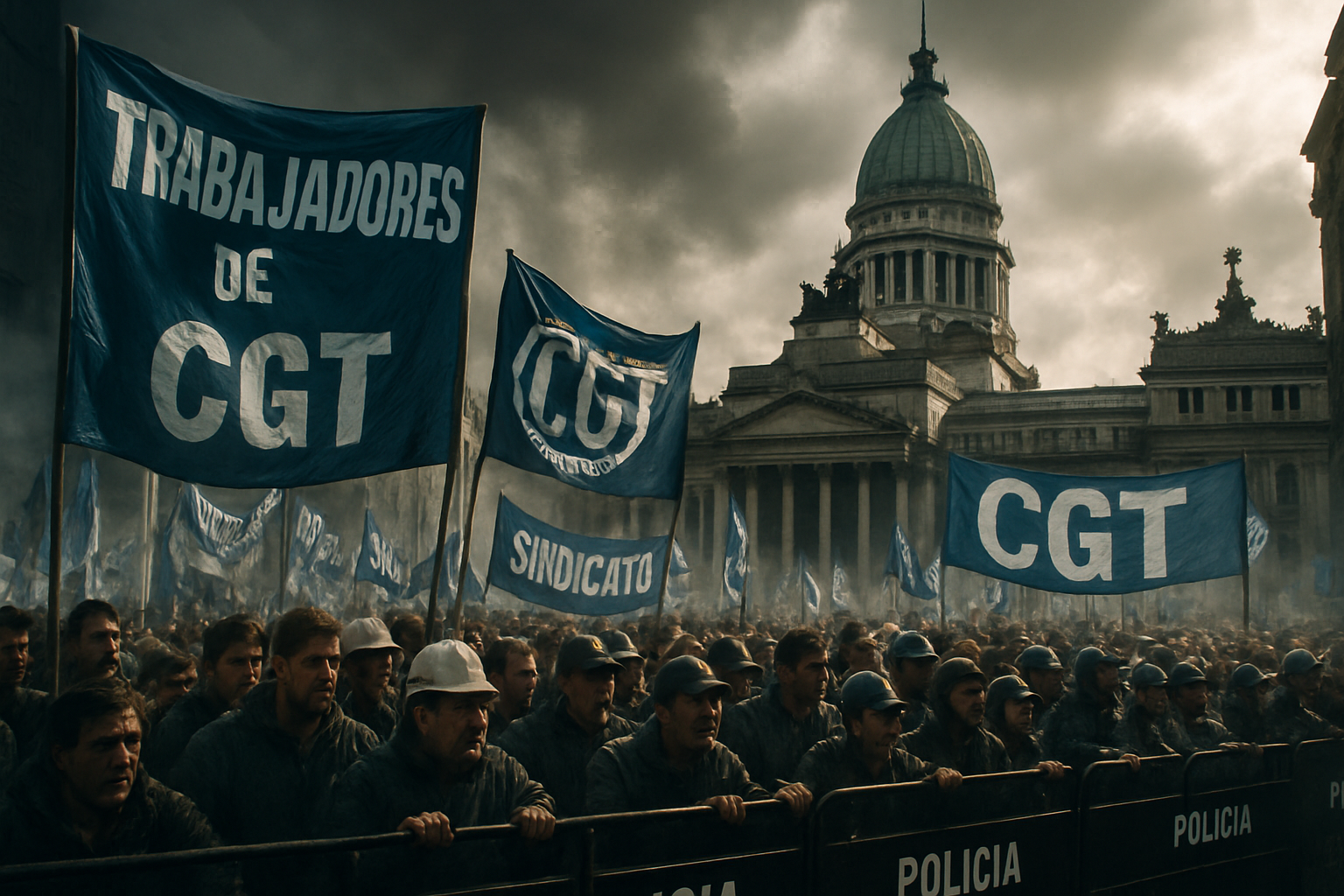
Argentina's General Confederation of Labor (CGT) achieved complete nationwide paralysis on February 19, 2026, through its fourth general strike against President Javier Milei's administration, coinciding exactly with the Chamber of Deputies' crucial 2 PM debate on controversial labor reform legislation that has divided the nation.
The strike, designated "without mobilization" to avoid street protests following February's violent confrontations at the Senate, represented a tactical evolution toward pure economic pressure. Transportation networks collapsed as bus services, subway systems, and aviation ground to a halt, while banking services shut down entirely across the country.
Complete Transportation Shutdown
The Unión Tranviarios Automotor (UTA) confirmed total participation affecting "short, medium and long distance" bus services throughout the country. UTA Tucumán declared complete provincial bus service suspension, stating they were "not in agreement with labor reform." The Buenos Aires subway system, operated by Metrodelegados, came to a complete halt, while railway workers from La Fraternidad joined the coordinated action.
Aviation suffered massive disruptions as APLA and AOITA aviation workers caused widespread flight cancellations. Aerolíneas Argentinas canceled 255 flights affecting 31,000 passengers at an estimated cost of $3 million. The disruption extended beyond Argentina's borders, with 1,000 Paraguay passengers affected and Chilean airlines canceling all Argentina routes.
Economic Impact Reaches $489 Million
INECO-UADE calculated the strike's economic cost at $489 million, representing 0.8% of February GDP and 17.3% of single-day output. CIARA-CEC agricultural exporters criticized the "resistance to change" as affecting employment and foreign currency earnings, highlighting the broader economic implications of the labor dispute.
The Association of Bank Employees achieved full participation, closing nationwide banking services and demonstrating the CGT's organizational sophistication in coordinating multiple sectors simultaneously. However, some essential services remained operational, including DOTA's 60+ bus lines, Yerba Buena Munibus, and PAMI gas stations.
Congressional Drama Amid Street Violence
The strike's timing was strategically calculated to coincide with the Chamber of Deputies' 2 PM session debating the "Labor Modernization" bill after its Senate approval by a 42-30 margin. The legislation had already survived violent February protests outside Congress that featured unprecedented scenes of Molotov cocktails, over 50 arrests, and 270 million pesos in property damage.
The government achieved the necessary quorum with 130 deputies present, thanks to support from allied blocs including PRO, UCR, and provincial forces. Interior Minister Patricia Bullrich's strategy of modifying 30+ articles of the original legislation proved crucial in securing this broad coalition support while isolating traditional Peronist opposition.
"The government has the votes and will advance this historic reform despite the senseless CGT agenda that holds back progress."
— Government spokesperson dismissing strike impact
The "Bank of Hours" Revolution
At the heart of the controversy lies the proposed "bank of hours" overtime system, which would fundamentally change how Argentine employers calculate and compensate overtime work. The reform also includes modified severance structures while maintaining basic worker protections, adjusted union contribution requirements, and digital registration systems designed to modernize Argentina's labor framework.
These changes complement the historic US-Argentina trade agreement that eliminates over 1,600 tariffs, positioning the country to capitalize on new international opportunities. However, critics argue the reforms prioritize employer flexibility at workers' expense during an already challenging economic period.
Opposition Coalition Crystallizes
The CGT coordinated the broadest opposition coalition seen during the Milei administration, including both CTA branches, the Left Front, La Cámpora, and various Peronist groups. Six provincial governors supported the union position, with Buenos Aires Governor Axel Kicillof personally joining earlier protests while positioning himself for a 2027 presidential campaign.
This opposition reflects deeper concerns about Argentina's economic trajectory under Milei. The country has lost 21,938 companies affecting 290,602 workers according to Superintendency of Labor Risks data, with the construction sector facing particular challenges from rising material costs.
Economic Crisis Context
The strike occurs against a backdrop of severe economic challenges. Economists project 22.4% annual inflation for 2026, more than double the government's 10.1% forecast. Recent high-profile closures, including the FATE tire plant that eliminated 920 jobs after 80 years of operation, symbolize the industrial disruption caused by rapid trade liberalization and Chinese competition.
Despite these pressures, the government maintains currency stability with the official dollar at 1,442 pesos, while country risk has declined to 504 points, reflecting cautious international investor optimism about structural reforms.
Regional and International Implications
The strike's impact extended beyond Argentina's borders, with Bolivia rescheduling football matches due to stadium worker solidarity and Chile experiencing flight cancellations to Argentina. This demonstrates the interconnected nature of South American economies and labor movements.
International monitoring organizations are closely watching Argentina as a test case for Latin American structural reform capacity. The country's ability to balance economic modernization with democratic governance and social stability could serve as a template for similar efforts throughout the region.
Tactical Evolution in Labor Relations
The decision to conduct a strike "without mobilization" represents a significant tactical shift from the CGT's traditional approach. This evolution follows the violent February Senate protests that featured Molotov cocktails and systematic property destruction, marking the most serious escalation in recent Argentine labor history.
By focusing on economic disruption rather than street confrontations, the CGT aimed to maximize political pressure while avoiding the negative publicity that accompanied earlier violence. This sophisticated approach demonstrates the union confederation's capacity for strategic adaptation in pursuit of its political objectives.
Implementation Challenges Ahead
Regardless of the Chamber of Deputies' decision, significant implementation challenges remain. Union legal challenges are anticipated to create years of litigation, while extensive regulatory development and federal-provincial coordination will be required. The CGT's sustained organizational capacity suggests continued confrontation rather than acceptance of legislative outcomes.
The success of any labor reform will ultimately depend on workplace negotiations and the government's ability to maintain political commitment amid ongoing organized labor resistance. International observers are monitoring whether Argentina can implement necessary but unpopular reforms through democratic processes.
Historical Significance
The February 19 general strike represents the most sustained union opposition to an Argentine government since the return to democracy. The tactical evolution from violent street confrontations to coordinated economic disruption demonstrates the sophistication of modern labor organization and the fundamental institutional resilience test facing Argentina during this comprehensive transformation.
As the nation navigates between economic modernization imperatives and historical worker protection commitments, the outcome will significantly influence Argentina's political-economic trajectory and serve as a crucial precedent for democratic governance under intense social pressure throughout Latin America.