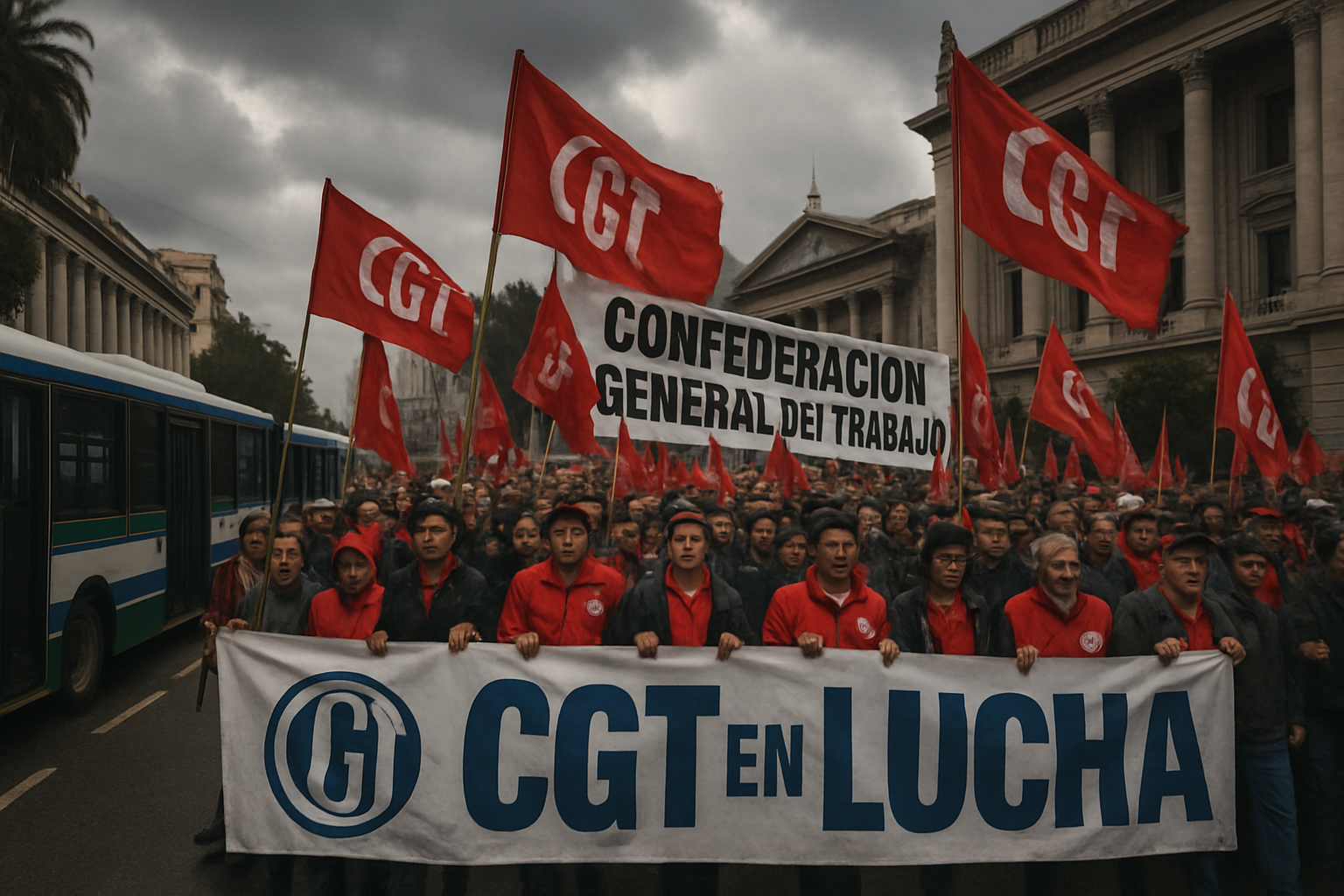
Argentina faced complete paralysis on February 19, 2026, as the General Confederation of Labor (CGT) executed its fourth general strike against President Javier Milei's administration, coinciding precisely with the Chamber of Deputies' 2 PM session to debate controversial labor reform legislation.
The 24-hour strike achieved comprehensive nationwide disruption, with complete shutdowns across transportation networks, banking services, and essential industries. The CGT designated this as a strike "without mobilization," representing a tactical evolution from the violent February Senate protests that saw Molotov cocktails thrown at Congress and resulted in over 50 arrests and 270 million pesos in damage.
Complete Transportation Shutdown
The strike's most visible impact came through the total paralysis of Argentina's transportation infrastructure. The Unión Tranviarios Automotor (UTA) confirmed complete participation affecting "short, medium and long distance" bus services throughout the country, while UTA Tucumán declared they were "not in agreement with labor reform" and suspended all provincial bus services.
Buenos Aires subway services came to a complete halt through Metrodelegados participation, while aviation workers caused widespread flight cancellations. Flybondi advised passengers of service disruptions, and neighboring Paraguay reported approximately 1,000 affected passengers due to canceled flights from Buenos Aires, including services by JetSmart, Aerolíneas Argentinas, and Fly Bondi.
Despite the comprehensive strike, some private bus companies maintained limited services. DOTA continued operating more than 60 lines in Buenos Aires, while Yerba Buena's municipal "Munibus" system maintained its regular schedule, providing isolated examples of continued service amid the broader paralysis.
Economic Disruption and Costs
The Association of Bank Employees achieved full participation, closing nationwide banking services and amplifying the economic impact beyond transportation. An analysis by the Institute of Economics at the Argentine University of Enterprise (INECO-UADE) calculated that the general strike would cost approximately US$489 million, representing 0.8% of February's GDP and 17.3% of a single day's economic output.
"CIARA-CEC alerted that the protest affects employment, foreign currency earnings, and regional economies. The real problem to solve should promote the formalization of the labor market," said the Chamber of Agricultural and Industrial Companies.
— CIARA-CEC Statement
Several sectors deliberately avoided the strike to maintain essential services. PAMI confirmed it would maintain active services and guarantee public attention during the day, while gas stations also continued operations to ensure fuel availability during the crisis.
The Labor Reform at the Center
The strike targeted President Milei's comprehensive "Labor Modernization" legislation, which had already received Senate approval by a 42-30 margin in February following violent protests. The reform introduces a "bank of hours" overtime system that would allow employers greater scheduling flexibility, modified severance payment structures while maintaining basic worker protections, and adjustments to union contribution requirements.
Interior Minister Patricia Bullrich had strategically modified over 30 articles of the original legislation to secure support from the Radical Civic Union (UCR) and dialoguing opposition parties, effectively isolating traditional Peronist opposition. The government characterized the strike as "senseless" and claimed union leaders "had to resort to transport sector adhesion" to create an image of paralysis.
The reform complements the historic US-Argentina trade agreement that eliminates over 1,600 US tariffs on Argentine goods, positioning the country as a key Trump administration partner in South America and potentially generating $800 million in additional agricultural exports.
Political Opposition Mobilizes
The CGT coordinated the strike with both CTA branches, the Left Front, La Cámpora, and various Peronist groups, creating the most significant organized resistance to the Milei administration since taking office. Six provincial governors supported the union position, including Buenos Aires Governor Axel Kicillof, who has been positioning himself for a 2027 presidential campaign.
The breadth of opposition represents a fundamental challenge to Milei's comprehensive economic restructuring agenda. The strike demonstrated the sustained organizational capacity of Argentina's labor movement, despite previous legislative defeats and the government's success in building coalitions beyond its libertarian base.
Economic Context and Challenges
The labor action occurs amid severe economic pressures, with economists projecting 22.4% annual inflation for 2026 compared to the government's forecast of 10.1%. Under the Milei administration, 21,938 companies have ceased operations, affecting 290,602 workers according to data from the Superintendencia de Riesgos del Trabajo.
The recent closure of the historic Fate tire manufacturing plant, which eliminated 920 jobs due to Chinese import competition, has become symbolic of the broader industrial challenges facing Argentina under rapid trade liberalization policies. The 80-year-old company's closure represents the speed of economic transformation overwhelming traditional social safety nets designed for gradual adjustment.
Regional and International Impact
The strike's effects extended beyond Argentina's borders, with Bolivia's football authorities forced to reschedule matches in the Argentine tournament's sixth round due to stadium workers' union participation. However, the measure did not affect the Conmebol Recopa match between Lanús and Flamengo.
International observers are closely monitoring the situation as Argentina serves as a test case for Latin American structural reforms that balance economic modernization with democratic governance and social stability. The country's approach could influence similar regional efforts to manage comprehensive economic change while maintaining institutional legitimacy.
"It's the fourth general strike called by the union confederation during Javier Milei's administration. The strike spans a full day and affects public transport, among other sectors."
— Clarin Media Report
Historical Significance
This fourth strike represents the most sustained union opposition to an Argentine government since the democratic transition, demonstrating the tactical evolution from violent street confrontations to sophisticated economic disruption. The CGT's ability to coordinate such comprehensive resistance while avoiding the February violence shows organizational maturity and strategic planning.
The "without mobilization" designation reflects lessons learned from previous confrontations, where Molotov cocktails and systematic property destruction outside Congress created negative publicity while failing to prevent Senate approval of the labor reforms.
Implementation Challenges Ahead
Regardless of the Chamber of Deputies' decision, the reform faces extensive implementation challenges. Union legal challenges are anticipated that could create years of litigation, while the legislation requires extensive regulatory development, employer training, and federal-provincial coordination for effective enforcement.
The CGT's sustained organizational capacity suggests continued confrontation rather than acceptance of potential legislative defeat. Success will depend not only on parliamentary victory but on ongoing negotiations with business groups, unions, and provincial governments for workplace stability.
The outcome of this legislative battle and labor confrontation will determine not only the specific fate of the reforms but also the broader trajectory of Milei's structural change agenda, Argentina's political-economic future, and the capacity of democratic institutions to manage intense social pressure during comprehensive transformation.
As the Chamber of Deputies convened for their crucial 2 PM session, Argentina remained largely paralyzed, with the strike serving as a powerful demonstration of organized labor's capacity to challenge government policy through economic pressure while testing the resilience of the country's democratic institutions during a period of unprecedented change.