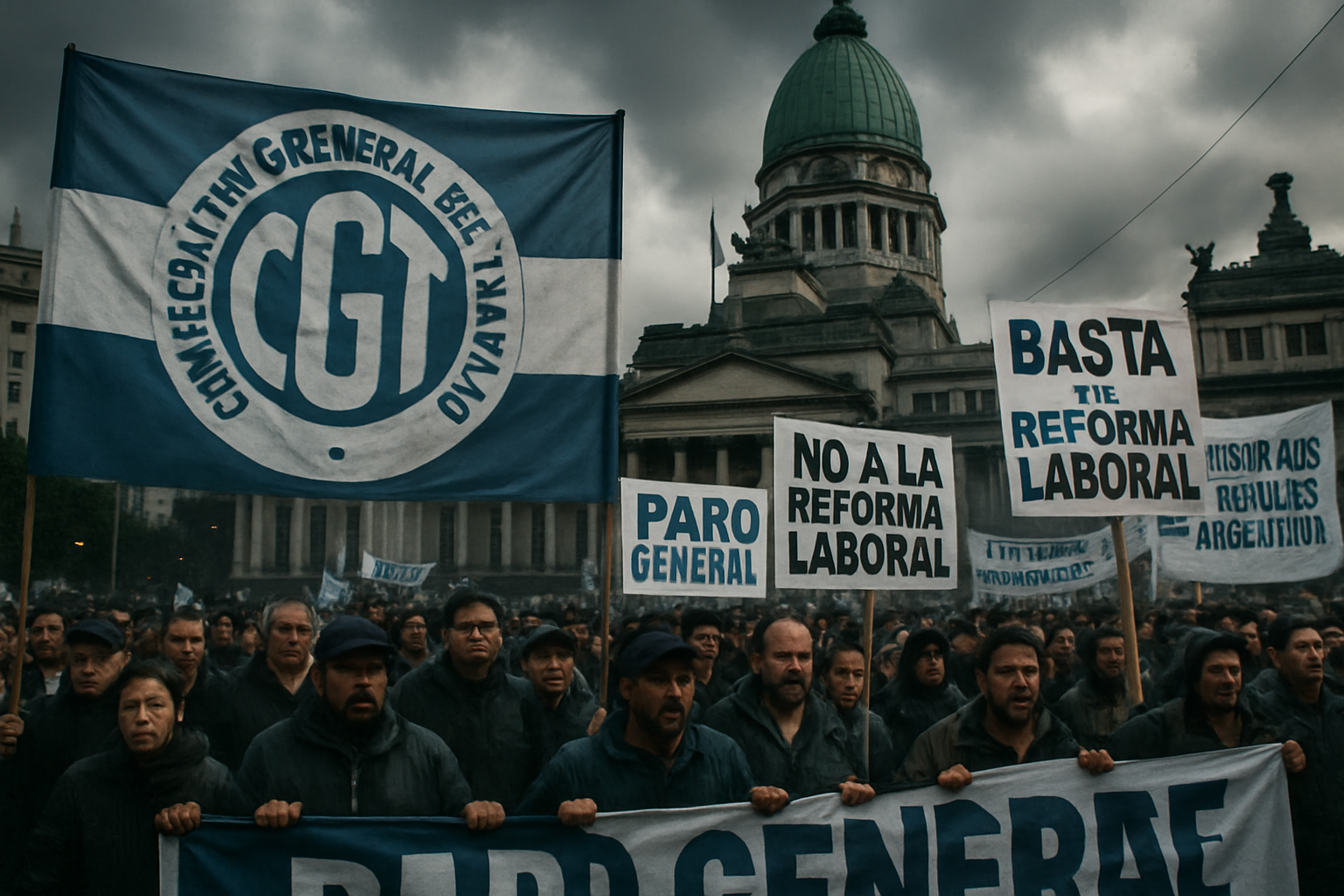
Argentina came to a virtual standstill on February 19, 2026, as the General Confederation of Labor (CGT) launched its fourth general strike against President Javier Milei's administration, coinciding with a crucial Chamber of Deputies debate on controversial labor reform legislation.
The 24-hour strike began at midnight local time, paralyzing transport systems across the country as the CGT coordinated with major unions to oppose what they characterize as regressive changes to Argentina's labor protections. The action represents the most significant organized resistance to Milei's comprehensive economic restructuring since he took office in December 2023.
Complete Transport Shutdown
The strike achieved near-total paralysis of Buenos Aires metropolitan area transport, with the Unión Tranviarios Automotor (UTA) confirming complete participation affecting "short, medium and long distance" bus services throughout the country. In Tucumán province, UTA declared total bus service suspension, stating they were "not in agreement with labor reform."
Subway services in Buenos Aires were completely halted as Metrodelegados union joined the action, while railway workers from La Fraternidad union participated alongside aviation workers from APLA and AOITA, causing widespread flight cancellations and passenger advisories from airlines including Flybondi.
The coordinated transport shutdown strategically maximized economic disruption during the legislative session, as lawmakers gathered at 2 PM to debate the final passage of reforms that have already received Senate approval by a 42-30 margin following violent protests in February.
Strategic "Without Mobilization" Approach
Notably, the CGT designated this strike "without mobilization," representing a tactical shift from traditional street protests to pure economic pressure. This approach follows the unprecedented violence during February Senate debates, when protesters threw Molotov cocktails at federal police outside Congress, resulting in over 50 arrests and 270 million pesos in property damage.
"The CGT is carrying out its measure of force throughout the country," reported La Nación, "as rejection of the Labor Reform Law promoted by the government and being treated in the Chamber of Deputies."
The decision to avoid street demonstrations while maintaining work stoppages reflects union leadership's calculation that economic disruption alone would send a powerful political message without risking the violent confrontations that marked earlier protests.
Banking and Essential Services Affected
The strike extended beyond transportation to critical sectors, with the Association of Bank Employees ensuring full participation, closing banking services nationwide. Gas stations and essential services faced disruptions as workers across multiple sectors heeded the CGT's call.
The comprehensive nature of the action demonstrated the CGT's continued organizational capacity despite legislative defeats, with coordination extending to both branches of the Central de Trabajadores Argentinos (CTA), Left Front organizations, and La Cámpora.
Labor Reform at Critical Juncture
The strike coincides with the Chamber of Deputies' final consideration of President Milei's "Labor Modernization" legislation, which introduces a controversial "bank of hours" overtime system allowing employers greater scheduling flexibility. The reform also modifies severance payment structures while maintaining basic worker protections and adjusts union contribution requirements.
Interior Minister Patricia Bullrich successfully modified over 30 articles of the original proposal to secure support from the Radical Civic Union (UCR) and dialoguing opposition parties, demonstrating the government's tactical flexibility in building legislative coalitions beyond its libertarian base.
The reforms complement the historic US-Argentina trade agreement signed in February, which eliminates over 1,600 US tariffs on Argentine goods and positions the country as a key Trump administration partner in South America. Government officials argue that labor market flexibility is essential for capitalizing on new international opportunities and attracting foreign investment.
Economic Context of Crisis
The strike occurs amid severe economic challenges, with economists projecting 22.4% annual inflation for 2026 versus the government's forecast of 10.1%. Argentina has lost 21,938 companies under the Milei administration, affecting 290,602 workers according to Superintendency of Labor Risks data.
The recent closure of the iconic Fate tire manufacturing plant, eliminating 920 jobs, has become a symbolic flashpoint representing broader industrial challenges under rapid trade liberalization policies. The closure, attributed to Chinese import competition, sparked unprecedented political confrontation between the government and the Madanes Quintanilla family ownership.
Political Coalition and Opposition
The labor reform battle has crystalized political alignments for the remainder of Milei's term and the 2027 electoral cycle. Buenos Aires Governor Axel Kicillof has emerged as the leading opposition figure, personally joining earlier protests while positioning himself for a potential presidential campaign.
Six provincial governors support the union position, representing significant political territory in opposition to federal reforms. The coalition includes traditional Peronist parties alongside leftist organizations and civil society groups concerned about worker rights rollbacks.
Meanwhile, Milei has demonstrated remarkable coalition-building capacity, uniting La Libertad Avanza with the PRO party, UCR, and dialoguing opposition blocs to advance his reform agenda despite narrow legislative margins.
"The people gave them the vote, but not to take away their rights," declared the CGT in a statement promising strong impact from the strike.
— CGT Leadership Statement
International Implications
The Argentine labor conflict is being closely monitored internationally as a test case for Latin American structural reforms within democratic frameworks. Success or failure will influence similar efforts throughout the region where governments face pressure to modernize labor markets while maintaining social stability.
European and regional media have provided extensive coverage, focusing on Argentina's capacity to balance economic modernization with democratic governance and institutional legitimacy during comprehensive structural change.
The reform's outcome affects Argentina's positioning as a reliable international partner for the Trump administration's South American strategy, particularly as the country seeks to capitalize on enhanced agricultural market access and critical minerals cooperation agreements.
Implementation Challenges Ahead
Regardless of legislative outcomes, implementation faces significant obstacles. Union leaders have signaled plans for legal challenges that could create years of litigation over specific provisions. The CGT's sustained organizational capacity suggests continued confrontation rather than acceptance of potential legislative defeat.
Success will require extensive regulatory development, employer training, and federal-provincial coordination mechanisms. Workplace negotiations between management and labor will prove crucial for operational stability amid ongoing union resistance.
The government must also navigate international labor standards through commitments to the International Labour Organization (ILO) while pursuing domestic modernization objectives that unions argue violate historical worker protections.
Historical Precedent and Future Trajectory
This marks the fourth general strike against the Milei administration, representing the most sustained union opposition to any Argentine government since the return to democracy. The tactical evolution from violent street confrontations to coordinated economic disruption demonstrates sophisticated union strategy adaptation.
The February 19 strike serves as a critical test of institutional resilience during Argentina's most comprehensive economic transformation in decades. The outcome will determine not only the specific fate of labor reforms but broader momentum for Milei's structural change agenda.
As deputies gathered for the afternoon session amid paralyzed streets and shuttered businesses, the fundamental question remained whether Argentina's democratic institutions could successfully manage intense social tensions while implementing necessary but unpopular economic modernization.
The stakes extend beyond immediate legislative victories to Argentina's long-term capacity for democratic governance during periods of rapid structural change, providing crucial lessons for emerging democracies worldwide facing similar challenges of balancing economic transformation with social stability.