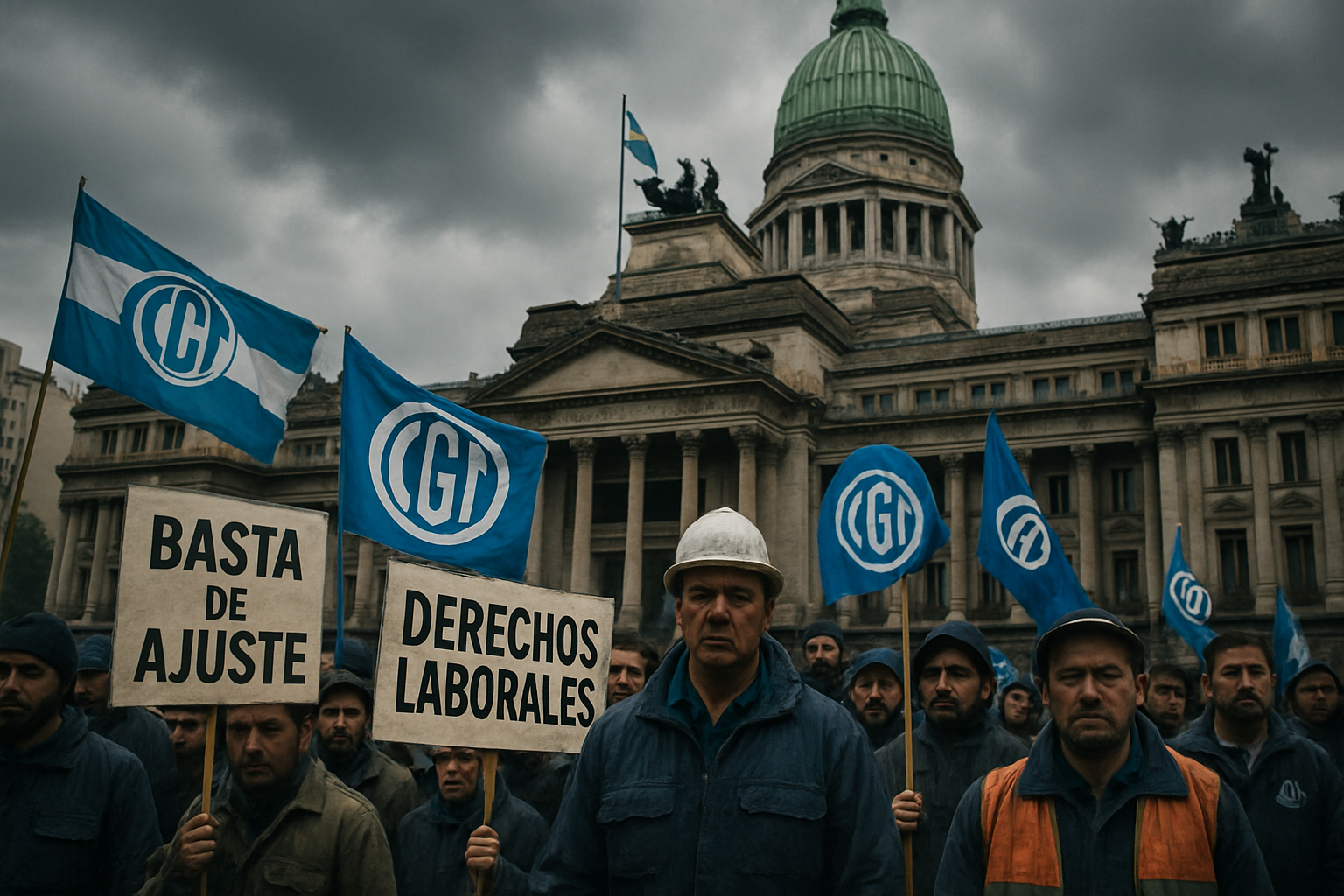
Argentina's General Confederation of Labor (CGT) has announced a general strike without mobilization to coincide with the Chamber of Deputies debate on President Javier Milei's labor reform legislation, marking the fourth major work stoppage against the libertarian administration as the government signals potential modifications to controversial sick leave provisions.
The CGT's decision to call for a strike represents a significant escalation in tensions between the country's largest labor confederation and the Milei government, which has been pursuing sweeping economic reforms since taking office. The timing is strategic, as the ruling coalition seeks to secure enough votes in the Chamber of Deputies to pass the "Labor Modernization" bill before the end of the extraordinary session period.
Government Acknowledges Errors in Sick Leave Provisions
In a notable development, Senator Patricia Bullrich, who serves as Interior Minister, acknowledged "errors" in the legislation's provisions regarding sick leave payments. Speaking to media outlets, Bullrich recognized flaws in the article that would have reduced salary payments during medical leave and assured that the government would "fix it" before the Deputies debate.
"We're going to fix it," Bullrich stated, indicating the administration's willingness to modify contentious aspects of the reform to secure broader political support. This represents a tactical shift for the government, which has faced resistance not only from labor unions but also from allied political blocs concerned about worker protections.
Political Maneuvering in the Chamber
The ruling coalition's leadership in the Chamber of Deputies is pushing to advance the legislation "without pause but without risks," according to sources familiar with the negotiations. All efforts are focused on ensuring quorum in the chamber, with government officials working to secure commitments from allied blocs and dialoguing opposition sectors.
If the necessary support is guaranteed in the coming hours, the government could call a session for this Thursday. The reform has already received media sanción (preliminary approval) from the Senate after a tumultuous 42-30 vote in February that was marred by violent protests outside the National Congress.
"The condition elevated by allied blocs of PRO and UCR for giving quorum in Deputies is that the text would return to the Senate if modified"
— Congressional Source
Labor Union Opposition Intensifies
The CGT's announcement of a general strike without street mobilization reflects both the confederation's pressure on the government and internal tensions within the labor movement. Union sources indicate that transport sector unions would fully support the strike, potentially causing significant disruptions to Buenos Aires' public transportation systems and economic activity nationwide.
This decision represents a hardening of the union confederation's strategy, which had previously focused on introducing changes to the libertarian initiative through dialogue and negotiation. The confederation, under pressure from its rank-and-file membership and criticized for having negotiated certain aspects with the government, has now chosen a more confrontational approach.
Key Provisions of the Labor Reform
The controversial legislation introduces several significant changes to Argentina's labor framework:
- Bank of Hours System: A new overtime structure that provides employers with greater scheduling flexibility
- Modified Severance Structures: Changes to indemnification calculations while maintaining basic worker protections
- Union Contribution Adjustments: Alterations to how union fees are collected and distributed
- Digital Registration Systems: Modernization of employment record-keeping processes
The reform aims to increase labor market flexibility while preserving core worker protections, complementing the government's broader economic restructuring agenda that includes the historic US-Argentina trade agreement eliminating over 1,600 tariffs.
Economic Context and International Implications
The labor reform debate unfolds against a challenging economic backdrop. Economists project 22.4% annual inflation for 2026, more than double the government's forecast of 10.1%. Despite these pressures, currency stability has been maintained, with the official dollar rate at 1,442 pesos and country risk indicators showing some improvement to 504 points.
The reform is designed to complement Argentina's historic trade agreement with the United States, which eliminates over 1,600 US tariffs on Argentine goods. This positions Argentina as a key Trump administration partner in South America and aims to attract foreign investment by demonstrating labor market flexibility.
Historical Context of CGT Resistance
This marks the fourth general strike called by the CGT against the Milei administration, underlining the persistent tensions between organized labor and the government's market-oriented policies. Previous strikes have involved varying degrees of mobilization and economic disruption, with transport unions playing a crucial role in determining the effectiveness of work stoppages.
The confederation's decision to call for a strike "without mobilization" suggests an attempt to maintain economic pressure while avoiding the violent confrontations that characterized the Senate vote in February, when protesters threw Molotov cocktails and stones at federal police, resulting in over 50 arrests and 270 million pesos in property damage.
Political Calculations and Coalition Building
The government's willingness to modify the sick leave provisions reflects sophisticated political calculations aimed at maintaining the coalition that secured Senate approval. Interior Minister Bullrich's successful modification of over 30 articles to gain UCR (Radical Civic Union) support in the Senate demonstrated the administration's capacity for tactical flexibility when necessary.
Buenos Aires Governor Axel Kicillof, positioning himself for a potential 2027 presidential campaign, has emerged as a vocal critic of the reforms and has supported union opposition efforts. This positions the labor dispute within broader political dynamics as various actors prepare for the next electoral cycle.
Implementation Challenges Ahead
Even if the legislation passes the Chamber of Deputies, significant implementation challenges remain. The CGT and other labor organizations have signaled their intention to pursue legal challenges that could result in years of litigation. Additionally, the reform requires extensive regulatory development, employer training, and coordination between federal and provincial authorities.
The success of the reforms will ultimately depend not only on legislative approval but on the government's ability to manage workplace relations and maintain economic stability during the transition period. International observers are closely monitoring Argentina's experience as a potential template for labor market modernization in other Latin American countries facing similar competitive pressures.
Looking Ahead
The coming days will prove crucial for both the Milei administration's reform agenda and the labor movement's resistance strategy. The government's indicated willingness to modify contentious provisions suggests recognition that sustainable reform requires broader political consensus, even at the cost of compromising on some objectives.
For the CGT, the general strike represents a critical test of its organizational capacity and political influence in the face of a government that has shown remarkable resilience in advancing its agenda despite significant opposition. The outcome of this confrontation will likely shape labor relations in Argentina for years to come and influence the broader trajectory of the country's economic transformation under President Milei.