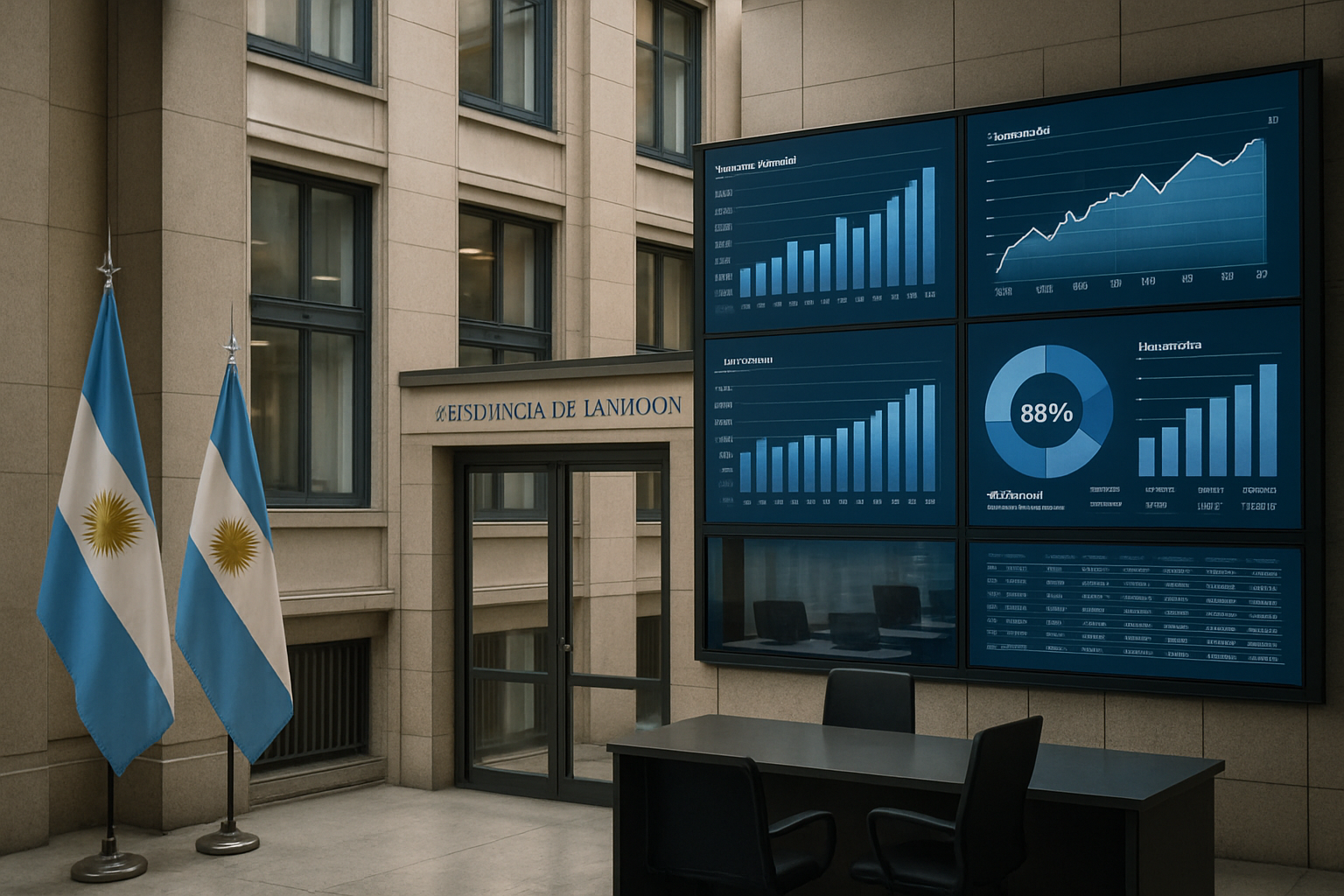
Argentina's Economy Minister Luis Caputo announced Monday that Pablo Lines will lead the National Institute of Statistics and Census (INDEC) following the resignation of Marco Lavagna, while simultaneously confirming the government will delay implementing a new inflation measurement methodology until the country's desinflation process stabilizes.
The leadership transition at one of Argentina's most crucial economic institutions comes at a critical juncture for President Javier Milei's administration, which has been working to combat persistent inflation that has plagued the South American nation for years. Caputo's announcement, made on February 2, 2026, addresses both personnel changes and methodological decisions that could significantly impact how Argentina measures and reports its economic performance.
New Leadership at Argentina's Statistical Helm
Pablo Lines, who previously served as Lavagna's deputy, brings extensive experience within the statistical organization to his new role. According to sources familiar with the appointment, Lines has worked within INDEC for years, providing him with deep institutional knowledge of Argentina's statistical methodologies and data collection processes.
The transition was confirmed by Economy Minister Caputo, who emphasized continuity in the agency's operations despite the leadership change. Lines' appointment represents an internal promotion that maintains institutional memory while potentially signaling a shift in approach under the new administration.
Inflation Measurement Controversy
The most significant aspect of Monday's announcement involves the government's decision to maintain the current Consumer Price Index (CPI) methodology rather than implementing reforms that Lavagna had championed. The outgoing INDEC director had pushed for modernizing Argentina's inflation measurement system, which currently relies on consumption patterns and weightings that are more than two decades old.
Lavagna's proposed reforms aimed to update the basket of goods and services used to calculate inflation, reflecting contemporary Argentine consumption habits rather than outdated patterns. The project sought to provide more accurate inflation readings that would better represent current economic realities faced by Argentine consumers.
"The current mechanism will remain in place until the desinflation process is consolidated"
— Luis Caputo, Economy Minister
However, Caputo explained that implementing such methodological changes during a period of elevated inflation would create short-term discrepancies in reported data, potentially complicating the government's economic messaging and policy implementation. The decision reflects the administration's prioritization of statistical consistency over methodological modernization during this transitional economic period.
Economic Context and Policy Implications
The timing of these changes occurs against the backdrop of Milei's broader economic reform agenda, which has focused heavily on reducing inflation and stabilizing Argentina's monetary situation. The government's approach to statistical methodology demonstrates the delicate balance between technical accuracy and political practicality in economic policy implementation.
Argentina's inflation measurement has historically been a contentious issue, with previous administrations facing criticism for statistical manipulation during periods of high inflation. The current government's decision to delay methodological changes while maintaining transparency about the reasoning suggests an attempt to avoid such controversies while managing the country's economic transition.
The Consumer Price Index serves as a crucial benchmark for wage negotiations, contract adjustments, and government policy decisions. Any changes to its calculation methodology could have far-reaching consequences for millions of Argentines whose incomes and expenses are tied to official inflation figures.
Institutional Stability Amid Change
Lines' appointment from within INDEC's existing structure suggests the government's preference for institutional continuity rather than external disruption. This approach contrasts with more dramatic personnel changes seen in other areas of Milei's administration, indicating recognition of the technical expertise required to manage Argentina's statistical operations effectively.
The new INDEC chief inherits an organization responsible for collecting and analyzing data that influences everything from monetary policy to social welfare programs. His experience as Lavagna's deputy positions him to maintain operational continuity while potentially implementing gradual changes aligned with the current administration's priorities.
Regional Economic Dynamics
Argentina's statistical agency changes occur within broader regional and global economic contexts. The country's approach to inflation measurement and economic data reporting affects not only domestic policy but also international confidence and investment decisions. Maintaining credible statistical operations becomes crucial for preserving Argentina's relationships with international financial institutions and trading partners.
The decision to postpone methodological reforms while ensuring transparent communication about the reasoning may help Argentina avoid the credibility issues that have affected other regional economies during periods of high inflation and political transition.
Future Outlook
With Lines now at INDEC's helm and the inflation methodology question temporarily resolved, attention turns to how the agency will navigate Argentina's continuing economic challenges. The government's commitment to implementing reforms once the desinflation process consolidates suggests that methodological updates remain on the agenda, albeit with adjusted timing.
The success of Argentina's current economic policies will largely be measured through INDEC's data, making Lines' leadership crucial for both technical accuracy and public confidence in official statistics. His tenure will likely be defined by how effectively he balances statistical integrity with the practical needs of an administration working to transform Argentina's economic trajectory.
As Argentina continues its economic transition under President Milei's leadership, the stability and credibility of its statistical institutions remain fundamental to policy success and international confidence. The careful handling of both leadership succession and methodological decisions at INDEC reflects recognition of these institutions' critical role in the country's economic future.