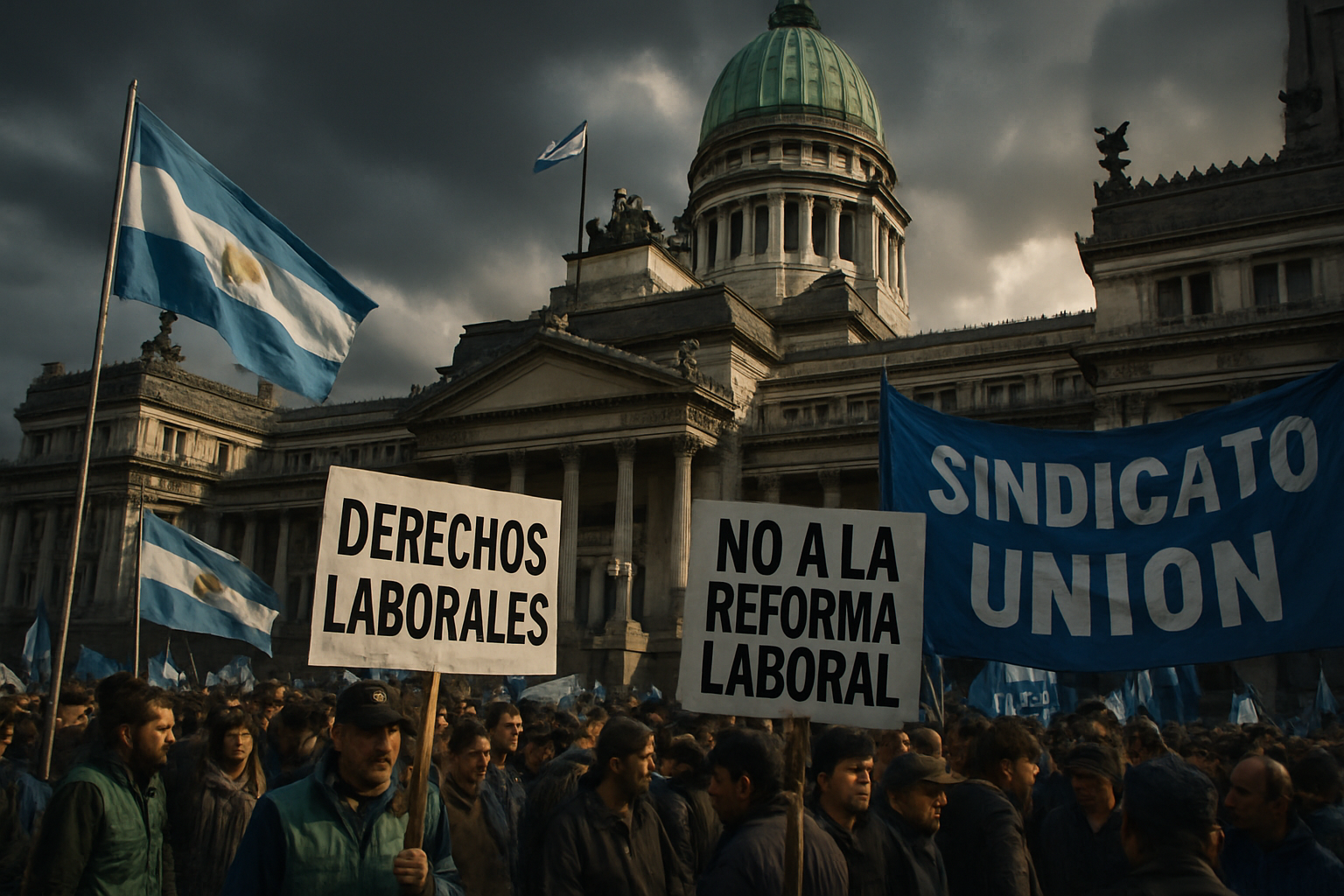
Argentina's government is engaged in crucial negotiations to advance controversial labor reform legislation through Congress, with Interior Minister Patricia Bullrich announcing significant modifications to address opposition concerns while union leaders mobilize for coordinated resistance.
The labor reform bill currently under consideration by Argentina's National Congress introduces substantial changes to the country's employment framework, affecting everything from working hour calculations to severance payment systems. The legislation has become a central pillar of President Javier Milei's broader economic restructuring program aimed at attracting foreign investment and increasing labor market flexibility.
Key Reform Provisions Under Debate
According to sources familiar with the legislation, the proposed reform introduces novel approaches to calculating maximum working hours and managing overtime compensation. The bill creates a controversial "bank of hours" system that would fundamentally alter how employers and employees handle extra work time beyond standard schedules.
One of the most contentious elements involves changes to worker indemnification structures. While the reform does not eliminate severance payments entirely, it significantly reduces their scope and limits the types of claims workers can pursue. The new framework also redefines how indemnifications are financed, potentially shifting costs and responsibilities between employers and the state.
The legislation encompasses broader changes affecting tax obligations, union contributions, and employer social security contributions. These modifications form part of what government officials describe as a "new legislative consensus" designed to modernize Argentina's labor market after decades of rigid employment regulations.
Political Maneuvering in Congress
Interior Minister Patricia Bullrich has been instrumental in securing political support for the reforms, reportedly modifying over 30 articles of the original legislation to gain backing from the Radical Civic Union (UCR). This parliamentary maneuvering reflects the government's recognition that the initial proposals faced significant resistance even from traditional political allies.
The negotiations have intensified as lawmakers prepare for crucial votes that could determine the fate of Milei's legislative agenda. Government sources suggest they have secured sufficient votes for passage, though the margin remains narrow given the contentious nature of the reforms.
The legislative process occurs against the backdrop of broader economic reforms, including the recently signed trade agreement with the United States that eliminated over 1,600 tariffs on Argentine goods. Proponents argue that labor flexibility is essential to capitalize on these new international opportunities.
Union Opposition Mobilizes
The General Confederation of Labor (CGT), Argentina's main union confederation, has emerged as the primary opponent of the reforms. Union leaders have announced plans for coordinated resistance, including potential general strikes that could paralyze key sectors of the economy during critical legislative sessions.
At the Universidad Nacional de Tucumán, student and worker organizations have called for protest activities including street demonstrations and artistic interventions. Protesters plan to express their opposition to what they characterize as negotiations that "trade away our rights and surrender our future."
"We reject any attempt to negotiate with our rights or surrender our future through these reforms that fundamentally alter the social contract between workers and employers."
— Protest organizers at Universidad Nacional de Tucumán
The union opposition reflects broader concerns about the direction of Milei's economic policies. Labor leaders argue that the reforms shift too much power toward employers while reducing worker protections that took decades to establish.
Economic Context and International Implications
The labor reform debates unfold as Argentina grapples with persistent economic challenges. Recent economic data shows monthly inflation reaching 2.9% in January 2026, with economists projecting annual inflation of 22.4% - more than double the government's 10.1% forecast.
Despite these inflationary pressures, currency markets have remained relatively stable, with the official dollar rate at 1,442 pesos and the parallel "blue dollar" rate at two-month lows. This stability has provided some breathing room for the government's reform agenda.
The labor reforms are designed to complement Argentina's historic trade agreement with the United States, which provides unprecedented access to American markets for Argentine agricultural products and critical minerals. Government officials argue that labor market flexibility is essential to attract the foreign investment needed to capitalize on these new opportunities.
Country risk indicators, while elevated at over 500 basis points according to JP Morgan, have shown some improvement as markets respond positively to the government's reform momentum. International investors are closely watching the legislative process as an indicator of Argentina's commitment to structural economic change.
Historical Precedent and Regional Context
Argentina's current labor reform efforts echo similar initiatives across Latin America, where governments have sought to balance worker protections with economic competitiveness. The country's labor laws, developed during the Peronist era, established some of the region's most comprehensive worker protections.
Previous attempts at labor reform in Argentina have faced significant resistance from unions and civil society organizations. The current government's approach of incremental modifications rather than wholesale replacement represents a tactical shift aimed at building broader political consensus.
The reforms also occur within the broader context of Milei's relationship with international partners, particularly the Trump administration's support for market-oriented policies in Latin America. The coordination between trade agreements and domestic reforms suggests a comprehensive strategy to reposition Argentina in global markets.
Implementation Challenges Ahead
Even if the current legislation passes Congress, implementation will face significant practical challenges. The new "bank of hours" system will require extensive regulatory development and employer training to ensure compliance with modified labor standards.
Union organizations have signaled they will challenge various aspects of the reforms through legal channels, potentially creating years of litigation over specific provisions. This legal uncertainty could complicate business planning and investment decisions that the reforms are intended to encourage.
The government must also navigate international labor standards established through treaties and agreements with organizations such as the International Labour Organization (ILO). Balancing domestic reform objectives with international commitments adds another layer of complexity to the implementation process.
Looking Ahead
The coming weeks will prove crucial for determining whether Argentina's labor reform efforts succeed in creating the legislative foundation for broader economic transformation. The government's ability to maintain political support while addressing union concerns will test the durability of Milei's reform coalition.
Success in passing the labor reforms could provide momentum for additional structural changes in areas such as tax policy and regulatory frameworks. Failure, however, might signal broader challenges to the government's ambitious agenda for economic modernization.
As Argentina navigates these complex political and economic currents, the outcome of the labor reform debates will likely influence both domestic policy development and the country's integration into global supply chains and investment networks.