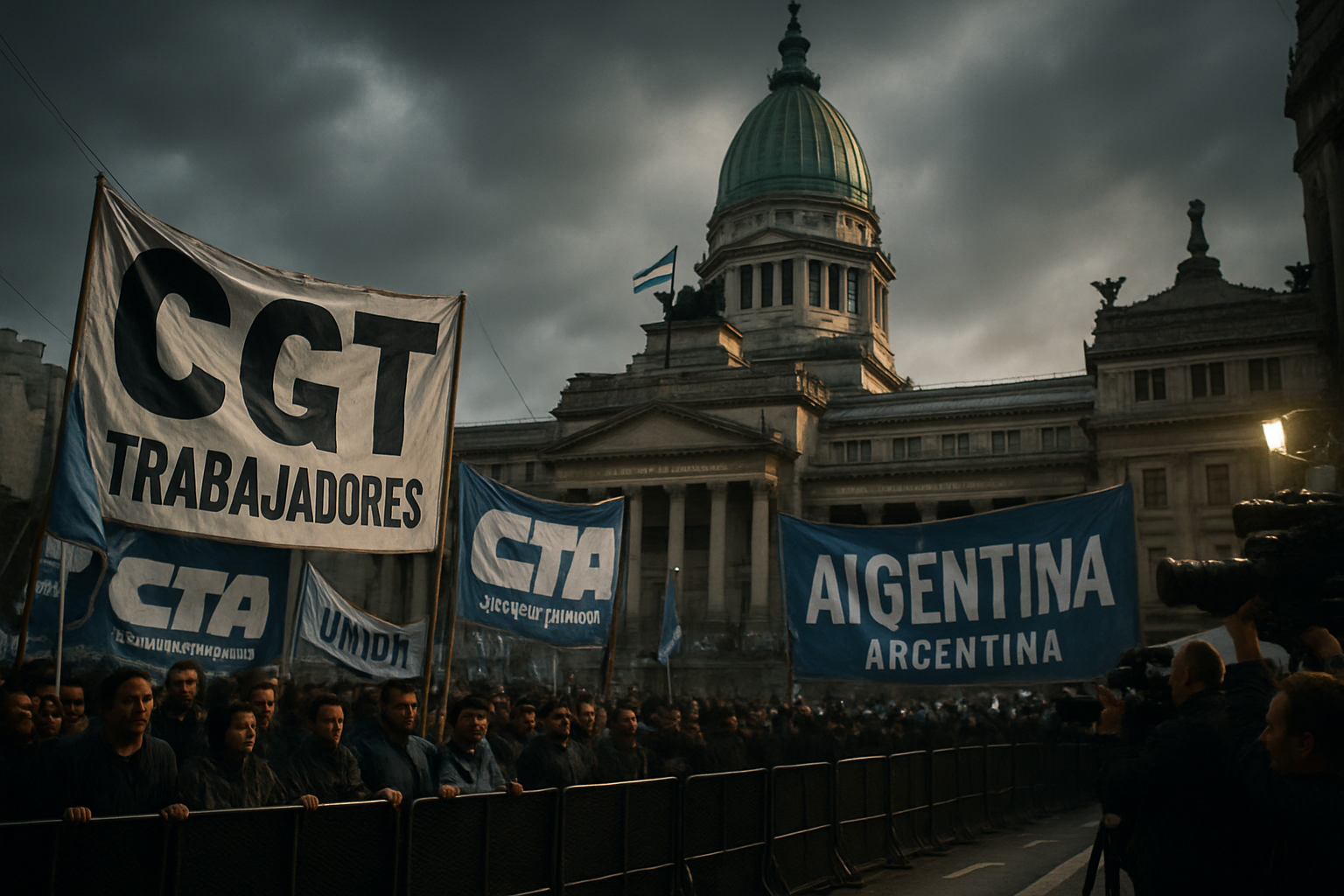
Argentina's government pushes forward with controversial labor reform legislation despite mounting opposition from trade unions, with the General Confederation of Labor (CGT) organizing a fourth general strike to coincide with the Chamber of Deputies debate scheduled for February 25 or a potential Senate vote on February 27.
Under internal pressure and facing criticism for behind-the-scenes negotiations with President Javier Milei's administration, the CGT has resolved to activate a general strike without mobilization for the day the reform project is debated in the Chamber of Deputies. The legislative debate could occur this Thursday or Wednesday, February 25, marking a significant escalation in labor tensions.
Government Modifies Controversial Provisions
In a tactical shift acknowledging the reform's contentious elements, the government announced it will modify the most criticized article of the labor reform before sending it to the legislative floor. The officialism plans to alter provisions related to sick leave salary reductions, with Interior Minister Patricia Bullrich publicly acknowledging "errors" in these components.
The modifications come as part of a broader strategy to secure passage in the Senate, with the government targeting February 27 for final approval. This represents the culmination of months of political maneuvering that has seen Bullrich modify over 30 articles to gain crucial support from the Radical Civic Union (UCR) and dialoguing opposition blocs.
Fourth Strike Against Milei Administration
The planned general strike would be the fourth major labor action against Milei's libertarian government since taking office, demonstrating the sustained nature of union opposition to the administration's economic restructuring agenda. The CGT's decision to proceed without traditional street mobilization represents a strategic departure from previous protests, focusing on economic disruption rather than visible demonstrations.
Transport unions have committed to full participation, potentially paralyzing Buenos Aires metropolitan area services during the legislative session. The Union of Automotive Transport Workers (UTA) in Tucumán province confirmed their participation, stating they are "not in agreement with the labor reform" and warning of complete bus service suspension throughout the province.
Strategic Timing and Political Pressure
The timing of the strike demonstrates sophisticated political calculation by union leadership, designed to maximize pressure on legislators during the critical voting period. This approach mirrors the CGT's previous successful coordination of strikes with legislative sessions, including the violent February protests during Senate approval that resulted in over 50 arrests and 270 million peso damage.
Reform Content and Economic Context
The labor reform legislation introduces fundamental changes to Argentina's employment framework, including the controversial "bank of hours" overtime system that allows employers greater scheduling flexibility, modified severance payment structures while maintaining basic worker protections, and adjusted union contribution requirements.
These changes complement Milei's broader economic agenda, including the historic US-Argentina trade agreement that eliminates over 1,600 US tariffs on Argentine goods. However, the reforms advance amid challenging economic conditions, with economists projecting 22.4% annual inflation for 2026 compared to the government's more optimistic 10.1% forecast.
"We are not in agreement with the labor reform. The measure will affect all collective transport services throughout the province."
— UTA Tucumán, Union Statement
Political Coalition Building Success
Despite union opposition, Milei's administration has demonstrated remarkable success in building legislative coalitions beyond its libertarian base. The strategic alliance with the UCR, PRO, and dialoguing opposition blocs has effectively isolated traditional Peronist parties, with Buenos Aires Governor Axel Kicillof positioning himself as a leading critic while building his 2027 presidential campaign.
The government's willingness to modify contentious provisions represents a significant departure from its typically confrontational approach, suggesting recognition that even supportive legislators have limits on what they can politically defend.
International and Economic Implications
The labor reform's passage would strengthen Argentina's position as a key Trump administration partner in South America, complementing the bilateral trade agreement and positioning the country for increased foreign investment. The reforms are designed to enhance labor market flexibility, crucial for capitalizing on new international trade opportunities.
However, implementation faces significant challenges beyond legislative approval. Union leaders have signaled extensive legal challenges that could create years of litigation, while workplace negotiations will prove crucial for operational stability amid ongoing labor opposition.
Presidential Travel During Critical Debate
Adding a layer of complexity to the political dynamics, President Milei is scheduled to begin a new trip to the United States precisely as the Chamber of Deputies starts debating the labor reform on Wednesday. This will be Milei's first of two planned visits to the US in the coming weeks, including participation in Trump's Peace Council meeting in Washington.
The timing of Milei's departure during such a critical domestic legislative moment underscores his confidence in the reform's passage and his prioritization of international relationships, particularly with the Trump administration.
Opposition Strategy and Electoral Positioning
The CGT's decision to call a general strike represents not just immediate opposition to the labor reform but part of broader positioning for the 2027 electoral cycle. With Kicillof emerging as a potential Peronist standard-bearer and Milei's reforms fundamentally reshaping Argentina's economic structure, the labor movement sees this as a defining moment for worker rights.
The strike's success will largely depend on transport sector participation and public support, factors that could influence both the immediate legislative outcome and longer-term political calculations for all major political actors.
Coming Weeks Will Prove Decisive
The confluence of legislative deadlines, strike actions, and international negotiations makes the coming weeks crucial for Argentina's political and economic trajectory. The government's ability to secure final passage while managing social tensions will determine not only the reform's fate but potentially the broader success of Milei's transformative agenda.
With the Senate vote potentially scheduled for February 27 and transport unions preparing comprehensive strike actions, Argentina faces a critical test of its democratic institutions' capacity to manage fundamental economic changes while preserving social stability and political legitimacy.
The outcome will likely influence similar reform efforts throughout Latin America and serve as a template for managing democratic governance during periods of comprehensive structural change.