Argentina's Senate approved President Javier Milei's controversial labor reform legislation by a vote of 42-30 early Wednesday morning, marking a significant legislative victory for the government's economic restructuring agenda while an International Monetary Fund mission concluded with positive assessments of the country's fiscal progress.
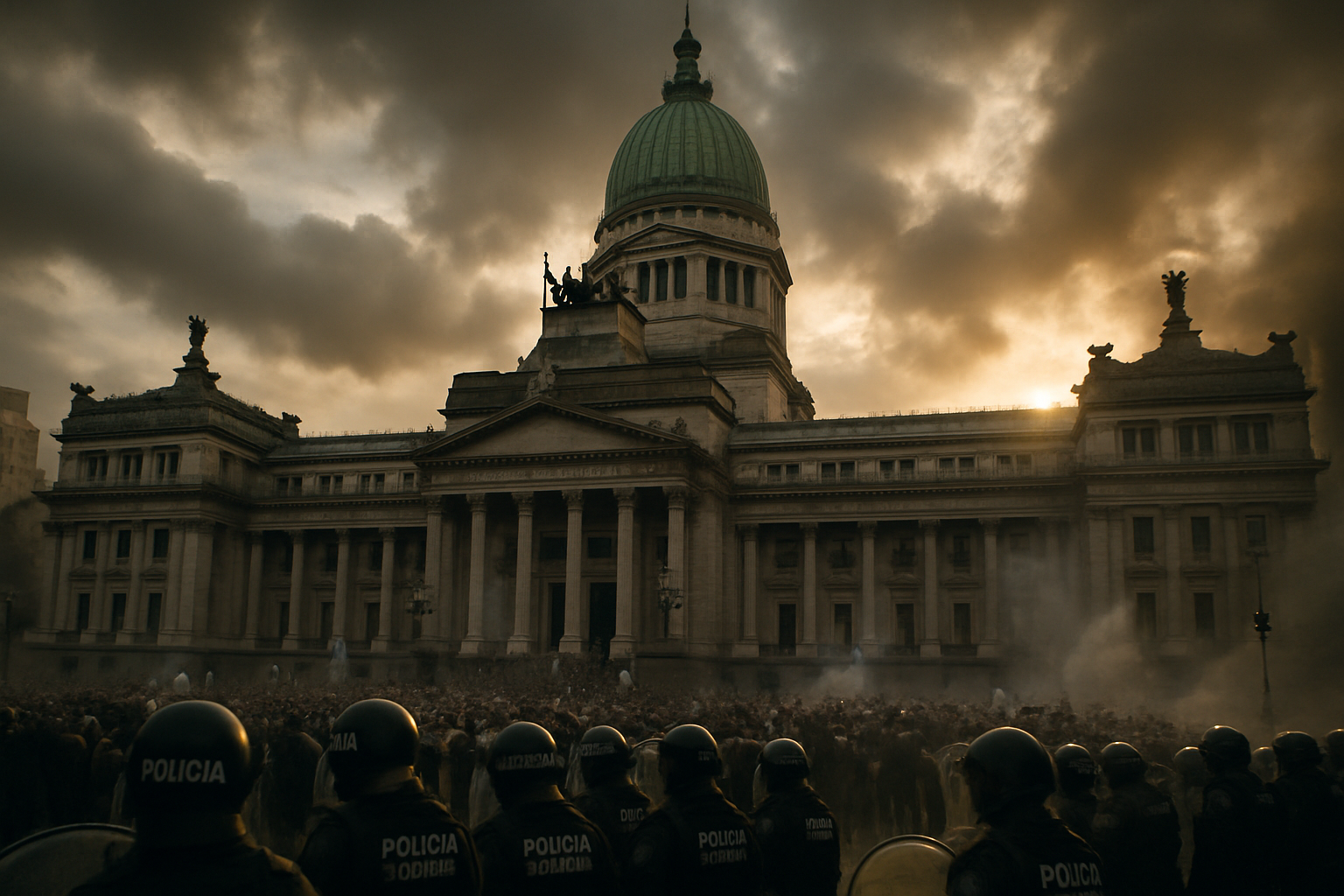
The marathon Senate session extended past midnight on February 12, 2026, as lawmakers debated the "Labor Modernization" bill amid violent street protests outside the National Congress building. The legislation now advances to the Chamber of Deputies for final approval before the extraordinary session period concludes.
Labor Reform Package Details
The approved legislation introduces sweeping changes to Argentina's labor framework, centered around a controversial "bank of hours" system that provides employers with greater scheduling flexibility for overtime work. The reform modifies severance payment structures while maintaining basic worker protections, adjusts union contribution requirements, and redefines various employment benefits.
Interior Minister Patricia Bullrich successfully secured passage through strategic negotiations, modifying over 30 articles to gain support from the Radical Civic Union (UCR) and dialoguist opposition blocs. The final version eliminated originally proposed elements including certain tax reductions and scaled back union funding cuts.
Constitutional lawyer Andrés Gil Domínguez criticized the reform as "objectively regressive in terms of normative rights for individual and collective workers," highlighting the contentious nature of the legislation among legal experts.
Unprecedented Violence Outside Congress
The legislative session proceeded despite the most serious CGT-organized violence in recent Argentine history. Protesters threw Molotov cocktails, stones, and improvised explosive devices at federal police forces stationed outside the Congress building.
Security Minister Alejandra Monteoliva confirmed over 50 arrests were made during the disturbances, with four police officers injured and two protesters hospitalized. The Buenos Aires city government assessed property damage at 270 million pesos, requiring extensive overnight cleanup operations.
The violent confrontations began at 3:30 PM on Rivadavia Avenue, with masked protesters systematically breaking sidewalks with hammers to create projectiles. Federal forces responded with tear gas and water cannons, creating dramatic television imagery that alternated between parliamentary debates and street confrontations.
Buenos Aires Governor Axel Kicillof personally joined the protests, criticizing the "project that puts workers' rights at risk" while positioning himself for a potential 2027 presidential campaign. CGT co-secretary Cristian Jerónimo declared the reform an attempt to "cover up the government's failure."
IMF Mission Success
Parallel to the legislative drama, Argentina successfully completed its second IMF mission review with Economy Minister Luis Caputo's team meeting with Fund technicians at the Ministry of Economy. La Gaceta reported that the IMF highlighted "very good progress" in evaluating the country's economic program, reserves position, and commitments under the 2025 agreement.
The positive assessment sets the stage for a potential $1 billion disbursement expected in March 2026, providing crucial foreign currency support for Milei's economic stabilization efforts. The mission's technical staff must now elevate their report to the IMF's executive board for final approval.
Economic Context and Challenges
The reform advances amid significant economic pressures, with economists projecting 22.4% annual inflation for 2026 compared to the government's more optimistic 10.1% forecast. January 2026 inflation reached 2.9% monthly, marking the fifth consecutive month of increases.
Despite inflation challenges, currency markets have shown relative stability. The official dollar rate declined to $1,442 pesos while the blue market dollar reached two-month lows, suggesting some confidence in the government's broader economic strategy.
The labor reform complements other elements of Milei's economic restructuring, including a historic trade agreement with the United States that eliminates over 1,600 tariffs on Argentine goods. This bilateral deal positions Argentina as a key Trump administration partner in South America.
Sectoral Impact and Modifications
The Senate version included significant modifications affecting specific industries. The legislation postponed until 2028 the elimination of funding for INCAA, Argentina's national cinema institute, following pressure from the audiovisual sector. This two-year grace period allows the industry to seek alternative financing mechanisms.
Labor provisions include digital registration systems, voluntary hour banks, and enhanced flexibility in rest periods and vacation scheduling. The reform maintains contributions to social security (obras sociales) while redefining compensation structures for dismissals and streamlining judicial payment processes.
Political Coalition Building
Milei's success demonstrated his administration's capacity to build coalitions beyond its libertarian base. The government secured support from La Libertad Avanza, PRO, UCR, and dialoguist opposition blocs while isolating Peronist parties across various factions.
The victory provides significant political capital for the president, who has faced criticism over his economic policies' social impact. The ability to pass controversial legislation despite widespread opposition suggests growing institutional support for his reform agenda.
Union Response and Legal Challenges
The General Confederation of Labor (CGT) coordinated the broadest opposition alliance to Milei's administration, including both CTA branches, the Left Front, La Cámpora, and various Peronist groups. Union leaders have signaled potential legal challenges that could create years of litigation over the reform's implementation.
The CGT leadership criticized what they termed "irresponsible senators" and "complicit governors" while maintaining that the reform seeks to distract from economic policy failures. The organization's capacity to organize large-scale protests demonstrates continued organizational strength despite the legislative defeat.
International Implications
The reform's approval strengthens Argentina's position as a reliable partner for international investors and trading partners. The legislation is viewed as essential for capitalizing on new trade opportunities, particularly the expanded agricultural market access provided by the US trade agreement.
European and regional media provided extensive coverage of the developments, with particular attention to the balance between democratic governance and economic modernization. The events serve as a template for other Latin American countries considering similar structural reforms.
Implementation Challenges Ahead
Despite legislative success, significant challenges remain for implementation. The reform requires extensive regulatory development and employer training programs. Union legal challenges are expected to create potential years of litigation, while workplace-level negotiations will be crucial for maintaining operational stability.
The government must balance ongoing union opposition with the need for effective implementation across diverse economic sectors. Success will depend on continued federal-provincial coordination and sustained political commitment to the reform process.
The Chamber of Deputies' final vote will determine whether Milei's labor modernization becomes law before the extraordinary session period ends. With the Senate's approval and positive IMF assessments, the government has gained significant momentum for its comprehensive economic transformation agenda, though substantial implementation challenges lie ahead.