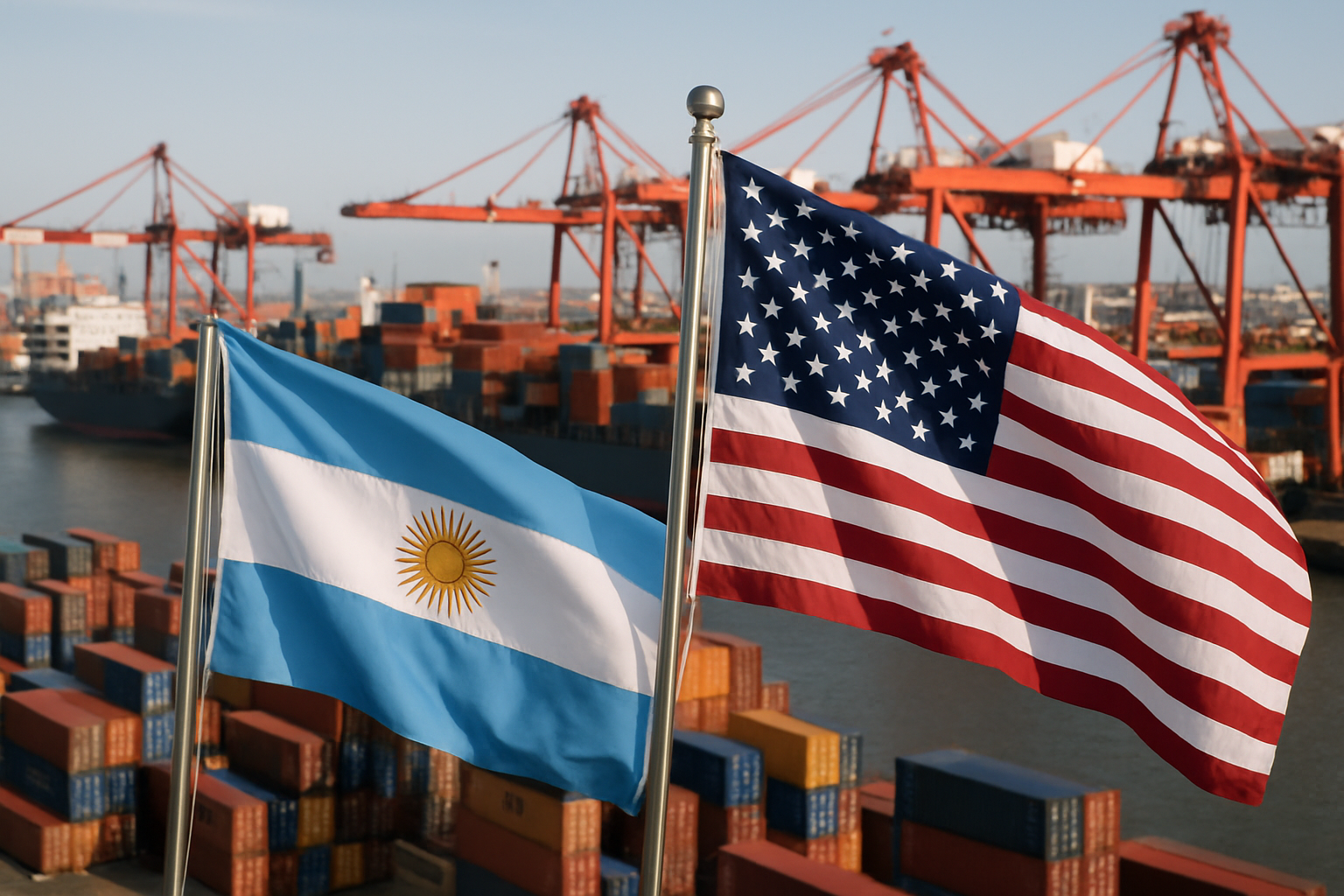
Argentina and the United States have signed a comprehensive trade agreement that will eliminate hundreds of tariffs and significantly expand market access between the two countries, marking one of President Javier Milei's most significant economic achievements since taking office.
The groundbreaking deal, announced on February 5, 2026, will see the United States eliminate over 1,600 reciprocal tariffs on Argentine goods while President Milei's government will terminate more than 220 levies on US products. The agreement represents a major shift toward free trade cooperation between the two nations and positions Argentina as a key economic partner for the Trump administration in South America.
Scope and Economic Impact
The trade deal encompasses multiple sectors crucial to both economies, with particular focus on reducing barriers for commercial goods and fostering strategic investments. Argentine exports to benefit from the tariff reductions include agricultural products, manufactured goods, and raw materials that have previously faced significant barriers in US markets.
According to official sources, the agreement aims to reduce commercial barriers and promote strategic investments that could boost bilateral trade volumes significantly. The Port of Rosario, Argentina's primary export hub, is expected to see increased shipping activity as trade flows expand under the new framework.
Key Provisions and Strategic Elements
The comprehensive agreement includes several critical components that extend beyond simple tariff reduction:
- Enhanced access to agricultural markets for both countries
- Strengthened intellectual property protections
- Cooperation on critical minerals development
- Provisions for strategic investment promotion
The focus on critical minerals is particularly significant, aligning with broader US efforts to diversify supply chains away from Chinese dominance. Argentina possesses substantial lithium reserves, making it a valuable partner for the United States in securing materials essential for renewable energy and advanced manufacturing.
Legislative Approval Process
President Milei will now send the agreement to Congress for legislative approval, according to Argentine government sources. The administration is seeking parliamentary backing for the treaty, which officials describe as crucial for Argentina's economic future and international competitiveness.
The legislative process represents a critical next step, as the agreement requires formal ratification to take effect. The Milei government has positioned the deal as essential for reducing trade barriers and attracting foreign investment to help revitalize Argentina's economy.
"This agreement represents a fundamental shift toward free trade cooperation that will benefit both nations economically and strategically."
— Argentine Government Official
Regional and Global Context
The Argentina-US trade deal comes amid a broader pattern of the Trump administration pursuing bilateral trade agreements across the globe. Recent successful negotiations with India, which resulted in significant tariff reductions and increased market access, demonstrate the administration's preference for direct bilateral engagement over multilateral frameworks.
This agreement also fits within the context of US efforts to strengthen economic ties with Latin American countries as part of a broader strategy to counter Chinese influence in the region. China has become a major trading partner for many South American nations, making US economic engagement increasingly important from a geopolitical perspective.
The timing coincides with other major US diplomatic initiatives, including ongoing negotiations with Iran and continued efforts to resolve the Ukraine conflict through direct engagement with Russia. These parallel diplomatic tracks suggest a comprehensive approach to international relations by the Trump administration.
Implementation Timeline and Challenges
While the agreement has been signed, implementation will require careful coordination between both governments and their respective business communities. The complex nature of tariff elimination means that different product categories may see varying timelines for the removal of trade barriers.
Argentine businesses will need to adapt to new market opportunities while ensuring compliance with US regulatory requirements. Similarly, American companies will gain enhanced access to Argentine markets, potentially creating new investment opportunities and partnerships.
The success of the agreement will largely depend on both countries' ability to maintain political commitment to free trade principles, despite potential domestic opposition from protected industries that may face increased competition.
Strategic Significance for Both Nations
For Argentina, the trade deal represents a crucial opportunity to diversify its economic partnerships and reduce dependence on traditional markets. Under President Milei's leadership, the country has pursued closer ties with the United States as part of a broader economic reform agenda focused on opening markets and attracting foreign investment.
From the US perspective, the agreement strengthens economic ties with a strategically important South American nation while potentially securing access to critical minerals and agricultural products. The deal also demonstrates American commitment to economic engagement in Latin America at a time when Chinese influence in the region continues to grow.
The agreement's provisions for intellectual property protection and strategic investment cooperation suggest both countries view this as more than a simple trade deal, but rather as a foundation for deeper economic and technological cooperation in the years ahead.
Looking Forward
As the agreement moves through the Argentine legislative process, business communities in both countries are already preparing for the new trade environment. The potential for significantly expanded commercial relationships exists across multiple sectors, from agriculture and manufacturing to technology and services.
The success of this agreement could serve as a template for future US trade negotiations with other Latin American countries, potentially reshaping economic relationships across the Western Hemisphere. For Argentina, successful implementation could attract additional foreign investment and help stabilize the country's economic situation.
Both governments have emphasized that this agreement represents just the beginning of enhanced cooperation, with potential for future expansion into additional areas of mutual economic interest.