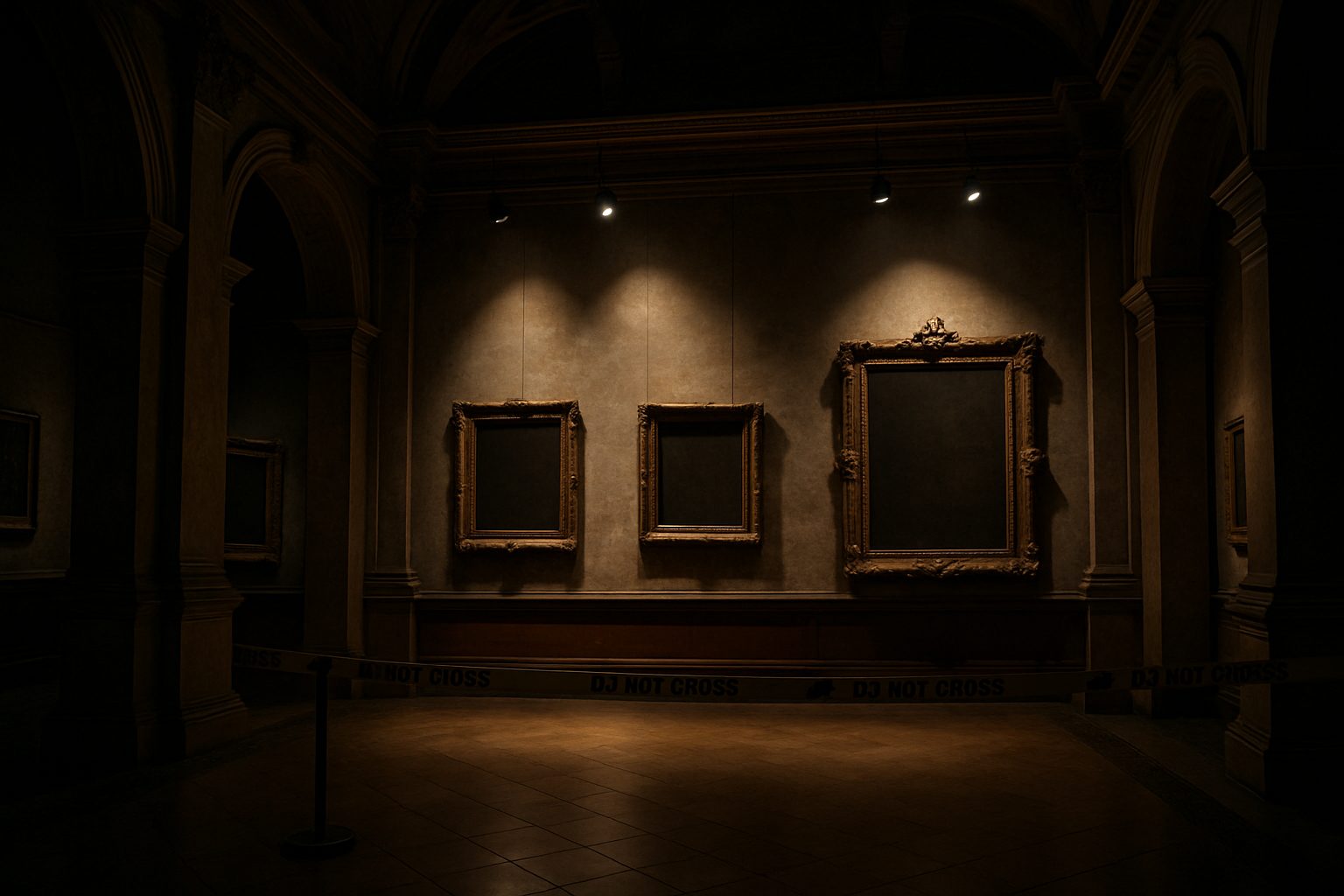
Four masked intruders breached the prestigious Fondazione Magnani-Rocca museum near Parma, Italy, in the early hours of March 22-23, 2026, stealing three invaluable French Impressionist and Post-Impressionist masterpieces in what investigators describe as one of the most sophisticated art heists in recent European history.
The stolen works include Pierre-Auguste Renoir's "Les Poissons" (The Fish, c. 1917), Paul Cézanne's "Still Life with Cherries" (1885-1887), and Henri Matisse's "Odalisque on the Terrace" – collectively valued at tens of millions of euros according to Italian news agency ANSA. The theft occurred at the villa housing the foundation in Mamiano di Traversetolo, a commune in the province of Parma, but remarkably went undetected until the public announcement on March 29.
A Meticulously Planned Operation
The precision of the theft has stunned investigators and art security experts across Europe. According to sources familiar with the investigation, the four intruders demonstrated intimate knowledge of the museum's layout, security systems, and collection placement. The operation was completed in approximately three minutes, suggesting extensive reconnaissance and planning.
"This was not a random act of vandalism or opportunistic crime," explained a source close to the investigation by Italy's Carabinieri Cultural Heritage Protection Unit. "The thieves knew exactly what they wanted and where to find it. They bypassed less valuable works to target these specific masterpieces."
The theft's sophistication is particularly evident in the delay between the crime and its discovery. That the museum's security systems failed to immediately detect the breach, and that the theft went unnoticed for nearly a week, suggests the perpetrators had detailed knowledge of the facility's operations and possibly inside assistance.
The Stolen Masterpieces
The three stolen works represent different periods and styles of French artistic innovation, making their theft a significant loss to cultural heritage. Renoir's "Les Poissons," painted around 1917 during the artist's final period, demonstrates his evolution toward simplified forms and synthetic brushwork. The painting shows how the master Impressionist reduced complex compositions to essential chromatic planes while maintaining his characteristic warmth and vitality.
Cézanne's "Still Life with Cherries" exemplifies the Post-Impressionist master's revolutionary approach to form and perspective. Created between 1885 and 1887, the work demonstrates Cézanne's systematic deconstruction of reality into geometric forms and compositional structures that would later influence the development of modern art. This piece represents one of the rare Cézanne works in a permanent Italian collection.
The Matisse work, "Odalisque on the Terrace," reflects the French artist's fascination with Orientalist themes and his bold use of color and pattern. These works formed part of the museum's permanent French collection, carefully assembled over decades to provide Italian audiences with access to crucial developments in French art.
Context of Cultural Heritage Threats
This heist occurs during what art security experts have identified as a particularly vulnerable period for European cultural institutions. The theft coincides with the broader "2026 Cultural Renaissance" – an unprecedented period of international cultural programming and heritage preservation initiatives across Europe that has heightened both the visibility and value of cultural artifacts.
Italy has experienced particular challenges in protecting its vast cultural heritage. The country's recent focus on expanding public access to cultural sites, including the March opening of 780 previously restricted cultural locations, has created new security challenges for institutions balancing accessibility with protection.
The Fondazione Magnani-Rocca, established in the villa of the same name, has historically been considered one of Italy's more secure private cultural institutions. The foundation's collection includes works spanning several centuries, but the French Impressionist and Post-Impressionist pieces were among its most valuable holdings.
International Investigation Underway
The investigation is being led by Italy's Carabinieri Cultural Heritage Protection Unit, one of the world's most specialized art crime investigation units. The organization has extensive experience with art theft recovery and maintains databases of stolen works that are distributed internationally to galleries, auction houses, and art dealers.
"We are treating this as a professional operation that likely involved months of planning and reconnaissance."
— Source close to the Carabinieri investigation
The investigation has already revealed several concerning aspects of the theft. The fact that the crime went undetected for days suggests either sophisticated techniques for bypassing security systems or possible inside knowledge of the museum's operations. International cooperation has been requested, as stolen artworks of this caliber typically require international networks for eventual sale or laundering.
Art theft experts note that works of this prominence are extremely difficult to sell through legitimate channels, as they are immediately flagged in international databases. This suggests the theft was either commissioned by a private collector willing to house stolen works, or represents part of a broader criminal operation using art as collateral for other illegal activities.
Broader Implications for Cultural Security
The Magnani-Rocca theft highlights systemic vulnerabilities in cultural heritage protection during a period of unprecedented cultural activity across Europe. The timing, occurring during the height of the "Cultural Renaissance" period that has seen major exhibitions, government cultural investments, and increased international cooperation in heritage preservation, suggests criminals may be exploiting the heightened focus on cultural accessibility.
Security experts have noted that the balance between public access and protection remains one of the most challenging aspects of cultural heritage management. Recent initiatives to democratize culture – including Italy's expanded access programs – create new vulnerabilities that criminal organizations may be exploiting.
The theft also occurs against the backdrop of broader security concerns in Italy's cultural sector. Recent months have seen various challenges to cultural institutions, from climate-related threats to infrastructure problems, suggesting that security resources may be stretched across multiple priorities.
Recovery Efforts and International Cooperation
Recovery efforts are now focusing on international cooperation networks that have proven successful in previous high-profile art theft cases. The stolen works have been entered into international databases maintained by organizations including Interpol, the FBI's Art Crime Team, and the Art Loss Register, alerting legitimate art market participants worldwide.
Historical precedent suggests that works of this caliber, while extremely difficult to sell legitimately, often surface years or even decades later through various channels. The distinctive nature of the three stolen pieces – each representing crucial developments in French art history – makes them particularly difficult for criminals to dispose of without detection.
The Carabinieri's Cultural Heritage Protection Unit has established a dedicated task force for the investigation, drawing on their extensive experience with art crime. Italy's leadership in cultural heritage protection, developed through necessity given the country's vast cultural resources, provides sophisticated investigative capabilities that are being deployed in this case.
Impact on Cultural Institutions
The theft has already prompted discussions about security protocols at cultural institutions across Italy and Europe. Museum directors and cultural heritage officials are reassessing the balance between accessibility and security, particularly as the cultural renaissance period has led to increased visitor numbers and expanded programming.
The Fondazione Magnani-Rocca has temporarily closed to the public while security assessments are conducted and the investigation continues. This closure affects not only immediate visitors but also educational programs and cultural partnerships that the foundation maintains with regional institutions.
The broader cultural impact extends beyond the immediate loss of the artworks. These pieces served educational and cultural functions, providing Italian audiences with access to crucial developments in French art history. Their absence creates gaps not only in the museum's collection but in the cultural narrative the institution sought to present.
Looking Forward
As the investigation continues, the Magnani-Rocca theft serves as a stark reminder of the ongoing challenges facing cultural heritage protection in an era of increased global cultural exchange and criminal sophistication. The case will likely influence security protocols and international cooperation frameworks for protecting cultural heritage.
The recovery of the stolen masterpieces remains the immediate priority, but the broader implications for cultural security policy across Europe are already becoming apparent. This incident may mark a turning point in how cultural institutions balance the competing demands of accessibility and protection in the 21st century.
The investigation continues, with authorities expressing cautious optimism based on the sophisticated investigative resources available and the international cooperation networks that have proven successful in previous high-profile art recoveries. However, the professional nature of this theft suggests that recovery efforts will require sustained international cooperation and may extend over an extended period.