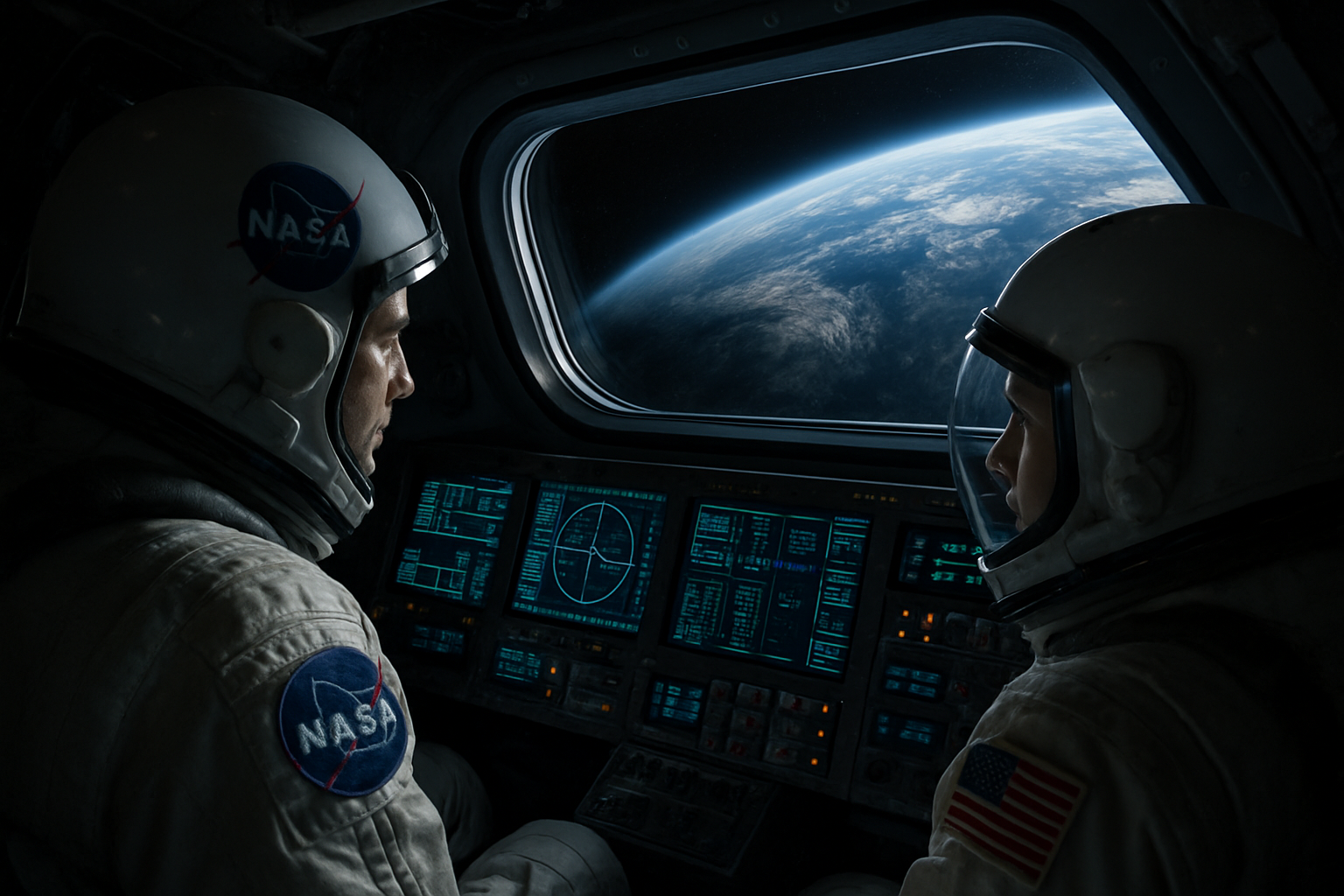
NASA's Artemis II mission successfully completed its critical translunar injection burn on April 3, 2026, sending four astronauts on humanity's first journey to the Moon in over half a century, marking a triumphant milestone after overcoming significant technical challenges and ending a 54-year gap since Apollo 17.
The historic maneuver was completed at approximately 2:49 AM CET (3:00 AM Bulgarian time) on April 3, with NASA Flight Director Jeff Radigan approving the flawless 5-minute 49-second engine burn that propelled the Orion spacecraft out of Earth's orbit and onto a lunar trajectory. The four-member international crew—Canadian Jeremy Hansen, NASA Commander Reid Wiseman, Christina Koch, and Victor Glover—are now heading toward the Moon on their 10-day, 685,000-mile journey.
Critical Technical Challenges Overcome
The successful translunar injection comes after the crew demonstrated remarkable adaptability in resolving multiple technical issues during their first 26 hours in space. These challenges included communication system failures, thermal sensor malfunctions, and spacecraft toilet system repairs—all resolved without affecting the mission timeline, showcasing the effectiveness of crew training and backup system reliability.
Jeremy Hansen, who becomes the first Canadian to travel beyond Earth orbit, reported a "beautiful view of the dark side of Earth lit by the moon" approximately 10 minutes after the burn completion. The successful resolution of these in-flight issues validates years of preparation and the robust design of the Orion spacecraft systems.
"We are on our way to the Moon. The crew is feeling excellent, and all systems are performing nominally."
— NASA Flight Director Jeff Radigan
Historic Significance and International Cooperation
This mission represents the first crewed venture beyond Earth orbit since Apollo 17 in December 1972, ending a 54-year gap in human deep space exploration. The achievement validates the Artemis Accords framework for peaceful lunar exploration, with Hansen's participation representing the most significant Canadian human spaceflight contribution since the Space Shuttle era.
The mission carries scientific equipment from international partners, including Argentina's Atenea radiation study device, which will collect crucial data on deep space radiation effects. This research is essential for future lunar settlements and Mars exploration missions where astronauts will face prolonged exposure to cosmic radiation beyond Earth's protective magnetic field.
Technical Triumph After Extensive Delays
The successful launch and translunar injection vindicate NASA's methodical approach to resolving pre-launch technical issues. Engineers spent months addressing persistent helium system failures affecting the SLS rocket's upper stage—critical for engine purging and fuel tank pressurization—and hydrogen leak problems during wet dress rehearsal testing.
The SLS rocket, standing 322 feet tall and weighing 5.75 million pounds when fully fueled with over 700,000 gallons of liquid hydrogen and oxygen, has proven itself as the most powerful rocket NASA has ever built. The successful demonstration of its deep space transportation capabilities marks a significant technological achievement.
Strategic Lunar Pivot and Economic Implications
The mission launches during what experts term the "space economy golden age," with NASA Administrator Jared Isaacman having announced a historic $20 billion commitment to establish a permanent lunar surface base by 2030—the largest space infrastructure investment in NASA history. This strategic pivot included canceling the Lunar Gateway orbiting station project to redirect resources toward surface operations.
The success occurs amid intensifying international competition, with China planning crewed lunar missions by 2030 and SpaceX preparing for a potential trillion-dollar IPO in June 2026. The space economy is projected to exceed $1 trillion by 2030, positioning space exploration as critical infrastructure rather than experimental endeavor.
Crew Performance and Space Medicine Advances
The crew's rapid resolution of communication, thermal, and toilet system issues demonstrates the effectiveness of extensive training programs and validates backup system designs. The successful repair of the spacecraft toilet system represents a significant advancement over Apollo-era capabilities, ensuring crew comfort during extended deep space operations.
The mission builds upon critical space medicine research, including French astronaut Sophie Adenot's record eight-month ISS mission that provided crucial data on lung tissue cultivation and Space-Associated Neuro-Ocular Syndrome (SANS) research. This medical research directly informs protocols for future lunar bases and Mars expeditions where medical evacuation to Earth will be impossible.
Journey to Lunar Flyby
The crew will enter the Moon's gravitational sphere of influence by Sunday morning and is positioned to break the Apollo 13 distance record by traveling approximately 4,000 miles beyond the Moon's far side. This trajectory validates deep space life support systems, radiation protection capabilities, and navigation systems essential for sustained lunar presence.
The mission serves as a crucial stepping stone for Artemis III, planned for 2028, which will return humans to the lunar surface for the first time since the Apollo era. All mission objectives focus on testing systems essential for permanent lunar settlements and Mars exploration foundations.
Safety-First Culture Vindicated
The mission's success validates NASA's safety-first institutional culture, developed through lessons learned from the Challenger and Columbia tragedies. Multiple delays throughout 2026 demonstrated the agency's commitment to methodical problem-solving, prioritizing crew protection over schedule adherence even under competitive pressure from international space programs.
This approach proved essential as the mission proceeded safely despite powerful geomagnetic storm conditions affecting Earth, demonstrating comprehensive planning resilience and robust safety protocols that will be crucial for future deep space operations.
Toward a Spacefaring Civilization
The successful translunar injection marks humanity's renewed commitment to becoming a spacefaring civilization through advanced technology, international cooperation, and space medicine knowledge accumulated over decades of ISS operations. The mission establishes the foundation for permanent extraterrestrial settlements and multi-planetary species development.
As the crew continues their journey toward the Moon, their success represents not just a return to lunar exploration, but the beginning of humanity's sustained presence beyond Earth orbit for the first time in human history. The mission's achievements will determine the trajectory of human space exploration for generations to come, potentially establishing the infrastructure needed for humanity's expansion into the cosmos.