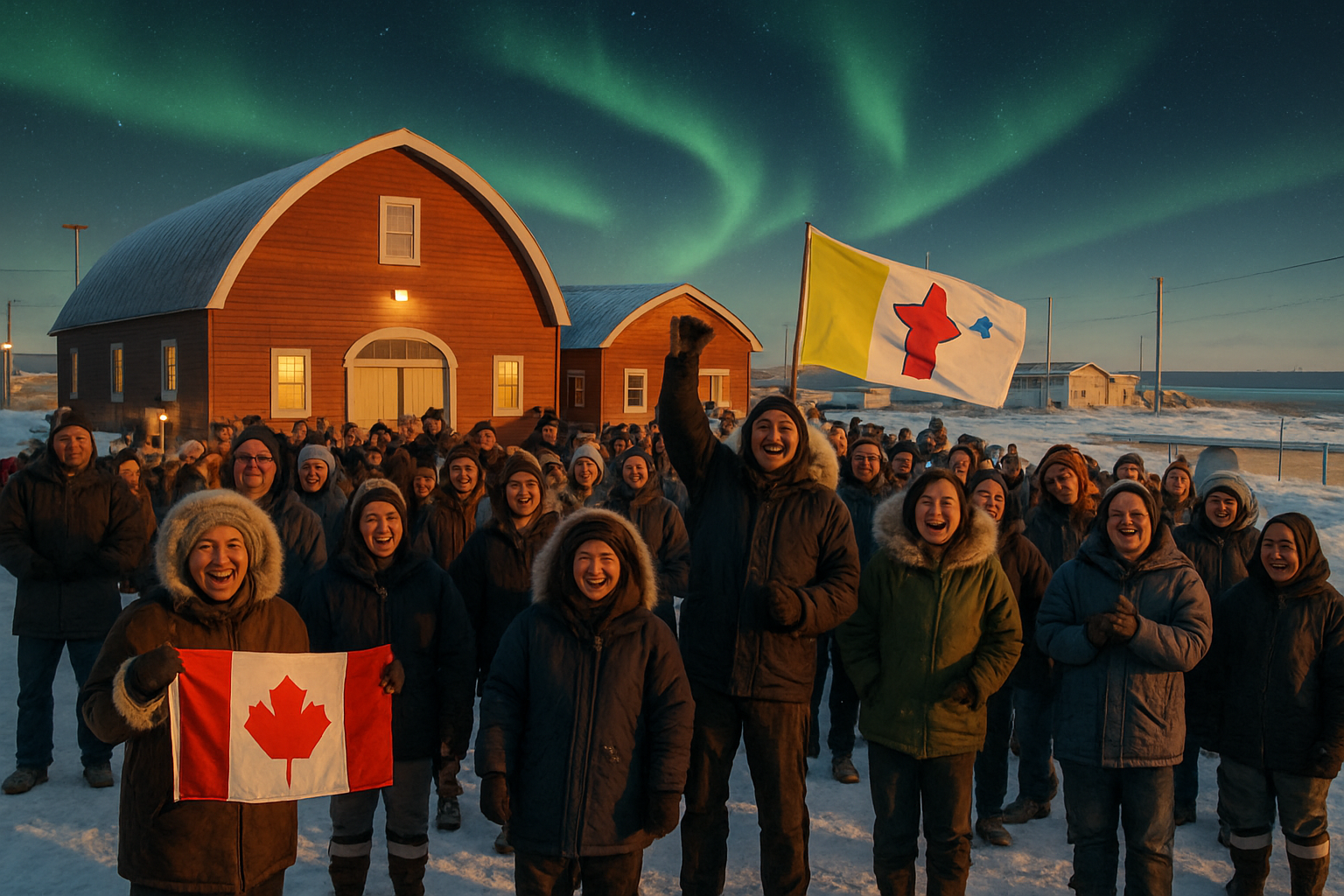
The remote hamlet of Arviat, Nunavut, is celebrating a transformative milestone after being selected by Inuit Tapiriit Kanatami to host Canada's first Inuit-led university, a decision that promises to reshape Indigenous higher education across the Arctic.
Located on the western shores of Hudson Bay, this community of approximately 3,200 residents has been chosen as the main campus site for Inuit Nunangat University, a historic achievement that recognizes Arviat's unique position as an educational leader within Inuit communities.
A Community Built for Learning
Mayor Joe Savikataaq, Jr. proudly pointed to areas on the local map where the university's facilities will be established, highlighting the community's readiness to embrace this unprecedented opportunity. The selection of Arviat was not arbitrary—Inuit Tapiriit Kanatami specifically recognized the hamlet's reputation as an "education leader" and its strong connection to Inuktitut, the traditional Inuit language that will play a central role in the university's curriculum.
"This represents more than just a new institution," explained a spokesperson for Inuit Tapiriit Kanatami. "It's about creating a space where Inuit knowledge, values, and ways of learning can flourish at the highest academic levels while maintaining deep cultural roots."
Breaking New Ground in Indigenous Education
The establishment of Inuit Nunangat University marks a significant departure from traditional educational models that have often required Indigenous students to leave their communities and cultural contexts to pursue higher education. This new institution is designed to operate within Inuit cultural frameworks while providing internationally recognized academic credentials.
The university's curriculum will integrate traditional Inuit knowledge systems with contemporary academic disciplines, creating learning opportunities that honor both ancestral wisdom and modern educational requirements. This approach represents a growing global movement toward culturally responsive education that recognizes Indigenous knowledge as equally valid to Western academic traditions.
"Our young people will no longer have to choose between their cultural identity and their academic ambitions. They can pursue both in their own community, in their own language, surrounded by their own values."
— Community Elder, Arviat
Strategic Location and Cultural Significance
Arviat's location on Hudson Bay provides both practical and symbolic advantages for the university. The hamlet's position within the traditional territory of Inuit peoples offers students direct access to the land-based learning that forms a cornerstone of Inuit education. From this location, students and faculty can engage in traditional activities such as hunting, fishing, and seasonal migrations that have sustained Inuit communities for millennia.
The community's strong commitment to Inuktitut language preservation was a decisive factor in the selection process. Unlike many Arctic communities where English or French have become dominant, Arviat maintains Inuktitut as a living, everyday language used in homes, businesses, and community gatherings.
Educational Innovation in the Arctic
The timing of this announcement coincides with what educational experts are calling the "2026 Educational Technology Renaissance," a global movement toward thoughtful integration of digital tools with traditional learning methods. Inuit Nunangat University plans to leverage this trend by incorporating technology that enhances rather than replaces traditional Inuit teaching methods.
The institution will utilize advanced communication technologies to connect with Inuit communities across the Arctic, creating a distributed learning network that serves the entire Inuit Nunangat region. This approach allows students to remain connected to their home communities while accessing educational resources that previously required relocation to southern institutions.
Economic and Social Impact
The university's establishment is expected to generate significant economic benefits for Arviat and the broader Nunavut region. Construction of campus facilities will create immediate employment opportunities, while the institution's ongoing operations will require permanent staff positions ranging from administration to specialized academic roles.
Beyond economic considerations, the university addresses critical social needs within Inuit communities. Young people who previously faced the difficult choice between pursuing higher education and maintaining community connections will now have pathways that honor both aspirations.
The institution also promises to strengthen cultural transmission between generations. Rather than seeing traditional knowledge and formal education as competing systems, the university will create spaces where elders can work alongside professors, ensuring that ancient wisdom informs contemporary scholarship.
Challenges and Opportunities Ahead
Establishing a university in Canada's remote Arctic presents unique logistical challenges. Infrastructure development must account for extreme weather conditions, limited transportation networks, and the high costs of materials and supplies in northern communities. However, these challenges also create opportunities for innovative approaches to sustainable education delivery.
The university's planners are exploring energy-efficient building designs suited to Arctic conditions, sustainable food systems that incorporate traditional Inuit dietary practices, and transportation solutions that minimize environmental impact while maintaining connections to other communities.
National and International Significance
The establishment of Inuit Nunangat University extends far beyond local impact, representing a significant advancement in Indigenous rights and educational sovereignty. As Canada's first Inuit-led university, the institution sets precedents for Indigenous educational governance and cultural preservation that may influence similar initiatives worldwide.
International Indigenous education advocates are closely monitoring this development as a potential model for other Indigenous communities seeking to maintain cultural identity while pursuing academic excellence. The success of this initiative could inspire similar projects among First Nations in other Arctic regions, including Alaska, Greenland, and northern Scandinavia.
Looking Forward
As Arviat prepares for its transformation into a university town, community leaders emphasize the importance of maintaining the hamlet's character while embracing new opportunities. The university's development will be guided by Inuit Qaujimajatuqangit—traditional Inuit knowledge and values—ensuring that growth serves community priorities rather than external demands.
The selection of Arviat represents more than an educational milestone; it signifies recognition of Inuit communities' capacity for educational leadership and innovation. As Mayor Savikataaq, Jr. noted while pointing to the future campus locations, this achievement belongs to the entire community—a testament to their commitment to education, culture, and the promising future they are building together.
With construction expected to begin in the coming year, Arviat stands on the threshold of a new chapter in its history, one that will see this Hudson Bay community become the heart of Inuit higher education for generations to come.