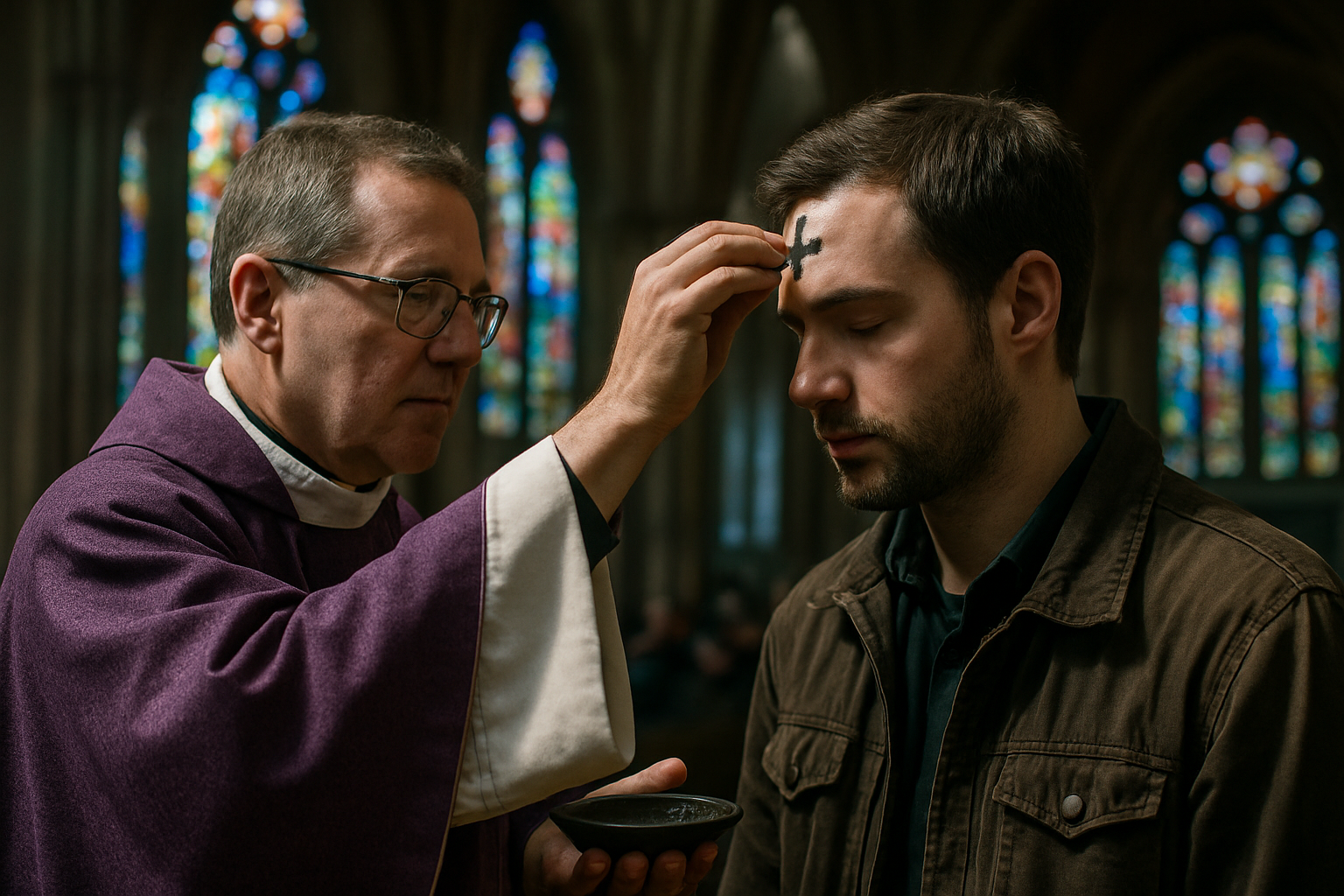
Christians worldwide marked Ash Wednesday on February 18, 2026, beginning the sacred 40-day Lenten season of prayer, fasting, and spiritual preparation leading to Easter. This year's observance carries special significance as it coincides with the historic simultaneous commencement of Ramadan, creating an unprecedented moment of global spiritual reflection affecting over 2.4 billion Christians and 2 billion Muslims.
Global Observance and Spiritual Renewal
From the Caribbean to West Africa, from the Americas to the Vatican, Christians gathered in churches and sacred spaces to receive the traditional ash cross on their foreheads, marking the beginning of Christianity's most solemn preparatory season. In Belize, Rev. Lizbeth Tulloch of St. Ann's Anglican Church in Belmopan explained the significance of Ash Wednesday and her church's innovative "Ashes to Go" program, bringing the sacred ritual directly to residents of the capital city.
The observance, characterized by prayer, fasting, and reflection, signals the start of a 40-day period of spiritual preparation commemorating Jesus Christ's 40 days of fasting in the desert before beginning his public ministry. This practice of self-discipline and devotion serves as a pathway for Christians to deepen their relationship with God and prepare their hearts for the celebration of Easter.
Religious Leaders Call for Modern Spiritual Practices
In Trinidad and Tobago, Archbishop Jason Gordon delivered a powerful Ash Wednesday homily at Our Lady of Perpetual Help RC Church in San Fernando, challenging Catholics to make this Lenten season truly transformative. The Archbishop made headlines by urging worshippers to consider fasting from social media during the 40-day period while increasing charitable giving to the poor.
"If you have never sinned and always done what is right, you may leave now," Archbishop Gordon quipped, before encouraging his congregation to examine their hearts and renew their relationship with God through meaningful sacrifice and service.
— Archbishop Jason Gordon, Trinidad and Tobago
Gordon's message reflects a growing trend among Christian leaders to adapt traditional Lenten practices to address contemporary spiritual challenges, including the pervasive influence of digital technology on modern spiritual life.
West African Spirituality and Community Focus
In Burkina Faso, Abbé Charles Ouanga delivered a stirring message to the faithful gathered at the cathedral Notre Dame de l'Immaculée Conception in Ouagadougou, emphasizing the importance of sincere conversion over superficial religious displays. His words carried particular weight as he addressed Christians who had returned to church specifically for the Lenten season.
The priest welcomed back long-absent parishioners with warmth while challenging all believers to move beyond mere appearances. "There is no Oscar for the best faster," Abbé Ouanga reminded his congregation, emphasizing that Lenten practices should stem from genuine spiritual conviction rather than competitive religious performance.
Immigration and Faith Communities
A particularly moving scene unfolded in New York City, where immigrants gathered in the rain outside the 26 Federal Plaza building in Manhattan—home to ICE and other federal agencies. Religious leaders offered the traditional Ash Wednesday ritual at the entrance, demonstrating how faith transcends political boundaries and provides comfort to vulnerable communities during challenging times.
This powerful image of religious observance at the seat of immigration enforcement highlighted the universal human need for spiritual grounding and community support, regardless of legal status or national origin.
Historic Spiritual Convergence with Ramadan
The 2026 Lenten season carries unprecedented significance as it begins simultaneously with Ramadan 1447 AH, creating the largest concurrent religious observance in human history. Nearly 4.5 billion believers worldwide entered their respective sacred seasons on the same day, emphasizing shared themes of fasting, prayer, charity, and personal reflection across faith traditions.
This rare alignment has been noted by religious leaders as providential timing that offers unique opportunities for interfaith understanding and mutual learning. Both traditions emphasize self-discipline, spiritual growth, community service, and preparation for major celebrations—Easter for Christians and Eid al-Fitr for Muslims.
Contemporary Challenges and Adaptations
The 2026 Lenten observance reflects the ongoing evolution of Christian practice in the modern world. Churches across multiple continents have adapted traditional approaches to meet contemporary needs while preserving essential spiritual elements. The "Ashes to Go" programs, like those in Belize, represent innovative outreach efforts that bring sacred rituals to people where they are, rather than requiring them to come to traditional church settings.
Educational institutions in countries with significant Muslim populations, such as Finland, have established "fasting parks" to accommodate students observing Ramadan during lunch periods. This spirit of religious accommodation demonstrates how communities can honor diverse spiritual practices while maintaining unity and mutual respect.
Technology and Spiritual Practice
Archbishop Gordon's call to fast from social media reflects growing awareness among religious leaders of technology's impact on spiritual life. This modern adaptation of traditional fasting practices acknowledges that spiritual discipline in the 21st century must address contemporary sources of distraction and superficial engagement.
Religious communities worldwide are increasingly integrating digital tools for prayer, scripture study, and charitable giving while maintaining the essential human connections and spiritual depth that characterize authentic religious experience.
Economic and Social Impact
The simultaneous observance of Lent and Ramadan creates significant economic and social impacts globally. Altered consumption patterns, increased charitable giving, and modified work schedules affect communities worldwide. Religious tourism increases as pilgrims and visitors seek meaningful spiritual experiences during these sacred seasons.
In many countries, businesses and educational institutions adapt their operations to accommodate fasting schedules and religious observances, demonstrating successful integration of ancient spiritual traditions with contemporary economic life.
Looking Toward Easter
As Christians worldwide begin this 40-day journey of spiritual preparation, the convergence with Ramadan offers unique opportunities for interfaith dialogue and shared commitment to spiritual growth. Both traditions emphasize the transformative power of disciplined spiritual practice, community support, and service to others.
The Lenten season will conclude with Holy Week and Easter celebrations on April 6, 2026, while Ramadan will end with Eid al-Fitr on March 19, 2026. These overlapping observances provide an extended period of global spiritual engagement that transcends religious boundaries while honoring distinct traditions.
Religious leaders across denominations emphasize that this historic convergence offers believers of all faiths an opportunity to deepen their spiritual lives, strengthen community bonds, and demonstrate the enduring relevance of ancient wisdom in addressing contemporary challenges. As Archbishop Gordon noted in his homily, the call to spiritual transformation remains as urgent today as it was two millennia ago.
The 2026 Lenten season thus begins not merely as a Christian observance, but as part of a global moment of spiritual reflection that demonstrates humanity's continued hunger for meaning, community, and transcendence in an increasingly complex world.