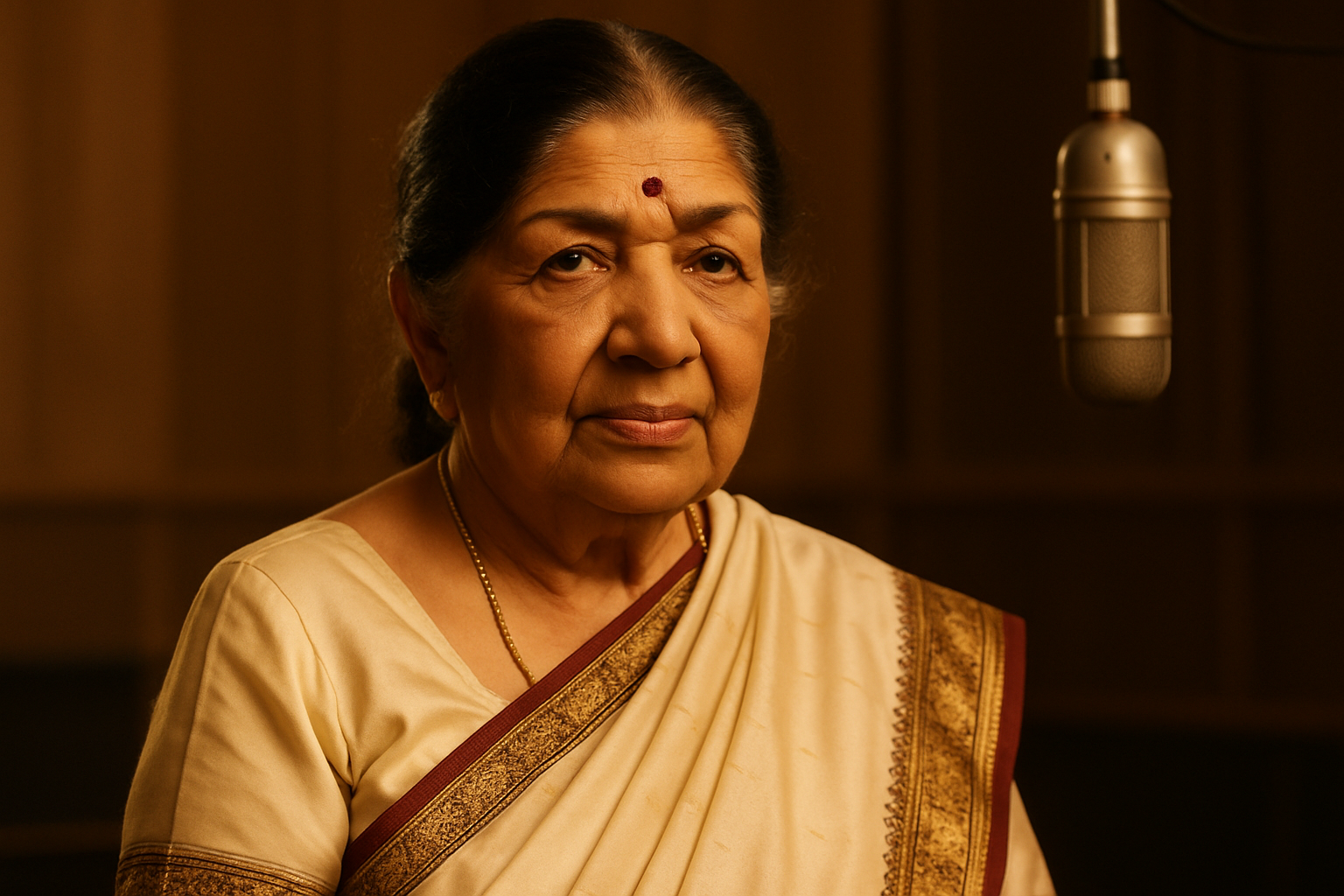
Asha Bhosle, one of India's most celebrated playback singers and a cultural icon whose versatile voice defined Bollywood music for over six decades, died Sunday at age 92 in Mumbai, her family announced.
The two-time Grammy Award nominee was admitted to a Mumbai hospital for "extreme fatigue" and a lung infection before passing away peacefully, according to family sources. "My mother passed away today (Sunday). Her funeral will take place tomorrow at Shivaji Park in Mumbai," her son, Anand Bhosle, told journalists.
A Voice That Transcended Generations
Known for her extraordinary vocal range and ability to adapt to changing musical trends, Bhosle's career spanned from the 1940s to the 2000s, making her one of the most prolific recording artists in music history. Her voice resonated through an India obsessed with cinema, earning her recognition as one of the most influential playback singers of all time.
The Guinness Book of World Records once acknowledged her as the most recorded artist in music history, with an estimated 12,000 songs across multiple languages including Hindi, Marathi, Bengali, and Gujarati. Her versatility allowed her to excel in everything from classical Indian compositions to Western pop influences, jazz, and folk music.
"Asha-ji was not just a singer; she was the voice of an era. Her ability to bring emotion and life to every song made her irreplaceable in Indian cinema."
— A.R. Rahman, Composer
Defining Bollywood's Golden Era
Bhosle's career flourished during Bollywood's golden age in the 1970s and 1980s, when her distinctive voice became synonymous with the industry's most memorable soundtracks. Unlike her contemporaries who often specialized in classical or semi-classical music, Bhosle embraced innovation and experimentation, making her the go-to voice for Western-influenced songs and cabaret numbers.
Her collaborations with music director R.D. Burman, whom she later married, produced some of Bollywood's most iconic songs. Together, they created a new sound that blended Indian classical music with jazz, rock, and pop influences, fundamentally changing the landscape of Indian film music.
Some of her most celebrated songs include "Dum Maro Dum" from the 1971 film "Hare Rama Hare Krishna," "Chura Liya Hai Tumne Jo Dil Ko" from "Yaadon Ki Baaraat" (1973), and "Piya Tu Ab To Aaja" from "Caravan" (1971). These tracks not only dominated Indian charts but also introduced Western audiences to Bollywood music's unique appeal.
International Recognition and Grammy Nominations
Bhosle's talent extended far beyond Indian borders. She received two Grammy nominations, including recognition for her album "Legacy," which showcased her ability to bridge Eastern and Western musical traditions. Her international collaborations included work with artists like Boy George and performances at prestigious venues worldwide.
In 2000, she was honored with the Dadasaheb Phalke Award, India's highest honor in cinema, recognizing her outstanding contribution to Indian film music. The British government awarded her an Honorary Fellowship of the Trinity College of Music, London, making her the first Indian singer to receive this distinction.

Beyond Playback Singing
While best known for her playback singing, Bhosle was also an accomplished live performer, entrepreneur, and cultural ambassador. She opened restaurants in several countries, showcasing Indian cuisine alongside her musical performances. Her concerts drew massive audiences across the globe, from Madison Square Garden to the Royal Albert Hall.
In her later years, Bhosle remained active in the music industry, mentoring young singers and experimenting with fusion genres. She embraced new technologies and recording techniques, proving that artistic evolution was possible at any age.
Personal Life and Artistic Legacy
Born Asha Mangeshkar on September 8, 1933, in Sangli, Maharashtra, she was part of a musical family that included her famous sister, Lata Mangeshkar, another legendary playback singer. Despite living in her sister's shadow for many years, Asha carved out her own distinctive niche in the industry.
Her marriage to R.D. Burman in 1980 was as much a musical partnership as a personal one. Together, they redefined Bollywood music, introducing sophisticated arrangements and international influences that appealed to both traditionalists and modernists.
"Asha Bhosle was fearless in her artistry. While others played it safe, she took risks that elevated Indian music to new heights."
— Shankar Mahadevan, Singer and Composer
Cultural Impact and Industry Transformation
Bhosle's influence extended beyond entertainment into India's cultural identity. Her songs became part of the nation's collective memory, played at weddings, festivals, and celebrations across the subcontinent and diaspora communities worldwide. She helped establish playback singing as a respected art form and paved the way for future generations of female vocalists.
Her willingness to adapt and experiment helped Bollywood music evolve from traditional structures to more contemporary, globally appealing formats. This evolution proved crucial as Indian cinema began reaching international markets in the latter part of the 20th century.
Final Years and Continuing Influence
Even in her final years, Bhosle remained connected to the music industry, occasionally performing and supporting charitable causes. Her last major public appearance was at a tribute concert in 2023, where she performed some of her most beloved songs to a standing ovation from an audience that spanned multiple generations.
The singer's death comes at a time when the global entertainment industry is increasingly recognizing the contributions of non-Western artists. Her Grammy nominations and international collaborations helped pave the way for today's cross-cultural musical exchanges.
Legacy of a Musical Pioneer
As India and the global music community mourn the loss of this extraordinary artist, her vast catalog of recordings ensures that her voice will continue to inspire and entertain for generations to come. Streaming platforms report that her songs consistently rank among the most played tracks in Indian music, demonstrating her enduring appeal to both longtime fans and new listeners discovering her work.
Music historians consider her career a bridge between traditional Indian classical music and contemporary global sounds, making her a pioneer in what would later be called "world music." Her fearless experimentation and refusal to be confined by conventional boundaries established her as one of the most innovative artists of her generation.
Asha Bhosle's death marks the end of an era in Indian music, but her influence on both Bollywood and the broader world of music will continue to resonate. She leaves behind not just a catalog of timeless songs, but a template for artistic fearlessness that continues to inspire musicians across genres and cultures.
Funeral arrangements will be held at Shivaji Park in Mumbai, with tributes expected from across the entertainment industry and government officials recognizing her immense contribution to Indian culture and global music appreciation.