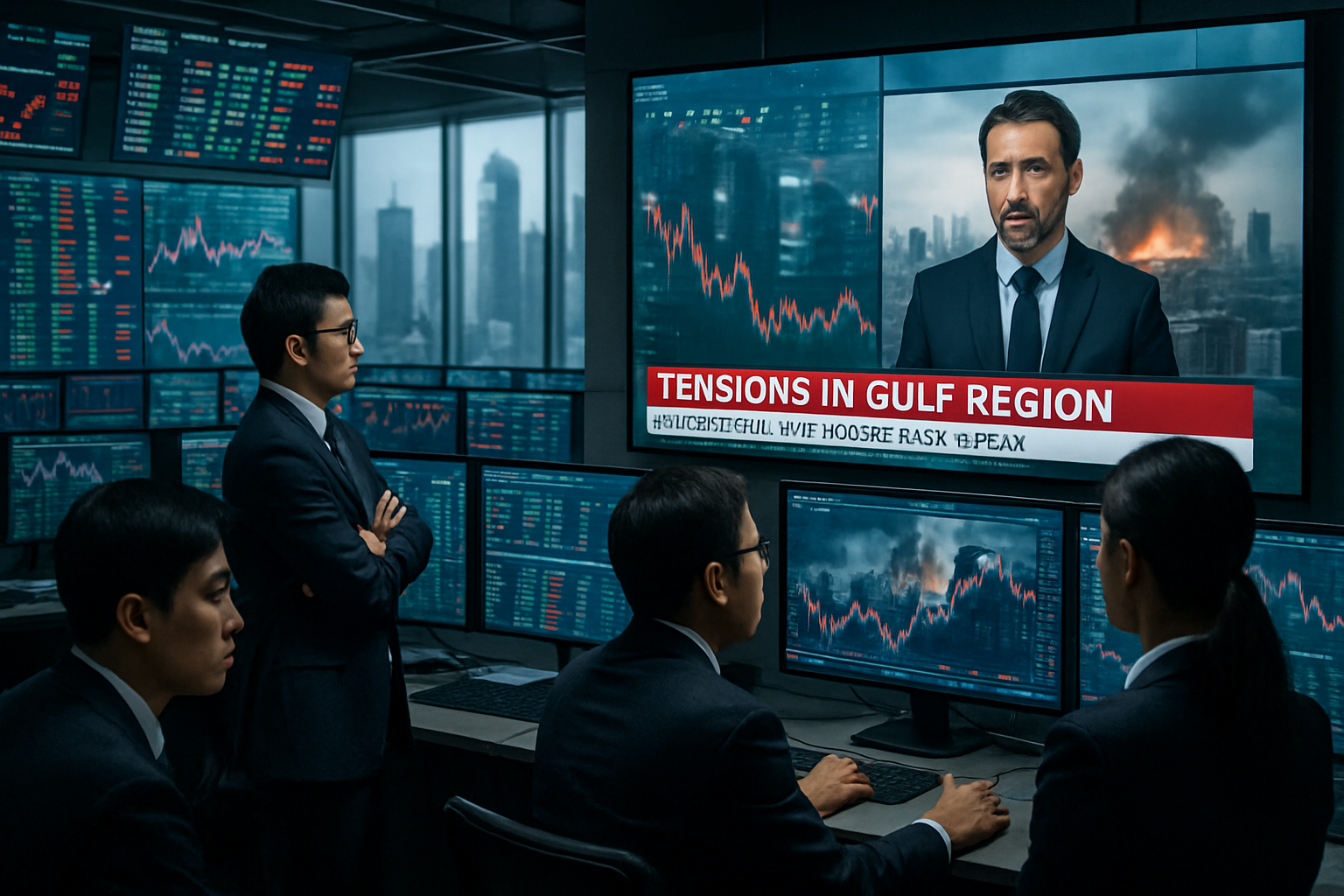
Asian financial markets are demonstrating heightened caution as Gulf region tensions continue to influence investor confidence and currency stability, even as recent diplomatic breakthroughs have provided temporary relief from the energy crisis that has gripped global markets since March.
The fragile nature of current market conditions was underscored by three key developments that have emerged from the region, highlighting how deeply the March-April 2026 crisis has affected Asian financial systems and investor psychology.
Market Volatility Amid Diplomatic Uncertainty
The recent ceasefire agreement mediated by Pakistan on April 8, which ended the most dangerous crisis since the Cold War, has brought only tentative relief to Asian markets. While oil prices crashed nearly 20% from their March peaks of $119.50 for Brent crude, the underlying fragility of the situation continues to weigh on investor sentiment.
The crisis, which began with Iran's closure of the Strait of Hormuz affecting 40% of global oil transit, had triggered the largest strategic petroleum reserve release in 50-year history - 400 million barrels from 32 countries. The memory of this unprecedented disruption continues to influence trading patterns across Asian exchanges.
Currency Stability Concerns
The crisis exposed significant vulnerabilities in Asian currency markets, with the South Korean won hitting a 17-year low during the height of the tensions in March. The Korean KOSPI had plunged 12%, triggering circuit breakers as foreign capital fled previously strong AI and memory chip positions.
Pakistan's KSE-100 experienced its largest single-day decline in history, falling 8.97% as the crisis unfolded. Even with the recent diplomatic breakthrough, the index has shown only partial recovery, with trading volumes remaining below pre-crisis levels as institutional investors maintain defensive positions.
The Japanese yen faced particular pressure given Japan's 95% dependence on Middle Eastern oil, with 70% transiting through the now-reopened Strait of Hormuz. The country's deployment of 80 million barrels from strategic reserves - the first since the 2011 Fukushima disaster - highlighted the severity of the energy security challenge.
Energy Security Reassessment
The crisis has forced Asian economies to fundamentally reassess their energy security frameworks. The revelation that the 21-mile Strait of Hormuz represented a single-point failure for modern logistics has prompted urgent discussions about supply diversification.
"This crisis exposed the most severe energy security vulnerabilities in decades, with single-chokepoint dependencies that require fundamental restructuring."
— Samuel Ciszuk, Energy Security Analyst
Natural gas prices had surged 24% in Europe and 78% in the US during the crisis, reaching €47.32/MWh - the highest levels since February 2025. Qatar's LNG production halt at major facilities, representing approximately 20% of global exports, demonstrated how quickly energy supply chains could be disrupted.
Aviation Sector Recovery
The aviation industry, which saw over 18,000 flights cancelled worldwide during the crisis - the most extensive disruption since COVID-19 - is now planning gradual route resumption to the Middle East. Dubai International Airport, which handles 86 million passengers annually, had been completely shut down due to missile damage but is now preparing for reopening.
Jet fuel costs, which had surged 122% from $85-90 to $150-200 per barrel during the crisis, are beginning to decline but remain elevated, forcing airlines to maintain higher fare structures as supply chains slowly normalize.
Nuclear Diplomacy and Regional Stability
The backdrop to the financial market uncertainty remains the broader nuclear diplomacy crisis. The conflict emerged from the complete collapse of US-Iran nuclear talks despite achieving "broad agreement on guiding principles" - the most progress since the 2018 JCPOA collapse.
Iran continues to maintain 60% uranium enrichment with over 400kg of weapons-grade material, while the expiration of New START in February 2026 marked the first time in over 50 years without US-Russia nuclear constraints. This nuclear governance crisis continues to cast a shadow over long-term investment planning across Asian markets.
Regional Coalition Dynamics
The Saudi-UAE-Qatar-Egypt coalition, which had maintained unprecedented consensus supporting diplomacy, was severely tested during the Iranian retaliation strikes. The UAE suffered one civilian casualty in Abu Dhabi, Kuwait had 32 injured at airport facilities, and Qatar wounded eight while intercepting 65 missiles and 12 drones with Patriot systems.
Egyptian President Sisi's condemnation of attacks on "sisterly countries" and warning of "comprehensive chaos" reflected the delicate balance regional powers must maintain between their alliance with the US and Iranian pressure.
Supply Chain Resilience Testing
The crisis revealed how deeply integrated Asian supply chains are with Persian Gulf logistics. Major shipping companies Maersk and MSC had suspended all operations, leaving over 150 tankers stranded with billions in cargo value. Singapore experienced 30% increases in logistics costs, while China suspended refined fuel exports, cancelling committed shipments.
Manufacturing in automotive, electronics, and textiles sectors faced severe disruptions as Gulf-dependent networks struggled to maintain operations. The revelation that alternative Arabian Peninsula routes lacked adequate capacity with significant time and cost penalties highlighted the vulnerability of current supply chain architectures.
Central Bank Coordination
Central banks across Asia, led by the Bank of Japan and European Central Bank, coordinated emergency liquidity provisions to prevent broader financial contagion. However, the crisis demonstrated the limited effectiveness of traditional monetary policy tools against structural geopolitical disruptions.
The unprecedented nature of the crisis - combining energy security, nuclear governance, and supply chain vulnerabilities - challenged existing crisis management frameworks and forced central bankers to develop new approaches to market stabilization.
Government Emergency Measures
Governments across Asia implemented emergency measures not seen since the 1970s oil crisis. Pakistan activated law enforcement monitoring of petroleum outlets to prevent hoarding and implemented wartime austerity measures including four-day government work weeks. The Philippines declared a year-long "national energy emergency" with the UPLIFT program as diesel prices approached P100 per liter.
Bangladesh implemented fuel rationing for 170 million people, while countries across the region activated strategic petroleum reserves for the first time in decades.
Looking Forward: Structural Changes
The crisis has catalyzed discussions about fundamental energy architecture transformation across Asia. The dangerous over-dependence on strategic chokepoints exposed during the crisis requires comprehensive restructuring to reduce geopolitical volatility.
While strategic petroleum reserves proved effective as temporary buffers, the crisis highlighted the need for sustained supply diversification and accelerated renewable energy transitions. The timeline for such transitions typically spans years or decades, but the crisis urgency has dramatically accelerated planning and investment timelines.
"The situation went longer than initially thought, with financial markets becoming the ultimate constraint on prolonged conflict."
— Damien Boey, Portfolio Strategist
The two-week ceasefire window created by Pakistani mediation represents a critical diplomatic opportunity, with scheduled talks in Islamabad potentially involving VP JD Vance. The stakes of these negotiations extend far beyond the immediate crisis, affecting territorial and nuclear dispute approaches that could reshape international relations for decades.
Template-Setting Crisis Management
The March-April 2026 crisis has established new paradigms for 21st-century crisis management. The success of Pakistan's middle-power mediation in bridging major adversaries when traditional mechanisms failed provides a template for diplomatic innovation during maximum-stakes international crises.
UN Secretary-General Guterres characterized the situation as "the greatest test of multilateral cooperation in the modern era," with nuclear risks at their "highest in decades." The successful prevention of broader regional war through diplomatic innovation rather than military escalation demonstrates the continued viability of diplomatic solutions even in the darkest international moments.
Asian financial markets, while maintaining cautious sentiment, are now positioned to benefit from any lasting stability framework that emerges from continued diplomatic engagement. The preference for diplomatic credibility over prolonged military confrontation, as demonstrated by market responses to the ceasefire breakthrough, suggests investor confidence in multilateral cooperation mechanisms.
However, the underlying vulnerabilities exposed during the crisis - from single-chokepoint energy dependencies to supply chain fragilities - will require sustained attention and investment to prevent similar disruptions in an increasingly volatile and interconnected global economy.