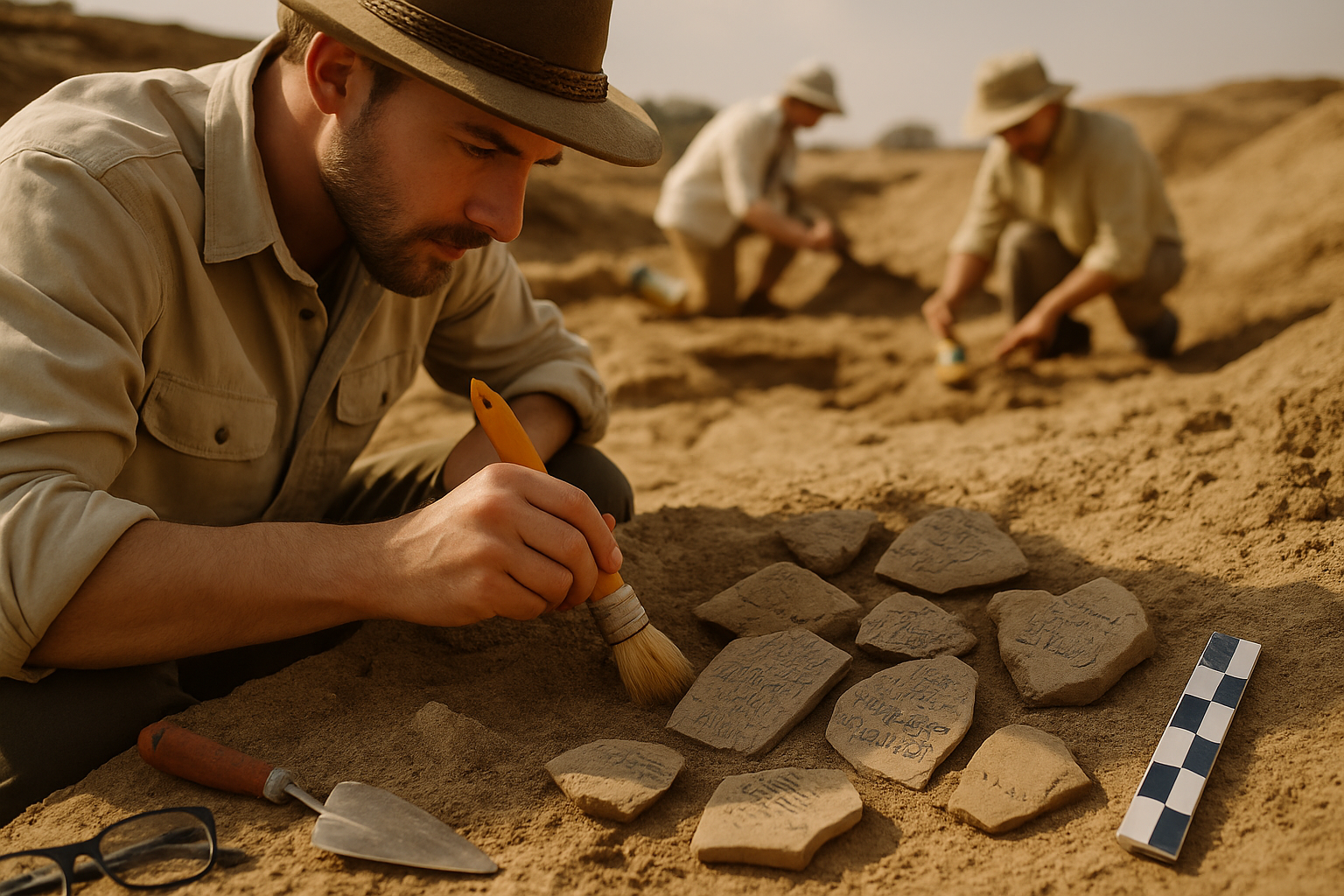
A joint Egyptian-German archaeological mission has achieved a groundbreaking discovery at the ancient site of Athribis in Upper Egypt, uncovering approximately 13,000 inscribed pottery fragments known as ostraca that provide unprecedented insights into the social, economic, and religious fabric of ancient Egyptian life.
The discovery, announced on March 11 by Egypt's Ministry of Tourism and Antiquities, represents a historic milestone in archaeological research. The mission, a collaboration between Egypt's Supreme Council of Antiquities and the University of Tübingen, has now brought the total number of ostraca found at Athribis to around 43,000 since excavations began in 2005—setting a new global record for the largest quantity of ostraca found at a single archaeological site.
Surpassing Historical Precedents
This remarkable total surpasses previous discoveries at renowned locations such as the workers' village of Deir el-Medina, which has been extensively studied for over two centuries and was previously considered the premier site for ostracan discoveries. The significance of this achievement cannot be overstated, as it fundamentally reshapes our understanding of ancient Egyptian administrative and daily life practices.
The ostraca—fragments of ancient pottery that served as a form of economic and administrative documentation—functioned as an ancient equivalent to modern receipts, contracts, and correspondence. These artifacts provide direct evidence of the complex bureaucratic systems, trade networks, and social hierarchies that characterized ancient Egyptian civilization.
The Athribis Site Significance
Located in Sohag Governorate, Upper Egypt, Athribis represents one of the most important archaeological sites for understanding the later periods of ancient Egyptian civilization. The site has consistently yielded artifacts that illuminate the administrative, religious, and economic systems that sustained one of history's most enduring civilizations.
The sustained productivity of the Athribis excavations over nearly two decades demonstrates the site's exceptional archaeological value. The systematic approach employed by the Egyptian-German team has enabled the careful documentation and preservation of thousands of fragments that might otherwise have been lost to time and environmental degradation.
"This discovery provides invaluable insights into the social, economic, and religious fabric of ancient Egyptian life, offering a window into daily practices that were previously unknown to modern scholarship."
— Egyptian Ministry of Tourism and Antiquities
International Collaboration Model
The success at Athribis exemplifies the power of international archaeological cooperation. The partnership between Egypt's Supreme Council of Antiquities and Germany's University of Tübingen represents a model for how modern archaeological research can benefit from combining local expertise with international academic resources and advanced analytical techniques.
This collaborative approach has enabled the deployment of cutting-edge archaeological methodologies including advanced chemical analysis, sophisticated dating techniques, and digital documentation systems that ensure the permanent preservation of findings while making them accessible to scholars worldwide.
Broader Archaeological Context
The Athribis discovery occurs within what historians are calling the "2026 Archaeological Renaissance"—a period marked by unprecedented international cooperation and remarkable discoveries across multiple continents. Recent months have witnessed significant finds including 5,000-year-old Egyptian drilling machines challenging technological development timelines, sophisticated ancient astronomical systems, and evidence of complex early human capabilities far earlier than previously assumed.
These discoveries collectively demonstrate how modern analytical techniques combined with traditional archaeological expertise are revealing previously invisible aspects of ancient life. The convergence of advanced technology with methodical fieldwork is producing insights that fundamentally alter our understanding of historical civilizations.
Preservation and Climate Urgency
The timing of this discovery carries particular significance given the environmental challenges facing archaeological sites globally. With January 2026 marking the 18th consecutive month of global temperatures exceeding 1.5°C above pre-industrial levels, archaeological sites across Egypt and worldwide face unprecedented threats from climate change, extreme weather events, and accelerated deterioration.
The systematic documentation and preservation efforts at Athribis serve as a crucial model for protecting cultural heritage in an era of environmental uncertainty. Advanced digital documentation techniques ensure that even if physical sites face future damage, the knowledge they contain can be preserved for future generations of researchers and the global community.
Economic and Cultural Impact
Beyond their academic value, discoveries like those at Athribis generate substantial economic benefits through cultural tourism, international media attention, and enhanced Egypt's position as a premier archaeological destination. The findings attract scholars, tourists, and cultural enthusiasts from around the world, contributing to sustainable economic development while preserving invaluable cultural heritage.
The international recognition of Egyptian archaeological achievements strengthens diplomatic relationships and positions Egypt as a leader in cultural preservation and historical research. Such discoveries contribute to what scholars term "cultural diplomacy"—using heritage preservation to build understanding and cooperation across national boundaries.
Future Research Directions
The 13,000 newly discovered ostraca will require years of careful analysis, translation, and interpretation. Each fragment potentially contains information about ancient economic transactions, religious practices, administrative procedures, or personal correspondence that could illuminate previously unknown aspects of ancient Egyptian society.
The success at Athribis indicates the potential for additional discoveries in the region and at similar sites throughout Egypt. The methodological approaches developed through the Egyptian-German collaboration provide templates for future international archaeological partnerships that respect local cultural heritage while facilitating scholarly cooperation.
Technological Integration
Modern archaeological research increasingly relies on the integration of traditional fieldwork with advanced analytical capabilities. At Athribis, researchers employ ground-penetrating radar, advanced chemical analysis, and sophisticated dating methods alongside careful excavation techniques and detailed documentation protocols.
Digital technologies enable the creation of permanent records that can be accessed by researchers worldwide while protecting original artifacts from damage caused by excessive handling. This approach represents the evolution of archaeology from a primarily extractive discipline to one focused on preservation, documentation, and global knowledge sharing.
Historical Understanding Revolution
The Athribis ostraca discovery contributes to a fundamental shift in understanding ancient civilizations. Rather than viewing historical societies as primitive forerunners to modern development, contemporary archaeological evidence reveals sophisticated administrative systems, complex economic networks, and advanced technological capabilities that existed thousands of years ago.
These findings challenge linear narratives of human progress and suggest that ancient civilizations possessed remarkable capabilities for organization, innovation, and cultural development. The ostraca provide direct evidence of the bureaucratic sophistication required to manage complex societies over extended periods.
As analysis of the 13,000 newly discovered fragments continues, the Athribis site promises to yield insights that will reshape our understanding of ancient Egyptian civilization for years to come. This record-breaking discovery stands as a testament to the power of international cooperation, advanced methodology, and sustained commitment to preserving humanity's shared cultural heritage.