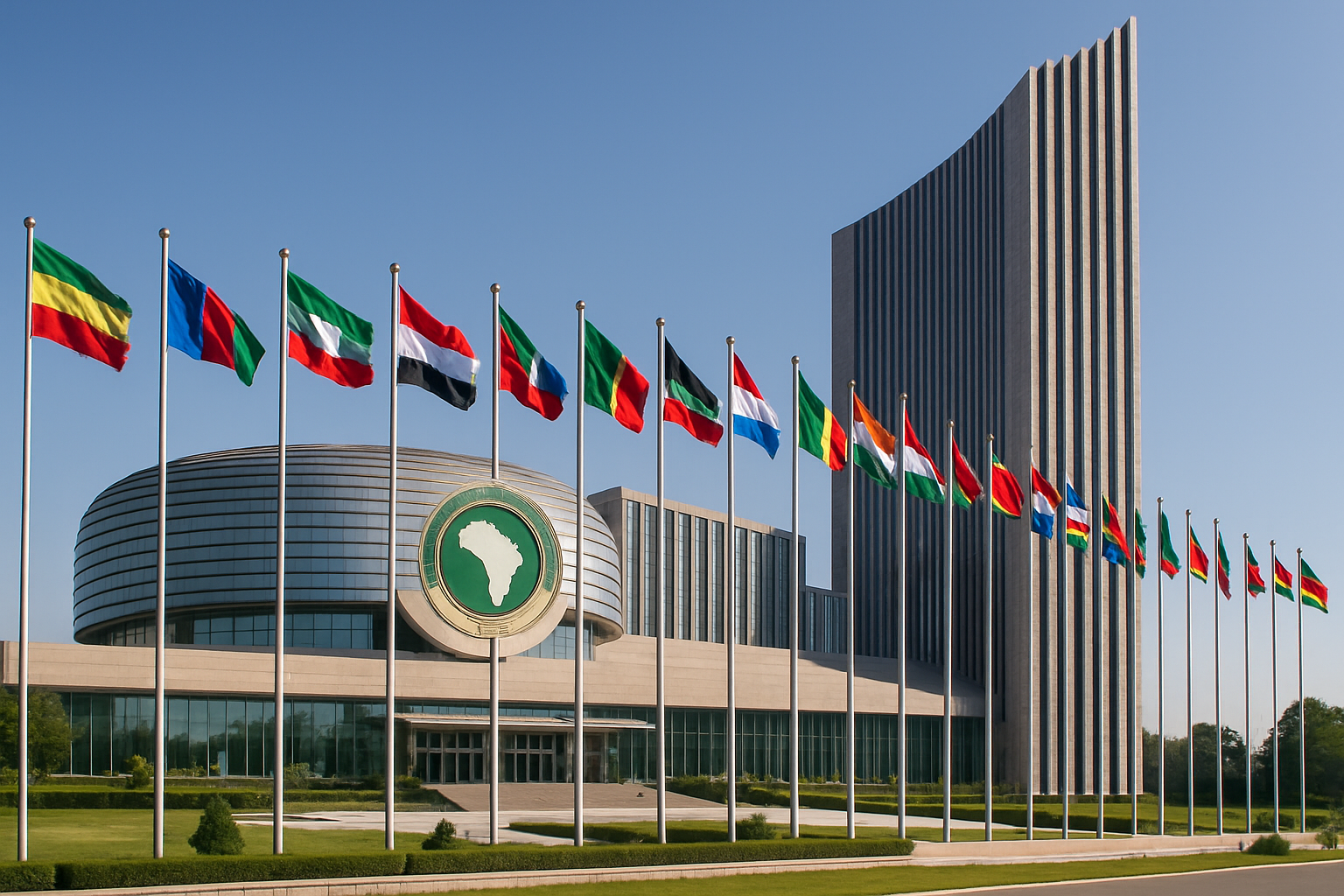
The 39th African Union Summit convened in Addis Ababa this weekend, bringing together leaders from across the continent to address pressing regional conflicts, advance continental integration, and reaffirm solidarity with Palestinian rights amid ongoing global tensions.
The summit, held at the African Union headquarters in Ethiopia's capital, marked a pivotal moment for continental diplomacy as member states grappled with multiple security challenges while pursuing ambitious economic integration goals through the African Continental Free Trade Area (AfCFTA).
Angola to Assume Rotating Presidency
A significant development at the summit was Angola's preparation to assume the African Union's rotating presidency, marking a transition in continental leadership during a period of heightened regional tensions and economic opportunities. The West African nation's assumption of this role comes as the continent faces complex challenges ranging from security crises to economic development imperatives.
The timing is particularly significant as Angola has been positioning itself as a key player in continental affairs, recently reviving the Lobito Corridor railway project that connects the Atlantic coast to mineral-rich regions in the Democratic Republic of Congo, demonstrating the country's commitment to regional integration and infrastructure development.
Strong Palestinian Solidarity Declaration
One of the summit's most forceful statements came in the form of robust support for Palestinian rights. According to Al Jazeera's coverage, the AU issued a powerful call for an end to what it termed the "extermination" of Palestinians, while simultaneously expressing concern over ongoing conflicts across the African continent.
This declaration reflects the African Union's consistent solidarity with liberation movements and oppressed peoples worldwide, building on the organization's historical foundation in anti-colonial struggles. The statement also highlighted the AU's role as a voice for the Global South in international affairs.
Continental Trade Integration Advances
The summit placed significant emphasis on advancing intra-African commerce through the African Continental Free Trade Area. Radio Okapi reported that a key meeting focused on the inaugural session of the Committee of Heads of State and Government on the implementation of the African Continental Free Trade Zone (ZLECAF).
The AU leadership emphasized their commitment to "promote intra-African trade and build a single market to stimulate growth," representing a fundamental shift toward economic self-reliance and reduced dependence on external markets. This initiative comes as African nations increasingly seek to leverage their vast natural resources and growing populations for sustainable development.
"The African Union wants to promote intra-African trade and build a single market to stimulate growth."
— Summit Declaration, as reported by Radio Okapi
International Engagement and Support
The summit attracted significant international attention, with Chinese President Xi Jinping sending a congratulatory message to the proceedings. According to reports from Zimbabwe's Herald newspaper, Xi extended congratulations to João Lourenço, the rotating African Union chairperson and Angolan president, as well as to Mahamoud Ali Youssouf, chairperson of the AU Commission.
Additionally, China announced a zero-tariff policy for 53 African countries, including Zimbabwe, representing a substantial economic gesture that could significantly impact trade relationships between China and Africa. This development underscores the growing importance of South-South cooperation in global economic relations.
Institutional Effectiveness Under Scrutiny
Despite the ambitious agenda, the summit faced questions about the African Union's effectiveness in addressing continental challenges. German broadcaster Tagesschau raised critical questions about whether the AU still fulfills its intended purpose, with critics calling for "sweeping reforms" to enhance the organization's capacity to address member states' needs.
The criticism reflects broader concerns about the AU's ability to prevent conflicts, enforce decisions, and coordinate effective responses to crises ranging from terrorism in the Sahel to political instability in various regions. These institutional challenges have persisted despite the organization's evolution from the Organization of African Unity to its current form.
Regional Security Challenges
The summit took place against a backdrop of significant security challenges across the continent. Recent developments include ongoing conflicts in eastern Democratic Republic of Congo, persistent instability in the Sahel region, and various other security concerns that require coordinated continental responses.
The AU's Peace and Security Council, recently reconstituted with new member countries including Somalia, Democratic Republic of Congo, Morocco, and others, faces immediate pressure to address these challenges through enhanced regional cooperation and conflict prevention mechanisms.
Economic Development and Infrastructure
Beyond political and security issues, the summit highlighted Africa's growing economic potential. The continent's vast mineral wealth, including critical materials needed for renewable energy technologies, positions African nations as key players in the global energy transition.
Recent investments across the continent, including major mining projects in West Africa and infrastructure development initiatives, demonstrate the potential for African-led economic transformation. The challenge remains in ensuring that resource extraction translates into broad-based development and improved living standards for African populations.
Climate and Environmental Priorities
The summit occurred during a period of heightened climate urgency, with January 2026 marking the hottest month on record globally. This context adds particular importance to African nations' calls for climate adaptation support and their role as both contributors to and victims of climate change impacts.
Africa's vast renewable energy potential, from solar resources in North Africa to hydroelectric capabilities in Central Africa, positions the continent as a potential leader in clean energy development while addressing energy access challenges for hundreds of millions of people.
Looking Forward: Continental Unity and Challenges
As the 39th African Union Summit concludes, the continent faces a complex array of opportunities and challenges. The advancement of continental integration through AfCFTA, growing international partnerships, and increasing global recognition of Africa's strategic importance provide reasons for optimism.
However, persistent security challenges, governance issues in various member states, and the need for institutional reforms within the AU itself highlight the work that remains. The success of Angola's upcoming presidency will be measured by its ability to advance concrete progress on these multiple fronts while maintaining the unity necessary for effective continental cooperation.
The summit's outcomes will likely influence continental policy directions for the coming year, particularly as member states work to balance sovereignty concerns with the integration necessary for collective prosperity and security in an increasingly interconnected world.