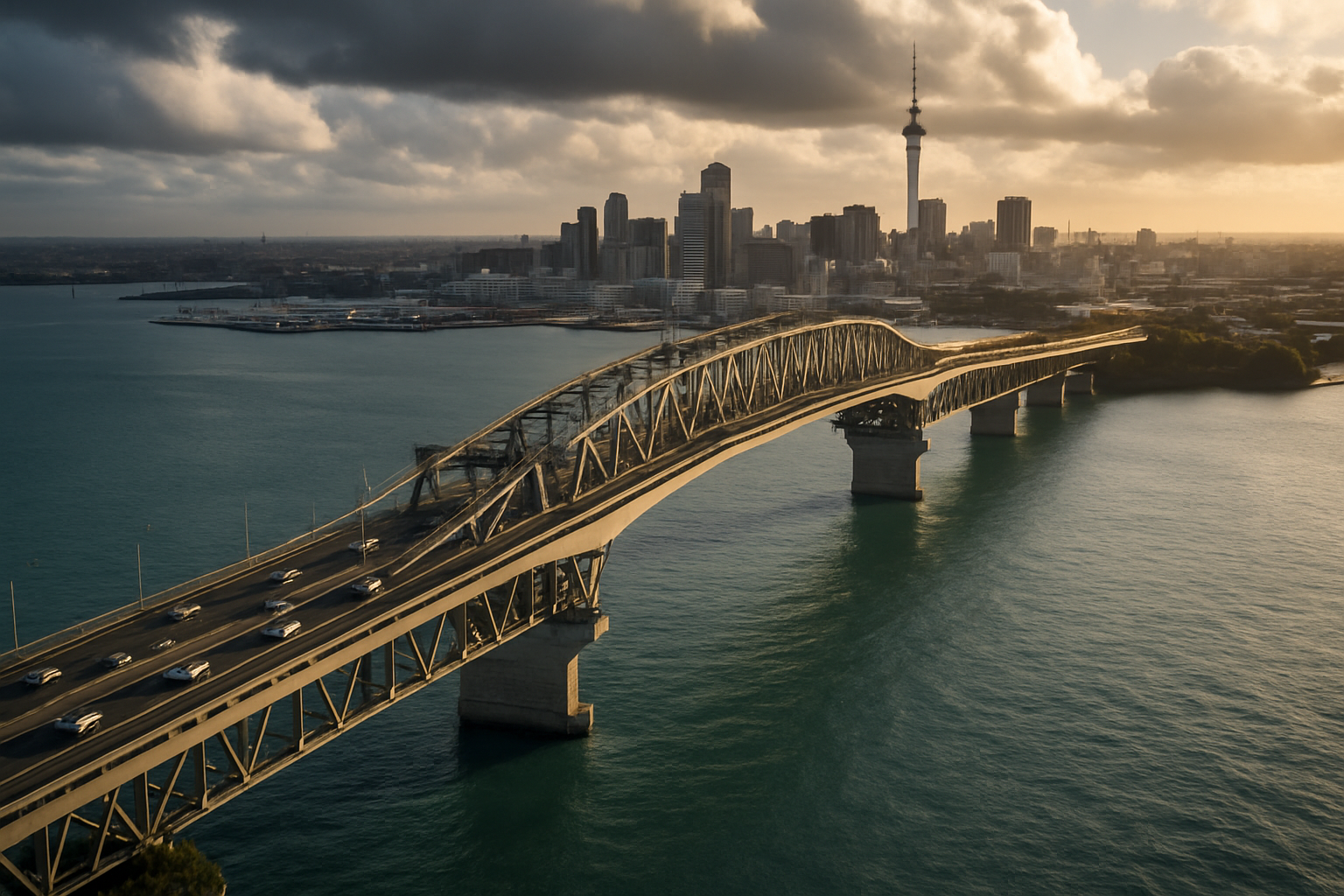
The New Zealand government is considering implementing a $9 toll for crossing the Auckland Harbour Bridge, a controversial proposal outlined in the National Infrastructure Plan that has sparked significant debate among Auckland residents and transportation experts nationwide.
The proposed toll would serve as a funding mechanism for a long-awaited second crossing between Auckland's North Shore and central city, with officials continuing to evaluate whether the new connection would take the form of a tunnel or an additional bridge spanning Waitemata Harbour.
Infrastructure Plan Triggers Public Outcry
The $9 toll suggestion, detailed in the recently released National Infrastructure Plan, has "riled up residents of Auckland," according to local media reports. The proposal represents one of the most significant transportation funding initiatives to emerge from the government's infrastructure review, which aims to address New Zealand's growing transportation bottlenecks and aging infrastructure network.
The existing Auckland Harbour Bridge, completed in 1959, carries approximately 170,000 vehicles daily and serves as a critical artery for the city's 1.7 million residents. Peak-hour congestion and structural capacity limitations have long highlighted the need for additional crossing capacity, but funding mechanisms have remained contentious.
Second Crossing Options Under Review
Government officials continue to evaluate multiple options for the second crossing project, with both tunnel and bridge configurations under consideration. The decision involves complex engineering, environmental, and financial assessments that could determine Auckland's transportation landscape for decades.
"The government continues to mull over its options as to what a new crossing would look like, such as a tunnel or second bridge," according to official statements. Each option presents distinct advantages and challenges, from geological considerations for tunnel construction to visual and environmental impacts of additional bridge infrastructure.
A tunnel option would require sophisticated boring technology through harbor seabed conditions, while a second bridge would need to accommodate shipping traffic and address community concerns about harbor views and environmental impact. Engineering assessments suggest either option would require significant international expertise and multi-billion-dollar investment commitments.
Transportation Crisis Context
The toll proposal emerges against a backdrop of severe transportation disruptions across New Zealand. Recent weather emergencies have exposed critical vulnerabilities in the nation's infrastructure network, with flooding and extreme weather events causing widespread transportation paralysis.
In February 2026, multiple districts declared states of emergency as MetService warned of life-threatening conditions including dangerous river conditions and significant flooding. Wellington faced extreme conditions with seven-meter swells threatening coastal infrastructure, while the Ōtorohanga District experienced deadly flooding that claimed at least one life and left residents in waist-deep water.
These weather events have highlighted the fragility of New Zealand's transportation networks, with highway closures, bridge washouts, and infrastructure damage becoming increasingly frequent. The crisis demonstrates the urgent need for climate-resilient infrastructure that can withstand extreme weather patterns expected to intensify with climate change.
"Never seen rain like yesterday's deluge"
— Murray Orr, Local Farmer with 70 Years Experience
Infrastructure Investment Surge
The Auckland toll proposal occurs within a global infrastructure investment surge exceeding $570 billion, as nations worldwide recognize transportation connectivity as essential for economic competitiveness and climate adaptation. Recent international projects include Mexico's completed "El Insurgente" train, Vietnam's $120 billion expressway commitments, and major European railway modernization initiatives.
New Zealand's infrastructure challenges extend beyond Auckland, encompassing rural connectivity, climate resilience, and emergency response capabilities. The nation's geographic isolation and challenging terrain create unique transportation requirements that demand sophisticated engineering solutions and substantial financial commitments.
Public Response and Political Implications
Auckland residents have expressed strong opposition to the proposed toll, viewing it as an additional tax burden on daily commuters who already face significant transportation costs. The proposal raises questions about equity and accessibility, particularly for lower-income households dependent on daily bridge crossings for employment and essential services.
Transportation experts emphasize that tolling policies require careful design to avoid disproportionate impacts on vulnerable communities while generating sufficient revenue for infrastructure improvements. International experience suggests that successful toll implementations require comprehensive public consultation and transparent revenue allocation mechanisms.
Engineering and Environmental Considerations
Both tunnel and bridge options for the second crossing present significant engineering challenges. A tunnel would require advanced boring technology capable of managing harbor seabed conditions, underwater geological formations, and complex ventilation systems for vehicle safety.
Environmental assessments must address marine ecosystem impacts, construction disruption, and long-term sustainability considerations. The harbor serves as both a critical transportation corridor and important ecological habitat, requiring careful balance between infrastructure development and environmental protection.
Climate adaptation requirements add another layer of complexity, as new infrastructure must withstand increasingly severe weather patterns. Recent flooding events have demonstrated the vulnerability of transportation networks to extreme precipitation, storm surge, and infrastructure overload during emergency conditions.
Economic Impact Analysis
The economic implications of the toll proposal extend beyond immediate revenue generation to broader regional development patterns. Transportation accessibility significantly influences business location decisions, residential development, and economic productivity across the Auckland region.
A $9 toll could generate substantial revenue for infrastructure investment while potentially reducing traffic congestion through demand management. However, economic modeling must account for behavioral changes, alternative route utilization, and potential impacts on regional competitiveness.
The timing of implementation will be critical, as New Zealand's economy continues recovering from recent disruptions while managing inflation pressures and infrastructure investment needs across multiple sectors.
International Infrastructure Lessons
Global infrastructure development provides valuable lessons for New Zealand's transportation planning. Successful projects demonstrate the importance of comprehensive stakeholder engagement, transparent funding mechanisms, and adaptive management approaches that can respond to changing conditions.
Recent international infrastructure successes emphasize technology integration, sustainable development principles, and climate resilience as standard requirements rather than optional considerations. Modern infrastructure projects increasingly incorporate smart monitoring systems, renewable energy components, and emergency response capabilities.
Future Planning Considerations
The Auckland harbor crossing decision will establish important precedents for New Zealand's infrastructure development approach. Success requires balancing immediate transportation needs with long-term sustainability goals, community consultation with technical expertise, and local priorities with national objectives.
Climate adaptation strategies must be integrated throughout the planning process, recognizing that future infrastructure will operate under significantly different environmental conditions than historical patterns. The increasing frequency and severity of extreme weather events demand infrastructure designed for resilience rather than historical averages.
Project implementation will require sophisticated coordination between national government agencies, regional authorities, local communities, and international technical partners. Success depends on maintaining public support throughout multi-year construction processes while delivering measurable improvements to transportation accessibility and regional connectivity.
The government's decision on both the toll proposal and second crossing configuration will significantly influence Auckland's development trajectory and establish New Zealand's approach to major infrastructure investment in an era of climate volatility and economic uncertainty. As officials continue evaluating options, public engagement and transparent decision-making processes will be essential for building the community support necessary for successful implementation of transformational transportation infrastructure.