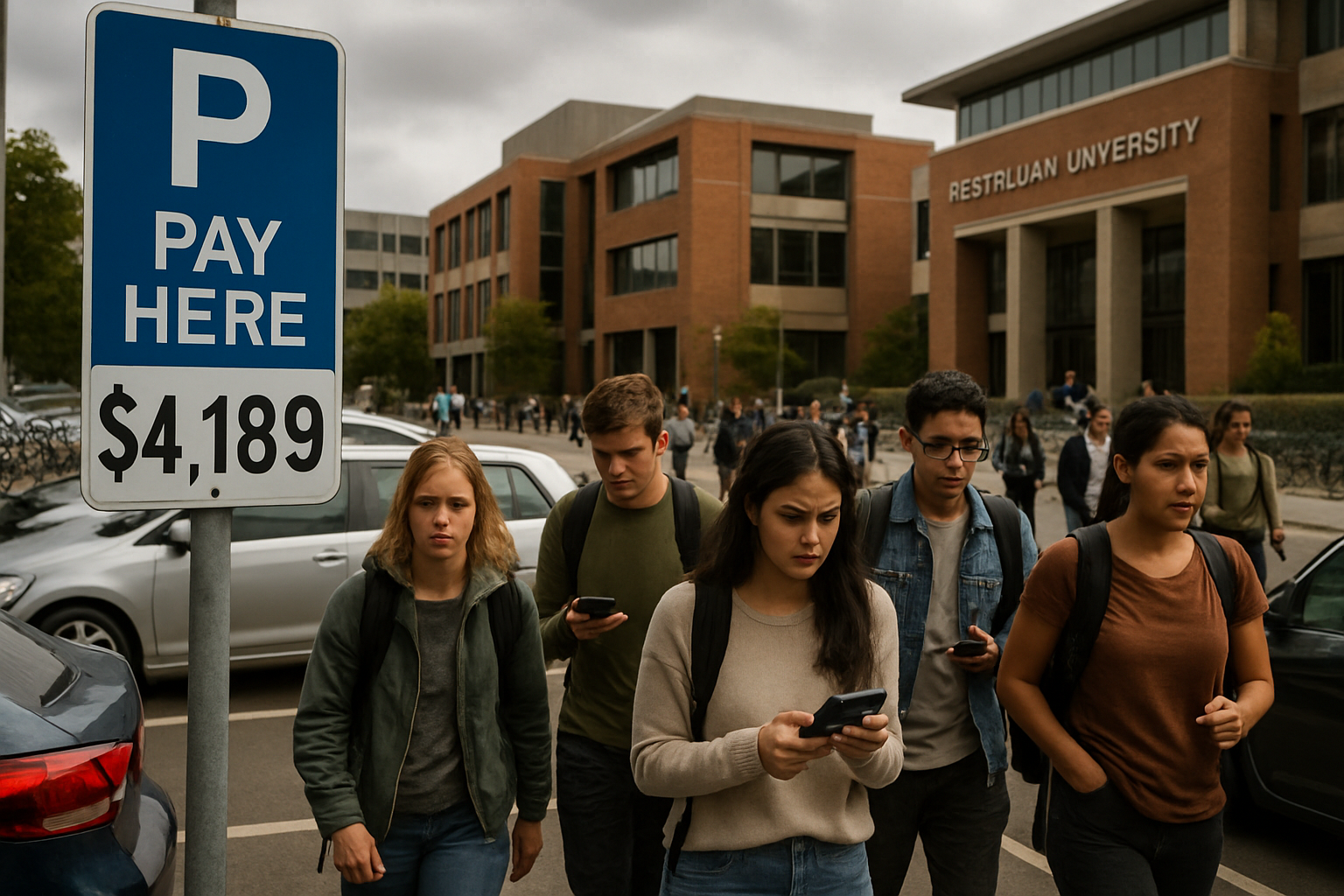
Australian university students are confronting an unprecedented financial crisis as parking fees soar to $4,189 per year at some campuses, forcing creative survival strategies including dumpster diving while the broader cost of living crisis pushes even dual-income families to report feeling "broke."
The Sydney Morning Herald's investigation reveals that students already grappling with degree costs of up to $50,000 for arts programs now face escalating expenses for basic study necessities. Campus parking fees have emerged as a particularly stark symbol of how the cost of living crisis has penetrated every aspect of student life, transforming what was once an affordable convenience into a luxury item equivalent to a semester's textbook budget.
Creative Survival Strategies Emerge
While some students struggle with traditional expenses, others have embraced radical solutions. Brisbane couple Emelie and Jon Watson, along with their two children, represent a growing movement of Australians adopting extreme cost-cutting measures. Living car-free and dumpster diving for groceries, the family has avoided buying anything "brand new" since 2008.
"It's not a glamorous lifestyle. But the money they save affords the Watsons a life they always dreamed of having."
— 9News Investigation
The Watson family's approach has reportedly saved them $10,000 annually through their comprehensive sustainability practices, which include aggressive thrift shopping for clothes and systematic avoidance of new purchases. Their story illustrates how the cost of living crisis has driven some Australian families to adopt what might have once been considered extreme measures as practical necessities.
Systemic Economic Pressures
The university parking crisis reflects broader economic pressures identified in Planet News's comprehensive analysis of Australia's ongoing financial challenges. The Reserve Bank of Australia's maintenance of a 3.85% cash rate has created "unprecedented challenges for first-time buyers and existing homeowners," with recession warnings emerging as "a possibility."
Recent energy price developments offer limited relief, with the Australian Energy Regulator proposing electricity price reductions of up to 10.1% in some regions. However, these savings pale in comparison to housing costs, with $2 million one-bedroom apartments now appearing in Sydney's inner suburbs, demonstrating extreme market dysfunction.
Student Financial Strain
The intersection of educational costs and living expenses creates particular hardship for students. With degree fees reaching $50,000 for arts programs, the additional burden of parking fees approaching $5,000 annually forces difficult choices about transportation, study locations, and even course completion.
Financial counselling services report unprecedented demand as household stress indicators reach critical levels across Australia. The crisis extends beyond immediate housing concerns to fundamental questions about economic opportunity and social mobility for working families and students.
Housing and Construction Crisis Context
The student affordability crisis unfolds against a backdrop of broader housing challenges. Australia's construction industry faces negative developer profit margins from rising material costs, while memory chip shortages have driven semiconductor prices sixfold higher, affecting smart building technologies standard in modern developments.
Young women particularly face systematic exclusion from homeownership despite stronger ownership desires than males, creating long-term financial disadvantages. Under-30s increasingly abandon property investment as deposit requirements extend beyond reasonable saving timelines, creating generational wealth divides.
The government's promise of 1.2 million homes by mid-2029 is already running one year behind schedule, with all states and territories struggling to meet construction targets. This supply constraint continues to push prices higher across both rental and purchase markets.
International Context
Australia's crisis reflects global patterns documented across developed economies. New Zealand faces similar pressures with Student Job Search receiving 38,000 applications in January 2026 for only 4,600 available positions, creating a crushing 8-to-1 ratio that forces students to "juggle multiple jobs" while pursuing education.
The global construction industry crisis affects all markets regardless of local policies, with material costs creating negative developer profit margins worldwide. Until material costs stabilize and supply chains normalize, even innovative policies face supply-side constraints that limit their effectiveness.
Government and Policy Response
The Albanese government faces mounting pressure to address the comprehensive nature of the crisis. While energy price reductions offer marginal relief, they are insufficient to offset broader cost increases affecting household budgets. The intersection of housing unaffordability, interest rate pressure, and educational costs requires comprehensive policy responses beyond energy market adjustments alone.
Traditional middle-class dual-income financial security assumptions are being challenged as families discover two incomes are insufficient for previous generation lifestyle expectations. This represents a fundamental shift in Australian economic reality, affecting social mobility and democratic governance.
Looking Ahead
The $4,189 parking fee serves as a powerful symbol of how the cost of living crisis has penetrated every aspect of Australian life, from basic necessities to educational access. The emergence of creative survival strategies like dumpster diving alongside traditional student struggles highlights the comprehensive nature of the challenge facing policymakers.
Success in addressing this crisis requires sophisticated frameworks balancing immediate relief with long-term structural reforms addressing housing supply, energy security, supply chain resilience, and educational affordability. The stakes extend beyond individual financial hardship to encompass Australia's future competitiveness and social cohesion.
As students face impossible choices between education and financial survival, and families adopt increasingly extreme cost-cutting measures, March 2026 represents a critical juncture for Australian policy makers to address the root causes of a crisis that threatens to undermine the country's educational and economic foundations for generations to come.