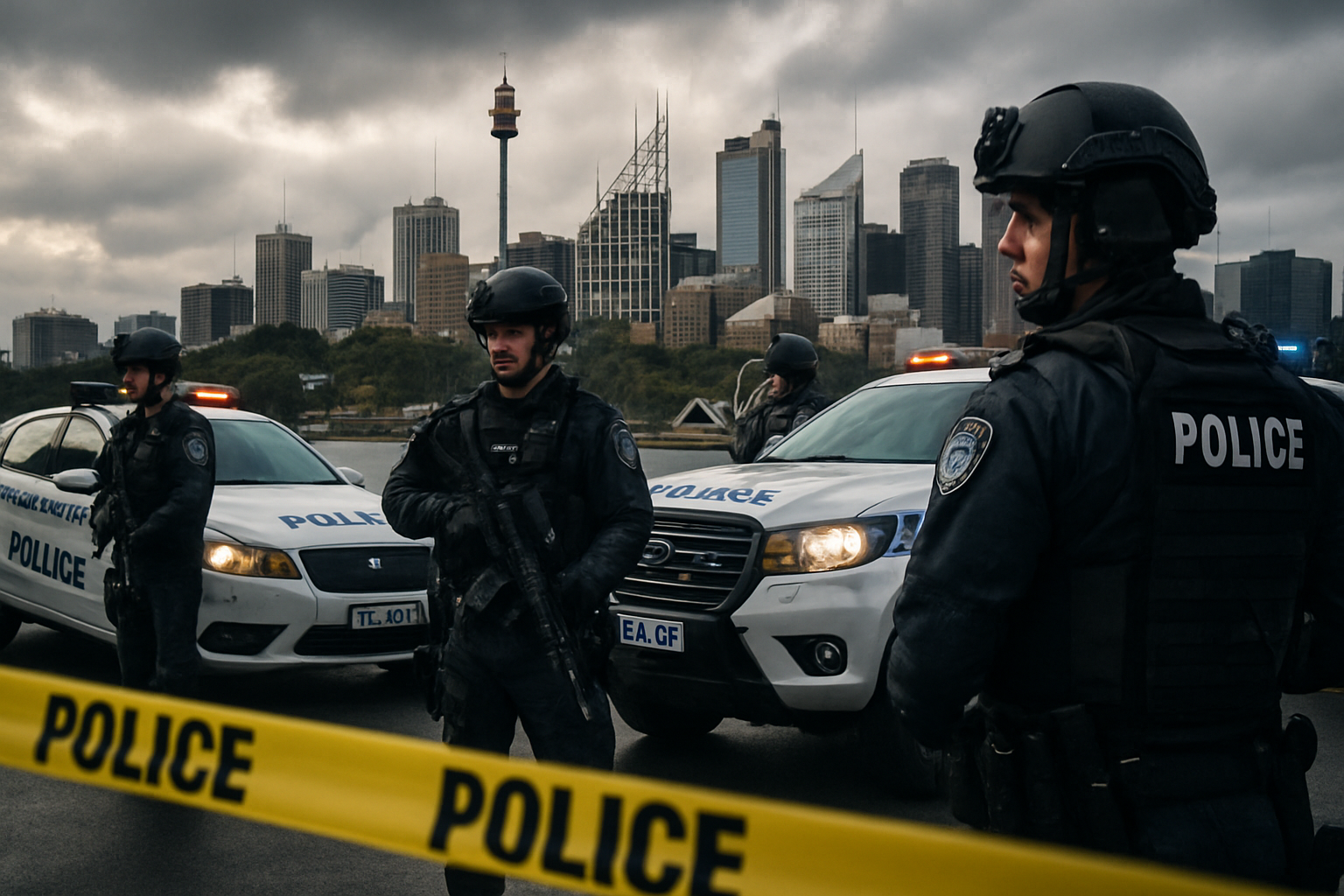
Australian law enforcement agencies are confronting an unprecedented wave of serious criminal activity spanning kidnapping, carjacking, terror threats, and organized crime, prompting authorities to implement major security operations and establish new armed response commands to protect communities.
The escalation of criminal incidents across multiple states has prompted NSW Police to announce the formation of a new armed response command employing 250 specialist officers with long-arm rifles to rapidly respond to hate-related threats, while federal authorities coordinate responses to high-profile kidnapping cases and terror incidents affecting national security.
Sydney Grandfather Kidnapping Breakthrough
Police have made significant arrests in connection with the alleged kidnapping and death of 85-year-old grandfather Chris Baghsarian, who went missing from his Sydney home nearly two weeks ago in what investigators believe was a case of mistaken identity. The elderly man became the victim of what police describe as a tragic error by criminal networks targeting the wrong individual.
Dramatic footage released by authorities shows two men being arrested in north-west Sydney following intensive investigations by multiple law enforcement agencies. The arrests represent a major breakthrough in a case that has shocked the Australian public and highlighted the risks faced by innocent citizens caught up in organized criminal activities.
The investigation has involved coordinated efforts between state police forces and federal agencies, demonstrating the sophisticated approach now required to combat increasingly organized criminal networks operating across jurisdictional boundaries.
Melbourne School Pickup Carjacking Thwarted
A Melbourne father's routine school pickup became the target of a failed carjacking attempt that saw two armed men threaten him with a knife before fleeing into nearby bushes when their plan failed. The incident occurred about 150 metres from school gates on Wellington Street in Kew, raising serious concerns about public safety in suburban areas previously considered low-risk.
The 48-year-old father was parked in his Mercedes when a white car pulled up behind him about 4:30pm. Two men got out and demanded he exit his vehicle while threatening him with a knife. When the carjacking attempt failed, the perpetrators fled on foot, with police subsequently tracing them through residential backyards in an extensive manhunt operation.
The incident demonstrates the brazen nature of contemporary criminal activity, with offenders willing to commit violent crimes in broad daylight near schools where children and families gather. This escalation in suburban crime has prompted calls for increased police patrols in areas traditionally considered safe community spaces.
Prime Minister Security Threat Response
A bomb threat that forced the evacuation of Prime Minister Anthony Albanese from his official Canberra residence revealed the extent to which criminal elements are now targeting Australia's highest political offices. The Lodge evacuation came after an email claimed explosives had been planted around the residence and would be detonated unless performances by a Chinese dance troupe were cancelled.
The incident represents an escalation in threats against political leaders and demonstrates how criminal activities are increasingly intersecting with political and cultural events. Security protocols around the Prime Minister's residence have been reviewed following the evacuation, with authorities treating any threats against government officials as matters of national security importance.
The targeting of cultural events adds another dimension to Australia's security challenges, as authorities must now consider the intersection of criminal threats with Australia's multicultural community activities and international diplomatic relations.
NSW Police Armed Response Command Established
In response to the escalating threat environment, NSW Police have announced the establishment of a new armed response command that will employ more than 200 police officers with long-arm rifles to rapidly respond to hate-related threats. The new command represents the most significant expansion of specialized police capabilities in recent years.
The intelligence-led command will patrol high-risk areas, places of worship, large protests, and major events with 250 specialist police officers, 28 civilian staff, and a fleet of specifically modified rapid-response vehicles. This represents a fundamental shift in how Australian law enforcement approaches community protection, moving from reactive responses to proactive threat prevention.
Operation Shelter, initially devised to respond to rising incidents of antisemitism and Islamophobia following international conflicts, will now be made permanent. However, the government remains coy about the full cost of these expanded security measures, reflecting the significant resource commitment required to address contemporary threat levels.
Organized Crime Network Investigations
The recent criminal incidents reveal sophisticated organizational structures behind many of the attacks, with investigations uncovering networks that operate across state boundaries and employ advanced planning and surveillance techniques. The Chris Baghsarian kidnapping case, in particular, has exposed how criminal organizations are conducting detailed reconnaissance operations that can result in tragic cases of mistaken identity.
Federal police sources indicate that criminal networks are increasingly using encrypted communications, coordinated operations across multiple jurisdictions, and sophisticated intelligence gathering that rivals legitimate security operations. This evolution in criminal capability requires corresponding evolution in law enforcement techniques and inter-agency cooperation.
The complexity of modern criminal operations is demonstrated by the diversity of incidents occurring simultaneously across the country - from street-level carjackings to sophisticated kidnapping operations to terrorist threats against government facilities. This range suggests criminal networks are operating at multiple levels with varying degrees of sophistication and organizational capability.
Community Impact and Response
The wave of criminal activity is having significant psychological and practical impacts on Australian communities, particularly in areas previously considered safe from serious crime. The Melbourne school pickup incident has prompted many parents to reconsider their daily routines, while the Sydney kidnapping case has raised concerns about random targeting of elderly community members.
Community leaders are working with law enforcement agencies to develop enhanced safety protocols, particularly around schools, places of worship, and community centers. The establishment of the armed response command reflects official recognition that traditional policing approaches may be insufficient to address current threat levels.
Business communities are also adapting to the changed security environment, with many implementing enhanced security measures and establishing closer cooperation with law enforcement agencies. The intersection of criminal activity with legitimate business operations requires new approaches to protecting commercial activities while maintaining normal economic functions.
International Security Context
Australia's security challenges are occurring within a broader international context of increasing criminal sophistication and cross-border criminal operations. The threat against the Prime Minister involving a Chinese cultural event reflects how domestic security concerns now intersect with international relations and cultural diplomacy.
The establishment of specialized armed response units follows similar developments in other democratic countries facing elevated threat levels. However, the Australian approach emphasizes intelligence-led operations and community engagement rather than purely reactive security measures.
Coordination between Australian agencies and international partners has become increasingly important as criminal networks demonstrate capabilities that transcend national boundaries. The complexity of modern investigations often requires cooperation with multiple international law enforcement agencies and intelligence services.
Future Security Architecture
The recent incidents are prompting a fundamental reassessment of Australia's domestic security architecture, with authorities implementing both immediate response measures and longer-term strategic adaptations. The permanent establishment of Operation Shelter represents recognition that current threat levels require sustained specialized responses rather than temporary measures.
Law enforcement agencies are investing heavily in new technologies, enhanced training programs, and improved inter-agency coordination mechanisms. The challenge lies in balancing enhanced security measures with maintaining Australia's traditional openness and community accessibility.
The success of current investigations, particularly the arrests in the Baghsarian case, demonstrates that Australian law enforcement retains significant capability to respond to serious criminal threats. However, the sophistication of recent incidents suggests that continued adaptation and resource investment will be necessary to stay ahead of evolving criminal capabilities.
As Australia confronts this challenging security environment, the coordination between federal, state, and local agencies, combined with community engagement and international cooperation, will be crucial for maintaining public safety while preserving the democratic values and open society that define Australian life.