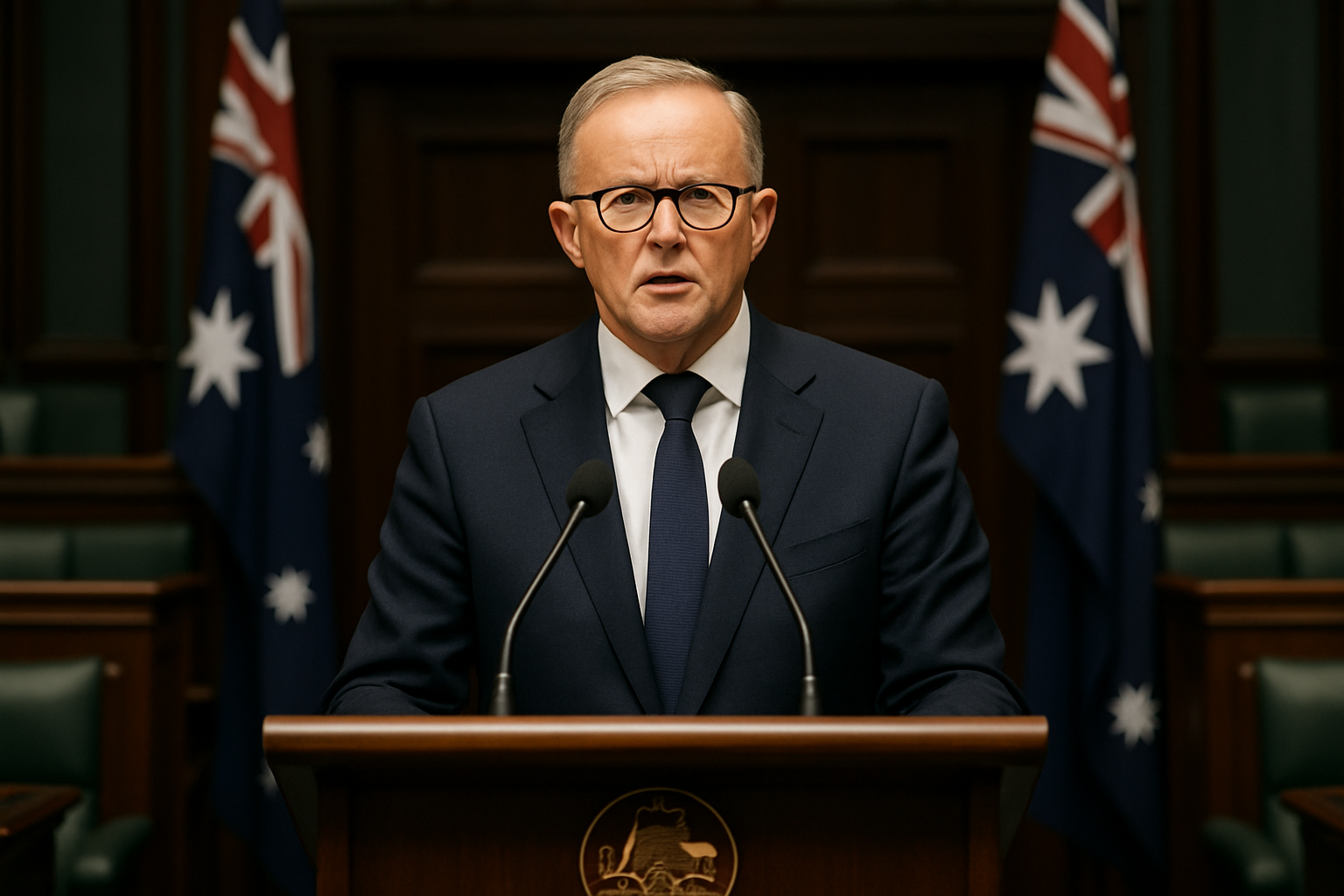
Prime Minister Anthony Albanese will announce a landmark $1 billion industry support program during a major speech in Canberra today, marking the most significant government intervention in Australia's economy since the COVID-19 pandemic as the nation grapples with an unprecedented fuel crisis.
The announcement comes as Australia confronts its most severe energy emergency in decades, with petrol prices surging past $2.50 per liter and approaching the critical $3 threshold in some regions. Queensland communities including Texas township and Robinvale have been completely depleted of fuel supplies, forcing the government to consider emergency measures not seen since the 1970s oil shocks.
A Nation in Crisis: The Fuel Emergency Deepens
The Prime Minister's address, scheduled for the National Press Club, represents only his second national address since the Middle East crisis began. The speech is widely expected to outline comprehensive assistance for businesses hit by soaring fuel costs, marking a dramatic escalation in government intervention as the crisis deepens.
Deputy Prime Minister Richard Marles has admitted that fuel rationing remains a possibility if the Iran conflict continues, while Energy Minister Chris Bowen has advocated for work-from-home arrangements as a "sensible" demand management strategy. NSW Energy Minister Penny Sharpe has been chairing crisis talks in Sydney with transport, agriculture, mining and consumer groups as the government scrambles to address acute regional shortages.
"We want our country to be over-prepared rather than caught off-guard," Albanese said in recent comments about Australia's fuel security.
— Anthony Albanese, Prime Minister
The Australian Competition and Consumer Commission (ACCC) is monitoring fuel companies for price gouging as major suppliers favor bulk distributors over independent stations, creating severe regional shortages affecting rural communities with limited transport alternatives.
Root Causes of Australia's Energy Vulnerability
The current crisis stems from Iran's Revolutionary Guard declaring the Strait of Hormuz "unsafe for shipping," effectively blocking 40% of global oil transit through the critical 21-mile chokepoint. Oil prices have breached $100 per barrel for the first time since 2022, with Brent crude reaching a peak of $119.50 and WTI posting a record 18.98% jump to $108.15.
Australia's limited domestic refining capacity and heavy dependence on fuel imports has left the nation particularly vulnerable to global supply disruptions. This vulnerability was starkly exposed as the Middle East crisis escalated, forcing the International Energy Agency (IEA) to authorize the largest strategic petroleum reserve release in its 50-year history – 400 million barrels from 32 countries.
Regional Communities Bear the Brunt
Rural Queensland has been hit hardest by the crisis, with Goondiwindi Mayor Lawrence Springborg reporting that major suppliers are systematically abandoning independent stations in favor of bulk distributors. This has left regional communities without access to basic transportation, highlighting the deep inequities in Australia's fuel distribution system.
The crisis has exposed critical gaps in Australia's energy security infrastructure, with traditional supply chains proving inadequate for the scale of disruption caused by geopolitical tensions thousands of kilometers away.
Government Response: From Emergency Powers to Long-term Strategy
The government has already implemented emergency powers allowing public funds to underwrite private fuel purchases and essential imports. These measures, combined with the announcement of a 26.3 cent excise tax cut, represent the most aggressive government intervention in fuel markets since the 1970s.
The $1 billion support package announcement is expected to provide direct assistance to businesses struggling with the compound pressures of rising fuel costs and ongoing economic uncertainty. The program will likely target transportation companies, agricultural producers, and small businesses most affected by the crisis.
International Context and Coordination
Australia's response is part of a coordinated international effort to address what experts describe as the most severe energy security crisis in decades. Japan has released 80 million barrels from its strategic reserves – the first such release since the 2011 Fukushima disaster – while Germany and other European nations have activated emergency protocols.
The crisis has demonstrated the dangerous over-dependence on strategic chokepoints in volatile regions, with the Strait of Hormuz representing a single point of failure for modern global logistics systems.
Economic Implications: Beyond the Fuel Crisis
While the immediate focus remains on fuel security, Albanese's speech is also expected to lay the groundwork for what officials describe as an "ambitious" budget. This suggests the government is planning significant infrastructure investments and economic reforms designed to enhance Australia's resilience against future shocks.
The speech comes at a critical juncture for Australia's economy, with the Reserve Bank of Australia maintaining interest rates at 4.10% after consecutive increases that have added approximately $3,000 annually to typical mortgage payments. The combination of rising fuel costs and mortgage pressures has created unprecedented cost-of-living challenges for Australian families.
Aviation and Transportation Impacts
The crisis has extended far beyond road transport, with over 18,000 flights cancelled worldwide – the most extensive aviation disruption since COVID-19. Eight countries have simultaneously closed their airspace, creating what experts describe as an "aviation black hole" that has forced fundamental reconsideration of international route planning.
Dubai International Airport, the world's busiest with over 86 million passengers annually, remains completely shuttered due to missile damage, eliminating a critical hub for Europe-Asia connections and forcing massive international evacuations.
Political Dynamics and Opposition Response
The crisis has tested the political leadership of both the government and opposition, with Coalition leader Angus Taylor demanding greater transparency on regional fuel supply strategies while pressing for real wage increases through the Fair Work Commission.
Taylor, who won the Liberal leadership in February 2026 with a 34-17 victory over Sussan Ley, has been establishing alternative policies while holding the government accountable for its crisis management. The opposition faces the challenge of balancing criticism with the need to support national unity during a genuine emergency.
Parliament's return to sitting has been marked by unprecedented pressure on the Albanese government, with question time serving as a critical test of the administration's crisis management capabilities. The government must balance transparency with strategic flexibility while managing worker welfare concerns alongside business sustainability needs.
Long-term Strategic Implications
The current crisis represents what UN Secretary-General António Guterres has described as the "greatest test of multilateral cooperation in the modern era." For Australia, it has highlighted the urgent need for fundamental transformation of the nation's energy security architecture.
Strategic petroleum reserves provide only temporary buffers against sustained disruptions. The crisis has validated arguments for accelerated supply diversification, enhanced domestic production capacity, and a faster transition to renewable energy sources, though these solutions require years or decades to implement fully.
Australia's experience during the March 2026 crisis will likely influence energy policy for generations, potentially marking the beginning of a comprehensive reassessment of the nation's strategic vulnerabilities and resilience planning.
Template for Future Crisis Management
The government's response to this crisis is establishing precedents for 21st-century crisis management that could influence how democracies respond to similar challenges worldwide. The combination of emergency powers, industry support, and international coordination represents a new model for managing complex, multi-faceted crises.
Success in containing the current emergency could provide valuable frameworks for future diplomatic and economic challenges, while failure might accelerate more drastic interventions and reshape Australia's approach to energy security for decades to come.
As Albanese prepares to address the nation, the stakes extend far beyond immediate fuel prices to questions of national resilience, economic sovereignty, and Australia's ability to maintain prosperity in an increasingly volatile and interconnected world.