Australia's emergency response capabilities faced a severe test on March 15, 2026, as multiple critical incidents unfolded simultaneously across the country, from a tragic mountain climbing accident in Queensland to an aviation fire emergency that prompted a full emergency response at Melbourne Airport.
Glasshouse Mountains Tragedy Claims Young Life
In Queensland's iconic Glasshouse Mountains, a routine hiking expedition turned into tragedy when an 18-year-old woman died and her boyfriend was left fighting for life after both fell from a cliff face on Mount Beerwah. The incident occurred at approximately 10:30 AM local time, witnessed by the woman's helpless sister who could only watch as the pair plunged down the rocky terrain.
Emergency services confirmed the young woman suffered fatal injuries after falling approximately 60 meters. Despite immediate rescue efforts, she was pronounced dead at the scene. Her boyfriend was rushed to hospital with critical injuries and remains in intensive care. The sister, who raised the initial alarm, was unharmed but reportedly in severe psychological distress.
"This is an absolute tragedy for this young family, and our thoughts are with them during this incredibly difficult time."
— Queensland Emergency Services spokesperson
Mount Beerwah, one of the most challenging peaks in the Glasshouse Mountains National Park on Queensland's Sunshine Coast, is known for its steep volcanic rock faces and technical climbing requirements. The mountain attracts thousands of hikers annually, though its Class 4 and 5 climbing sections have been the site of numerous accidents over the years.
Aviation Emergency at Melbourne Airport
Concurrently, Virgin Australia flight VA328 from Brisbane to Melbourne declared an emergency after a passenger's vape device caught fire during the flight, creating a mid-air crisis that required immediate action from the crew and ground emergency services.
The incident occurred as the aircraft approached Melbourne, forcing pilots to issue urgent calls for emergency assistance. Melbourne Airport's emergency services were placed on high alert, with fire and rescue teams positioning themselves for the aircraft's landing. The plane landed safely, but the incident highlighted ongoing concerns about lithium battery devices in aviation environments.
All passengers and crew were evacuated safely upon landing, with no injuries reported. However, the incident caused significant disruption to Melbourne Airport operations, with several flights delayed as emergency crews conducted safety inspections and protocols.
Pattern of Compound Disasters
These simultaneous incidents exemplify what the Australian Fire and Emergency Services Authority (AFAC) has identified as "compound disasters" – multiple emergency situations occurring concurrently rather than sequentially, placing unprecedented strain on emergency response resources and coordination systems.
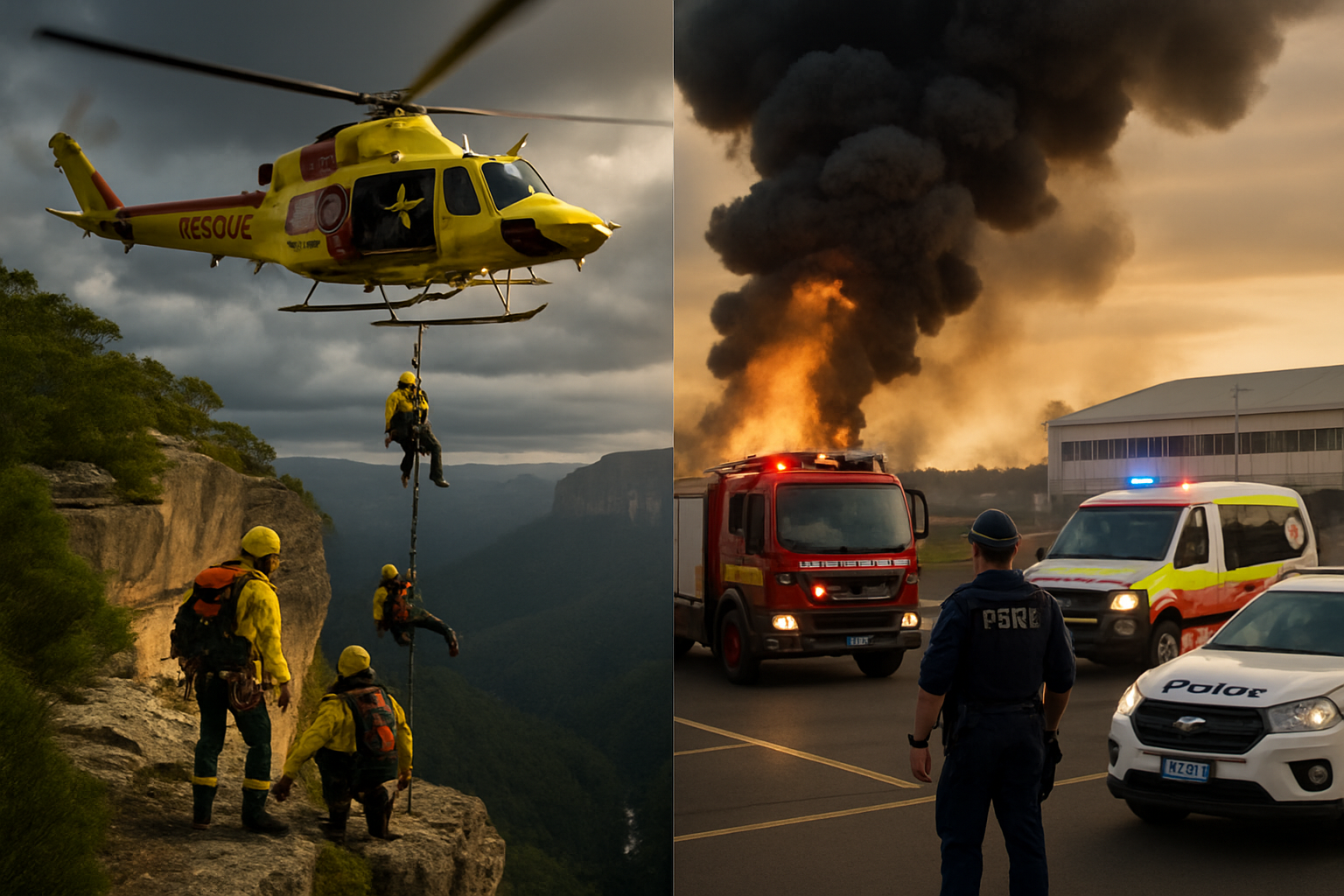
The March 15 events occurred during Australia's ongoing period of extreme weather volatility, marking the 20th consecutive month that global temperatures have exceeded 1.5°C above pre-industrial levels. This sustained climate pattern has contributed to increasingly unpredictable conditions that challenge traditional emergency response protocols designed for sequential, rather than simultaneous, disasters.
Emergency Response Evolution
Queensland's emergency services have significantly evolved their mountain rescue capabilities following previous tragic incidents in the region. The Glasshouse Mountains rescue operation deployed specialized cliff rescue teams, helicopter units, and paramedics trained in high-angle rescue techniques.
The response demonstrated the coordination between multiple agencies, including Queensland Fire and Emergency Services, Queensland Ambulance Service, and local police, all working within challenging terrain that required precise technical skills and equipment.
Meanwhile, the aviation emergency response at Melbourne Airport showcased the effectiveness of established protocols for in-flight fire incidents. Virgin Australia's crew followed standard procedures for containing lithium battery fires, while ground emergency services executed well-rehearsed airport emergency protocols.
Broader Context of Australian Emergency Management
These incidents occurred against the backdrop of Australia's broader challenges with extreme weather and emergency management. Throughout 2026, the country has faced record-breaking flooding in Queensland, severe bushfire conditions, and unprecedented storm systems that have tested emergency services across multiple states simultaneously.
The Australian government has invested heavily in emergency preparedness infrastructure, recognizing that climate volatility is creating new patterns of concurrent emergencies that require fundamentally different approaches to resource allocation and coordination.
"We're seeing a shift from isolated regional disasters to multiple simultaneous incidents across different specialties, which challenges our traditional mutual aid mechanisms."
— AFAC representative
Technology and Community Response
Social media platforms have become crucial in modern emergency response, with groups like "Bargara Facebookers" providing real-time community coordination when traditional communication systems become overwhelmed. This demonstrates the evolution of emergency management to include community-based networks alongside formal response structures.
The Glasshouse Mountains incident also highlighted the importance of emergency beacons and GPS technology in mountain rescue operations, though the tragic outcome underscores that no amount of technology can eliminate the inherent risks of challenging outdoor activities.
Safety Recommendations and Future Preparedness
Following these incidents, safety experts are calling for enhanced risk assessment procedures for both recreational mountain climbing and aviation safety protocols regarding lithium-powered devices. The concurrent nature of the emergencies has also prompted discussions about resource allocation during compound disaster scenarios.
For mountain safety, experts emphasize the importance of proper climbing equipment, weather monitoring, and companion safety protocols. The Glasshouse Mountains, while accessible to day hikers, contain technical climbing sections that require significant experience and appropriate safety equipment.
In aviation, the vape fire incident adds to growing concerns about lithium battery devices on aircraft, with industry experts calling for stricter regulations and passenger education about the risks these devices can pose in pressurized cabin environments.
Looking Forward: Building Resilience
As Australia continues to face the challenges of an increasingly volatile climate and the associated increase in emergency incidents, the events of March 15 serve as a crucial case study in emergency preparedness and response coordination.
The successful aspects of the response – including effective inter-agency coordination, proper use of emergency protocols, and community support networks – provide templates for future incident management. However, the tragic loss of life in the Glasshouse Mountains serves as a sobering reminder of the limits of emergency response when facing the inherent dangers of outdoor recreation and extreme conditions.
These incidents underscore the critical importance of continued investment in emergency services training, equipment, and coordination systems as Australia adapts to an era of more frequent and complex emergency scenarios. The lessons learned from managing compound disasters like those of March 15 will be essential for protecting communities and saving lives in an increasingly challenging environment.